
US to Sanction ICC President Over Netanyahu Arrest Warrant
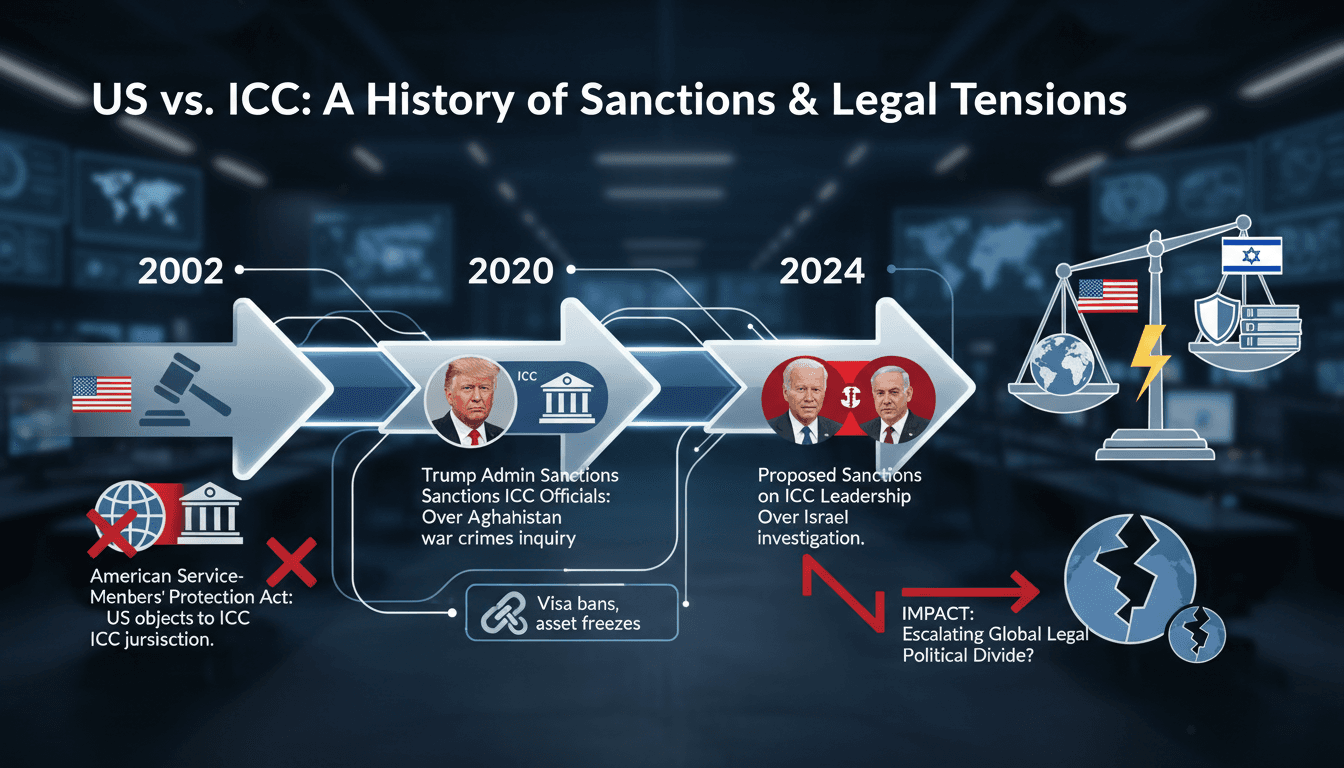
Why it matters
The U.S. sanctions reflect ongoing tensions between national sovereignty and international legal authority, impacting global diplomatic relations.
What happened (in 30 seconds)
- On August 18, 2026, U.S. Secretary of State Marco Rubio announced sanctions against ICC President Tomoko Akane and Senegalese official Abdoulaye Seye.
- The sanctions target their involvement in ICC investigations, particularly the arrest warrant for Israeli Prime Minister Benjamin Netanyahu.
- This move follows a pattern of U.S. opposition to ICC jurisdiction over non-member states, particularly regarding American and Israeli personnel.
The context you actually need
- The ICC, established under the Rome Statute, investigates war crimes and crimes against humanity, but the U.S. has consistently rejected its authority over its nationals.
- Since 2025, the U.S. has imposed sanctions on ICC officials involved in cases against U.S. allies, including multiple designations of ICC figures since February 2025.
- The ICC issued arrest warrants for Netanyahu and former Defense Minister Yoav Gallant in November 2024, escalating tensions between the U.S. and the court.
What's really happening
The recent announcement of sanctions against ICC President Tomoko Akane and Abdoulaye Seye is a continuation of the U.S. strategy to undermine the authority of the International Criminal Court (ICC) in matters involving its allies, particularly Israel. The U.S. government, under Secretary of State Marco Rubio, has framed the ICC as a "corrupt and fatally politicized supranational court," asserting that it overreaches its mandate by investigating officials from non-member states like the U.S. and Israel.
This latest round of sanctions is particularly significant as it targets individuals directly involved in the ICC's investigations into the actions of Israeli officials, including Prime Minister Netanyahu. The U.S. has long maintained that the ICC's jurisdiction is an infringement on national sovereignty, especially when it comes to its own personnel and those of its allies. The sanctions are not merely punitive; they serve as a deterrent against the ICC's attempts to hold U.S. and Israeli officials accountable for alleged war crimes.
The U.S. has a history of imposing sanctions on ICC officials, beginning in 2025 with executive orders that authorized such measures against ICC personnel involved in cases perceived as politically motivated. This includes previous sanctions against ICC Prosecutor Karim Khan and several judges linked to the Netanyahu warrants. The U.S. government views these actions as necessary to protect its national interests and those of its allies, reinforcing a narrative that positions the ICC as an adversary rather than a partner in global justice.
The implications of these sanctions extend beyond the immediate individuals targeted. They signal to other nations and international bodies that the U.S. will actively oppose any legal actions that it perceives as threatening its geopolitical interests. This could lead to a chilling effect on international legal proceedings involving U.S. allies, as other nations may hesitate to engage with the ICC for fear of U.S. reprisals.
Moreover, the sanctions could further polarize international relations, particularly in the context of ongoing conflicts where the ICC is involved. Countries that support the ICC may view the U.S. actions as an attempt to undermine international law, while those aligned with the U.S. may see it as a necessary stance against what they perceive as overreach by international institutions.
Who feels it first (and how)
- International lawyers: Those working in international law may face increased scrutiny and challenges in cases involving U.S. or Israeli officials.
- Diplomats: U.S. diplomats may need to navigate heightened tensions in international forums where the ICC is discussed.
- Human rights advocates: Organizations focused on accountability for war crimes may find their efforts complicated by U.S. sanctions.
What to watch next
- Future ICC investigations: Monitor how the ICC responds to these sanctions and whether it will continue to pursue cases against U.S. allies.
- U.S. diplomatic relations: Watch for shifts in U.S. relations with countries that support the ICC, particularly in the context of international human rights discussions.
- Global legal frameworks: Observe any changes in how other nations approach international law and their engagement with the ICC in light of U.S. actions.
The U.S. has imposed sanctions on ICC officials involved in investigations against its allies.
The ICC will continue to pursue cases against U.S. and Israeli officials despite U.S. sanctions.
The long-term impact of these sanctions on international legal proceedings and U.S. diplomatic relations remains uncertain.
Frequently Asked Questions
- Why it matters?
- The U.S. sanctions reflect ongoing tensions between national sovereignty and international legal authority, impacting global diplomatic relations.
- What happened (in 30 seconds)?
- On August 18, 2026, U.S. Secretary of State Marco Rubio announced sanctions against ICC President Tomoko Akane and Senegalese official Abdoulaye Seye. The sanctions target their involvement in ICC investigations, particularly the arrest warrant for Israeli Prime Minister Benjamin Netanyahu. This move follows a pattern of U.S. opposition to ICC jurisdiction over non-member states, particularly regarding American and Israeli personnel.
- What's really happening?
- The recent announcement of sanctions against ICC President Tomoko Akane and Abdoulaye Seye is a continuation of the U.S. strategy to undermine the authority of the International Criminal Court (ICC) in matters involving its allies, particularly Israel. The U.S. government, under Secretary of State Marco Rubio, has framed the ICC as a "corrupt and fatally politicized supranational court," asserting that it overreaches its mandate by investigating officials from non-member states like the U.S. and
- Who feels it first (and how)?
- International lawyers: Those working in international law may face increased scrutiny and challenges in cases involving U.S. or Israeli officials. Diplomats: U.S. diplomats may need to navigate heightened tensions in international forums where the ICC is discussed. Human rights advocates: Organizations focused on accountability for war crimes may find their efforts complicated by U.S. sanctions.
- What to watch next?
- Future ICC investigations: Monitor how the ICC responds to these sanctions and whether it will continue to pursue cases against U.S. allies. U.S. diplomatic relations: Watch for shifts in U.S. relations with countries that support the ICC, particularly in the context of international human rights discussions. Global legal frameworks: Observe any changes in how other nations approach international law and their engagement with the ICC in light of U.S. actions.
Arabic-language coverage of international news and geopolitics.
"RT Arabic is a Russian state-funded outlet often criticized for promoting Kremlin-aligned narratives."
— A47 Editor
تشمل أيضا سي.. واشنطن تعتزم فرض عقوبات على أكاني بسبب مذكرة الاعتقال بحق نتنتياهو
U.S. Secretary of State Marco Rubio announced that Washington plans to impose sanctions on International Criminal Court President Tomoko Akane and prominent Senegalese lawyer Abdoulaye Sy due to an arrest warrant issued against Israeli Prime Minister...
Arabic-language political and world news coverage for UAE readers.
"Emarat Al Youm world coverage usually presents international developments through a UAE and Arab audience lens."
— A47 Editor
أميركا تفرض عقوبات على رئيسة المحكمة الجنائية الدولية ومحام كبير بهيئة الادعاء أميركا تفرض عقوبات على رئيسة المحكمة الجنائية الدولية ومحام كبير بهيئة الادعاء
The United States has imposed sanctions on the President of the International Criminal Court (ICC) and a senior prosecutor, as announced by U.S. Secretary of State Marco Rubio. This action reflects ongoing tensions between the U.S. and the ICC regard...
Pan-Arab news coverage spanning politics, business, sports, and regional affairs.
"Asharq Al-Awsat reflects a broad Arab editorial perspective with strong attention to regional geopolitics."
— A47 Editor
«الخزانة الأميركية» تفرض عقوبات على رئيسة «الجنائية الدولية»
The United States imposed sanctions on Japanese judge Tomoko Akani, the president of the International Criminal Court, on Tuesday. This decision reflects ongoing tensions between the U.S. and international judicial bodies, particularly regarding acco...