Trending

    UK Prime Minister Andy Burnham Confirms Communication with Impersonator of White House Chief of Staff

    Section editor: ·Moderate3 articles covering this·3 news sources·Updated an hour ago·World
    Share:
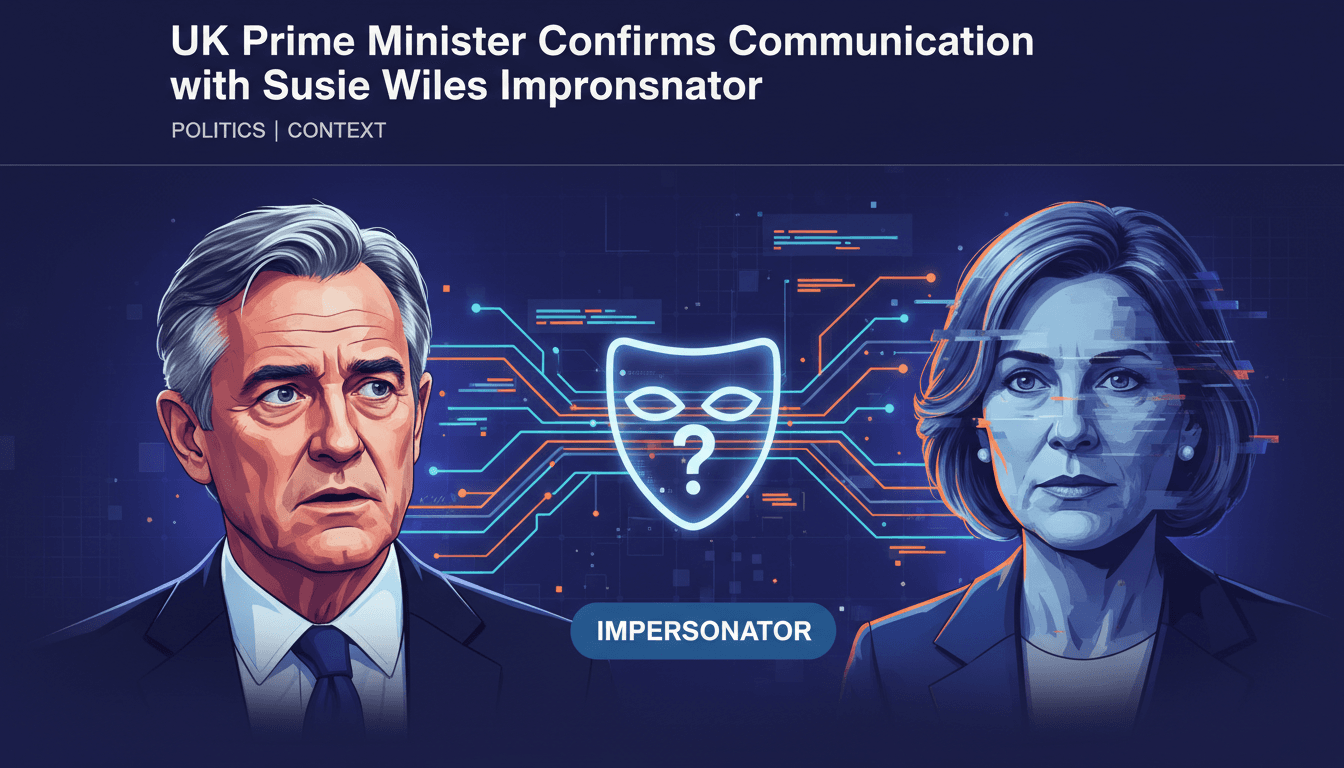
    Infographic showing the rise of digital impersonation incidents among political leaders and their implications for international relations.

    Here's what it means for you.

    As digital impersonation risks rise, understanding their implications on international relations is crucial for professionals engaged in global communications.

    Why it matters

    This incident highlights vulnerabilities in diplomatic communications, potentially affecting international trust and cybersecurity protocols.

    What happened (in 30 seconds)

    • On August 18, 2026, UK Prime Minister Andy Burnham confirmed he exchanged messages with someone impersonating Susie Wiles, the White House Chief of Staff.
    • The British Embassy notified the White House after Burnham reported the suspicious communications, which he deemed minimal and non-sensitive.
    • No sensitive information was compromised, and the incident is currently under investigation by relevant authorities.

    The context you actually need

    • Increased impersonation attempts: This incident follows a pattern of impersonation scams targeting high-profile political figures, raising concerns about digital security.
    • Burnham's recent premiership: Having taken office just a month prior, Burnham's role requires frequent international communication, increasing exposure to such risks.
    • Geopolitical climate: The incident occurs amid heightened scrutiny of US-UK relations under the Trump administration, emphasizing the need for robust cybersecurity measures.

    What's really happening

    The impersonation of UK Prime Minister Andy Burnham by an individual posing as Susie Wiles underscores a growing trend of digital impersonation targeting high-ranking officials. This incident, while seemingly minor in terms of information exchanged, reveals significant vulnerabilities in the communication protocols of political leaders. Burnham's quick identification of the impersonation and subsequent reporting to authorities demonstrate a proactive approach to cybersecurity, yet it also highlights the systemic risks that come with increased digital communication in a politically charged environment.

    The incident is particularly relevant given the backdrop of previous impersonation attempts, such as the 2024 case involving former UK Foreign Secretary David Cameron, who was deceived by someone impersonating Ukrainian President Petro Poroshenko. These events indicate a pattern where political figures are increasingly targeted, raising questions about the adequacy of existing security measures. The British Embassy's decision to escalate the matter to the White House reflects the seriousness with which such impersonation attempts are viewed, particularly in the context of US-UK relations.

    Moreover, the incident raises broader implications for international diplomacy. As political leaders engage in more frequent digital communications, the potential for miscommunication or deception increases, which can lead to diplomatic tensions. The lack of sensitive information being shared in this case may provide some reassurance, but it does not mitigate the underlying risks associated with digital impersonation. The incident serves as a reminder that even minimal exchanges can have significant repercussions in the realm of international relations.

    In the wake of this event, there is likely to be increased scrutiny on the digital security protocols employed by government officials. The incident may prompt a reevaluation of communication channels and security measures to prevent similar occurrences in the future. As political leaders navigate an increasingly complex digital landscape, the need for robust cybersecurity practices will become paramount.

    Who feels it first (and how)

    • Political leaders: Increased scrutiny and pressure to enhance digital security measures.
    • Government agencies: Potential policy shifts in cybersecurity protocols and communication strategies.
    • International relations professionals: Heightened awareness of risks in diplomatic communications.

    What to watch next

    • Increased cybersecurity measures: Watch for announcements regarding enhanced protocols for political communications, as governments respond to this incident.
    • Diplomatic communications: Monitor any changes in how international communications are conducted, particularly between the UK and US.
    • Public awareness campaigns: Look for initiatives aimed at educating officials and the public about the risks of digital impersonation.
    Known:

    Burnham exchanged a few messages with an impersonator; no sensitive information was compromised.

    Likely:

    There will be increased scrutiny on digital security measures for political communications.

    Unclear:

    The long-term impact on US-UK relations and any potential policy changes resulting from this incident.

    Frequently Asked Questions

    Why it matters?
    This incident highlights vulnerabilities in diplomatic communications, potentially affecting international trust and cybersecurity protocols.
    What happened (in 30 seconds)?
    On August 18, 2026, UK Prime Minister Andy Burnham confirmed he exchanged messages with someone impersonating Susie Wiles, the White House Chief of Staff. The British Embassy notified the White House after Burnham reported the suspicious communications, which he deemed minimal and non-sensitive. No sensitive information was compromised, and the incident is currently under investigation by relevant authorities.
    What's really happening?
    The impersonation of UK Prime Minister Andy Burnham by an individual posing as Susie Wiles underscores a growing trend of digital impersonation targeting high-ranking officials. This incident, while seemingly minor in terms of information exchanged, reveals significant vulnerabilities in the communication protocols of political leaders. Burnham's quick identification of the impersonation and subsequent reporting to authorities demonstrate a proactive approach to cybersecurity, yet it also highli
    Who feels it first (and how)?
    Political leaders: Increased scrutiny and pressure to enhance digital security measures. Government agencies: Potential policy shifts in cybersecurity protocols and communication strategies. International relations professionals: Heightened awareness of risks in diplomatic communications.
    What to watch next?
    Increased cybersecurity measures: Watch for announcements regarding enhanced protocols for political communications, as governments respond to this incident. Diplomatic communications: Monitor any changes in how international communications are conducted, particularly between the UK and US. Public awareness campaigns: Look for initiatives aimed at educating officials and the public about the risks of digital impersonation.
    3 Articles
    Emarat Al Youm

    رئيس وزراء بريطانيا يراسل شخصاً انتحل صفة كبيرة موظفي البيت الأبيض رئيس وزراء بريطانيا يراسل شخصاً انتحل صفة كبيرة موظفي البيت الأبيض

    British Prime Minister Andy Burnham confirmed on Tuesday that he exchanged messages with an individual impersonating the White House Chief of Staff. This incident raises concerns about security and the potential for misinformation in international co...

    16 hours ago
    Read Full Article
    Asharq Al-Awsat

    Reports: UK PM Exchanged Messages with Trump Aide Imposter

    Reports indicate that the UK Prime Minister exchanged messages with an imposter posing as a former aide to Donald Trump, raising concerns about security and the integrity of communications. This incident highlights vulnerabilities in political commun...

    Asharq Al-Awsat

    رئيس الوزراء البريطاني تبادل رسائل مع شخص انتحل شخصية مسؤولة أميركية

    Reports indicate that British Prime Minister Andy Burnham exchanged messages with an individual impersonating the White House Chief of Staff. This incident raises concerns about security and the potential for misinformation in political communication...