
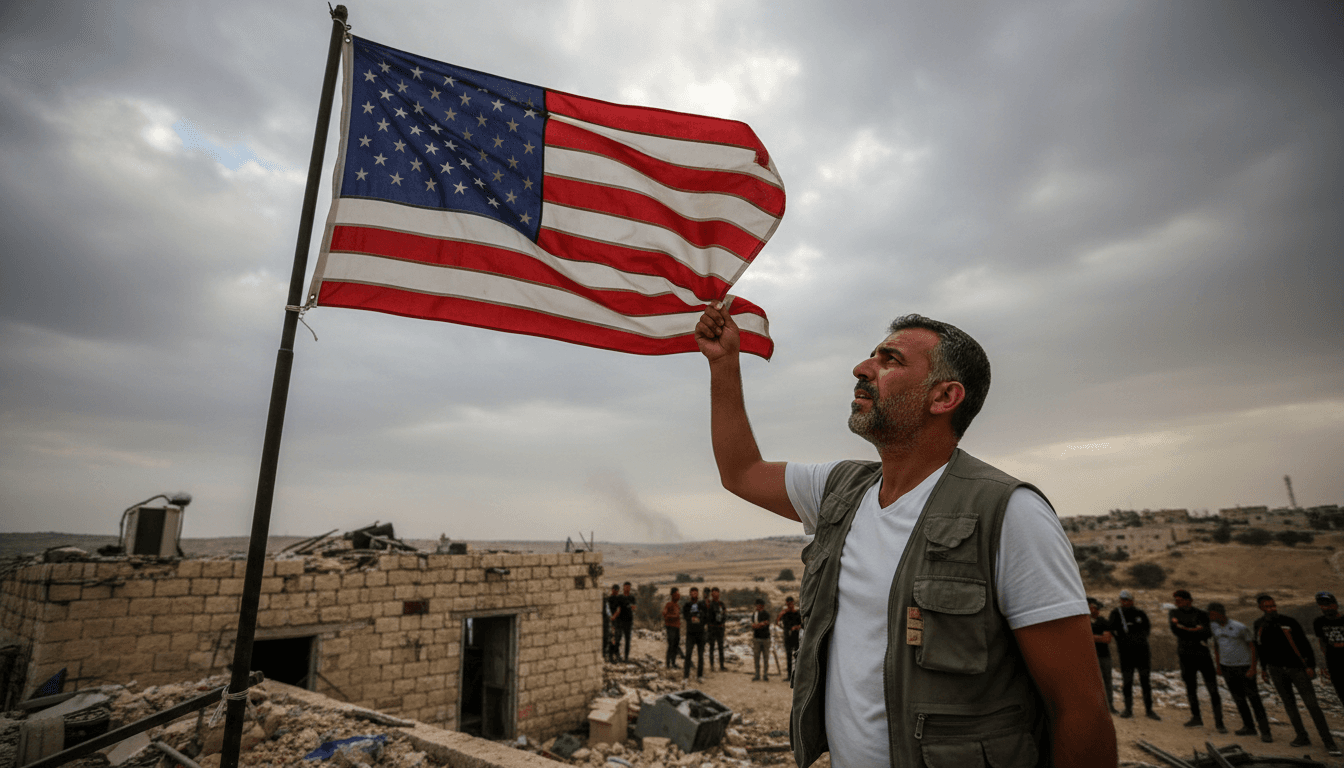
Palestinian-American Raises US Flag Amid Siege by Israeli Settlers in West Bank
Here's what it means for you.
This incident underscores the complexities of international relations and the potential risks for dual nationals in conflict zones.
Why it matters
The event highlights the ongoing tensions in the West Bank, which could influence US foreign policy and regional stability.
What happened (in 30 seconds)
- On August 18, 2026, Louai Abu Ridi raised the US flag at his home in Qusra, West Bank, amid a siege by Israeli settlers.
- The siege began on August 9, restricting access to food and water for three Palestinian families.
- US diplomatic criticism followed, with Ambassador Mike Huckabee condemning the settlers' actions and calling for accountability.
The context you actually need
- Settler violence against Palestinians has escalated, with increased harassment and property damage reported in recent months.
- Israeli government policies have favored settlement expansion, contributing to rising tensions in the region.
- The siege in Qusra is part of a broader pattern of conflict, with approximately 500,000 Israeli settlers living among three million Palestinians in the West Bank.
What's really happening
The situation in Qusra is emblematic of the broader Israeli-Palestinian conflict, where settler violence has become increasingly normalized. The siege that began on August 9, 2026, involved dozens of Israeli settlers surrounding three Palestinian homes, effectively cutting off utilities and blocking access to essential supplies. This act of aggression is not isolated; it reflects a systemic issue where Israeli settlers, often emboldened by government policies, engage in harassment and land seizures against Palestinian residents.
Louai Abu Ridi's decision to return from Ohio and raise the US flag was a strategic move aimed at drawing international attention to the plight of his family and neighbors. By invoking the US flag, he sought to leverage his dual citizenship to prompt a response from US authorities. The act was not just symbolic; it was a calculated appeal for intervention in a situation that had escalated to a humanitarian crisis.
The Israeli Defense Forces (IDF) declared the area a closed military zone, which further complicated the situation. Under pressure from the US, some settlers were removed, and humanitarian access was granted by the United Nations. However, the settlers' intermittent presence persisted, indicating that the situation remains volatile. The US government's response, led by Ambassador Huckabee, included public condemnation of the settlers' actions, emphasizing the need for the protection of American citizens abroad.
This incident also highlights the complexities of US foreign policy in the region. As tensions rise, the US may face increasing pressure to take a firmer stance against settler violence, especially as it relates to American citizens. The implications of this event extend beyond the immediate humanitarian concerns; they touch on the broader geopolitical landscape, where US interests and regional stability are at stake.
Who feels it first (and how)
- Palestinian residents in the West Bank, facing direct violence and displacement.
- US dual nationals in conflict zones, who may experience heightened risks and require consular support.
- International humanitarian organizations, which may need to navigate increased operational challenges in the region.
What to watch next
- US diplomatic actions: Monitor any changes in US policy regarding Israeli settlements and the protection of American citizens abroad.
- Settler activity: Watch for patterns of settler violence in the West Bank, particularly in areas with significant Palestinian populations.
- Humanitarian access: Keep an eye on the UN's ability to provide aid and support to affected families in Qusra and similar regions.
The siege in Qusra has drawn international attention and criticism.
Increased scrutiny on US foreign policy regarding Israeli settlements and Palestinian rights.
The long-term impact of this incident on US-Israel relations and regional stability.
Frequently Asked Questions
- Why it matters?
- The event highlights the ongoing tensions in the West Bank, which could influence US foreign policy and regional stability.
- What happened (in 30 seconds)?
- On August 18, 2026, Louai Abu Ridi raised the US flag at his home in Qusra, West Bank, amid a siege by Israeli settlers. The siege began on August 9, restricting access to food and water for three Palestinian families. US diplomatic criticism followed, with Ambassador Mike Huckabee condemning the settlers' actions and calling for accountability.
- What's really happening?
- The situation in Qusra is emblematic of the broader Israeli-Palestinian conflict, where settler violence has become increasingly normalized. The siege that began on August 9, 2026, involved dozens of Israeli settlers surrounding three Palestinian homes, effectively cutting off utilities and blocking access to essential supplies. This act of aggression is not isolated; it reflects a systemic issue where Israeli settlers, often emboldened by government policies, engage in harassment and land seizu
- Who feels it first (and how)?
- Palestinian residents in the West Bank, facing direct violence and displacement. US dual nationals in conflict zones, who may experience heightened risks and require consular support. International humanitarian organizations, which may need to navigate increased operational challenges in the region.
- What to watch next?
- US diplomatic actions: Monitor any changes in US policy regarding Israeli settlements and the protection of American citizens abroad. Settler activity: Watch for patterns of settler violence in the West Bank, particularly in areas with significant Palestinian populations. Humanitarian access: Keep an eye on the UN's ability to provide aid and support to affected families in Qusra and similar regions.
Regional coverage and analysis focused on politics, diplomacy, and business across the Middle East.
"Al-Monitor is known for analytical reporting on Middle East politics and policy developments."
— A47 Editor
Palestinian-American hoists US flag on home besieged by settlers
Louai Abu Ridi, a Palestinian-American from Ohio, returned to his family home in Qusra, West Bank, which has been besieged by Israeli settlers for over a week, effectively cutting off essential supplies and trapping residents. He raised the US flag a...
Regional and international reporting focused on Middle Eastern politics, diplomacy, and economics.
"Asharq Al-Awsat is a Saudi-owned international newspaper reflecting mainstream Gulf political perspectives."
— A47 Editor
Palestinian-American Hoists US Flag on Home Besieged by Israeli Settlers
A Palestinian-American citizen raised the U.S. flag over his home in Qusra, West Bank, which has been besieged by Israeli settlers for nearly a week, leading to severe restrictions on essential supplies for the residents. This act of defiance symboli...
European coverage of Middle East politics and security issues.
"France 24 offers international reporting with a European editorial perspective."
— A47 Editor
Palestinian-American citizen raises US flag over besieged West Bank home
A Palestinian-American citizen has raised the U.S. flag over his home in Qusra, West Bank, which has been besieged by Israeli settlers for nearly a week, cutting off essential supplies and drawing international condemnation. This act symbolizes resis...
Coverage of current events and conflicts in the Middle East.
"France 24 is viewed as a globally focused outlet with balanced coverage and a European perspective."
— A47 Editor
Palestinian-American citizen raises US flag over besieged West Bank home
A Palestinian-American citizen has raised the US flag over his home in the West Bank village of Qusra, which has been besieged by Israeli settlers for nearly a week. This act comes amid renewed criticism from the United States regarding the siege, wh...