
Israeli Defense Forces Acknowledge Fatal Shooting of Hind Rajab and Initiate Investigation
Why it matters
This incident highlights ongoing concerns about military conduct in conflict zones and the implications for global humanitarian law.
What happened (in 30 seconds)
- On August 19, 2026, the Israeli Defense Forces (IDF) admitted to firing on a vehicle carrying five-year-old Hind Rajab during the Gaza war.
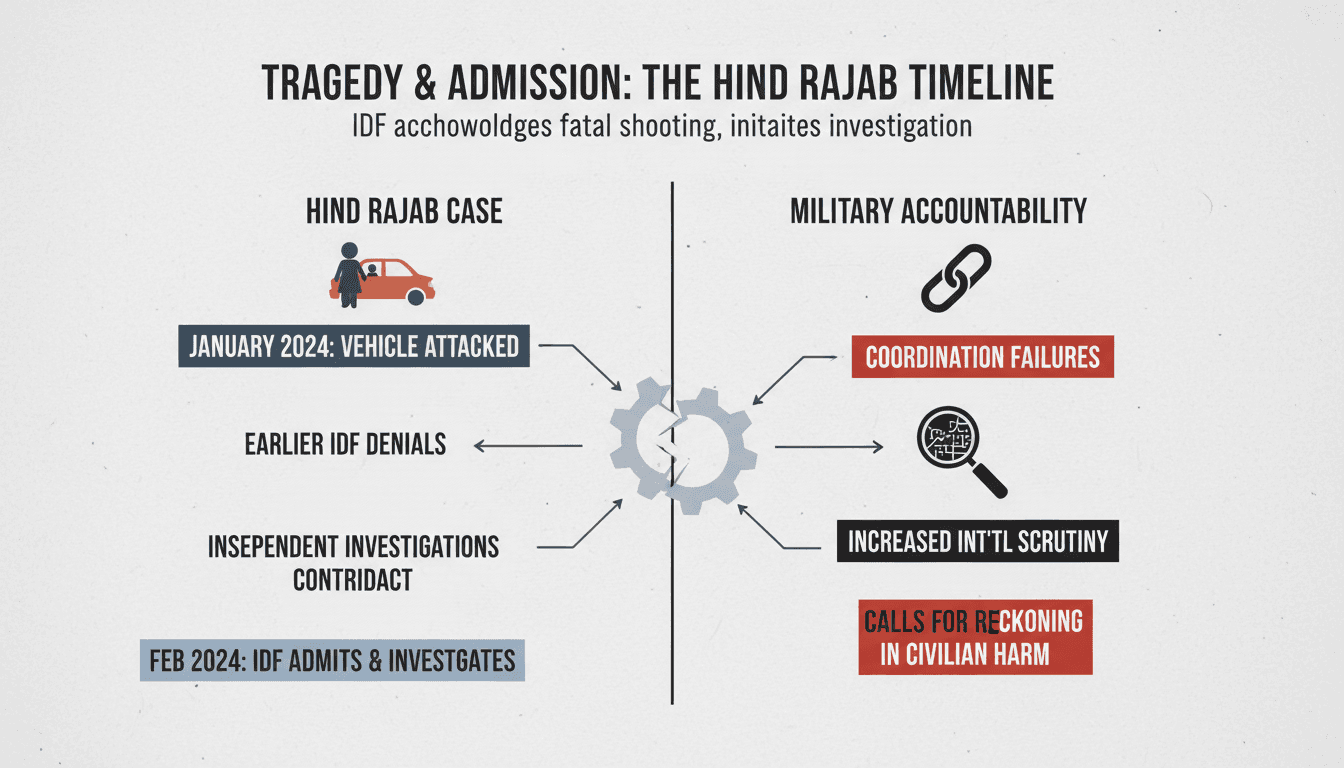
- The attack, which occurred on January 29, 2024, resulted in the deaths of Rajab, six family members, and two paramedics from the Palestine Red Crescent Society.
- A criminal investigation has been launched by the IDF, marking a significant shift in Israel's stance on military accountability.
The context you actually need
- The Gaza war escalated following the October 7, 2023, Hamas attacks, leading to increased military operations by Israel and significant civilian casualties.
- Hind Rajab's case became emblematic of child suffering in Gaza, with her pleas for help widely circulated, drawing international attention.
- Independent investigations have consistently contradicted Israeli denials of troop presence in the area, revealing a pattern of military engagement with civilian targets.
What's really happening
The admission by the IDF represents a critical juncture in the ongoing conflict and the broader discourse surrounding military accountability. The incident involving Hind Rajab's family vehicle is not an isolated event but part of a troubling trend where civilian casualties in conflict zones raise questions about adherence to international humanitarian law.
The IDF's acknowledgment of firing on the vehicle, which was reportedly carrying civilians fleeing an active conflict zone, underscores systemic issues within military operations. The military cited "coordination failures" as a contributing factor, suggesting that miscommunication may have led to the tragic outcome. However, this explanation does not absolve the military of responsibility, especially given the independent investigations that confirmed the presence of Israeli tanks in the area and the firing of 335 rounds at close range.
The implications of this admission extend beyond the immediate tragedy. It raises critical questions about the accountability mechanisms in place for military actions that result in civilian deaths. The IDF's internal investigation may be perceived as an attempt to manage public relations rather than a genuine effort to seek justice for the victims. This skepticism is echoed by Gaza residents and international observers who have called for an independent investigation into the incident.
Moreover, the case has sparked global activism, with movements advocating for accountability and justice for victims of military actions in Gaza. The sustained media attention and public outcry surrounding Rajab's death have led to increased scrutiny of military operations and their impact on civilians. This could potentially influence international diplomatic relations and humanitarian policies, particularly as global awareness of the situation in Gaza continues to grow.
As the IDF moves forward with its investigation, the outcomes will likely affect not only the families involved but also the broader discourse on military accountability in conflict zones. The case of Hind Rajab serves as a reminder of the human cost of war and the urgent need for systemic changes to prevent similar tragedies in the future.
Who feels it first (and how)
- Families of victims: Directly impacted by the loss and seeking justice.
- Humanitarian organizations: Increased pressure to advocate for accountability and protection of civilians.
- International community: Heightened scrutiny on military conduct and potential shifts in diplomatic relations.
- Activists and NGOs: Mobilizing support for accountability measures and raising awareness of civilian casualties.
What to watch next
- Outcomes of the IDF investigation: The findings could set precedents for military accountability in conflict zones.
- International responses: Watch for potential calls for independent investigations from global human rights organizations.
- Public activism: Increased mobilization around the issue may lead to broader movements advocating for changes in military engagement rules.
The IDF admitted to firing on the vehicle and has launched a criminal investigation.
Increased international scrutiny and calls for accountability in military operations.
The effectiveness of the IDF's internal investigation in addressing public concerns and achieving justice.
Frequently Asked Questions
- Why it matters?
- This incident highlights ongoing concerns about military conduct in conflict zones and the implications for global humanitarian law.
- What happened (in 30 seconds)?
- On August 19, 2026, the Israeli Defense Forces (IDF) admitted to firing on a vehicle carrying five-year-old Hind Rajab during the Gaza war. The attack, which occurred on January 29, 2024, resulted in the deaths of Rajab, six family members, and two paramedics from the Palestine Red Crescent Society. A criminal investigation has been launched by the IDF, marking a significant shift in Israel's stance on military accountability.
- What's really happening?
- The admission by the IDF represents a critical juncture in the ongoing conflict and the broader discourse surrounding military accountability. The incident involving Hind Rajab's family vehicle is not an isolated event but part of a troubling trend where civilian casualties in conflict zones raise questions about adherence to international humanitarian law. The IDF's acknowledgment of firing on the vehicle, which was reportedly carrying civilians fleeing an active conflict zone, underscores sy
- Who feels it first (and how)?
- Families of victims: Directly impacted by the loss and seeking justice. Humanitarian organizations: Increased pressure to advocate for accountability and protection of civilians. International community: Heightened scrutiny on military conduct and potential shifts in diplomatic relations. Activists and NGOs: Mobilizing support for accountability measures and raising awareness of civilian casualties.
- What to watch next?
- Outcomes of the IDF investigation: The findings could set precedents for military accountability in conflict zones. International responses: Watch for potential calls for independent investigations from global human rights organizations. Public activism: Increased mobilization around the issue may lead to broader movements advocating for changes in military engagement rules.
Global news coverage with extensive reporting on Middle Eastern conflicts and geopolitics.
"Al Jazeera is a Qatar-based broadcaster known for wide regional coverage and alternative perspectives."
— A47 Editor
Israel admits firing on car carrying Hind Rajab, symbol of Gaza’s suffering
The Israeli military has admitted to firing on a vehicle carrying Hind Rajab, a Palestinian girl who has become a symbol of the suffering in Gaza, leading to a criminal investigation into the incident. This admission follows widespread condemnation a...
Jordanian news and regional updates.
"Roya News is a Jordanian outlet focused on breaking news and local affairs."
— A47 Editor
بعد أشهر من النفي.. جيش الاحتلال يقر لأول مرة بالاعتداء على سيارة الطفلة هند رجب ويفتح تحقيقاً جنائياً
After months of denial, the Israeli army has acknowledged for the first time that it attacked the vehicle of a young girl, Hind Rajab, and has initiated a criminal investigation into the incident. This admission marks a significant shift in the army'...
Regional coverage and analysis focused on politics, diplomacy, and business across the Middle East.
"Al-Monitor is known for analytical reporting on Middle East politics and policy developments."
— A47 Editor
Israel army admits firing on car in death of five-year-old Hind Rajab
The Israeli military has admitted that its troops fired on a vehicle carrying five-year-old Hind Rajab in Gaza, resulting in her death. This admission follows a previous denial of military presence in the area and has prompted a criminal investigatio...