
US Begins Third-Country Deportation Program to Liberia with Arrival of Initial Group
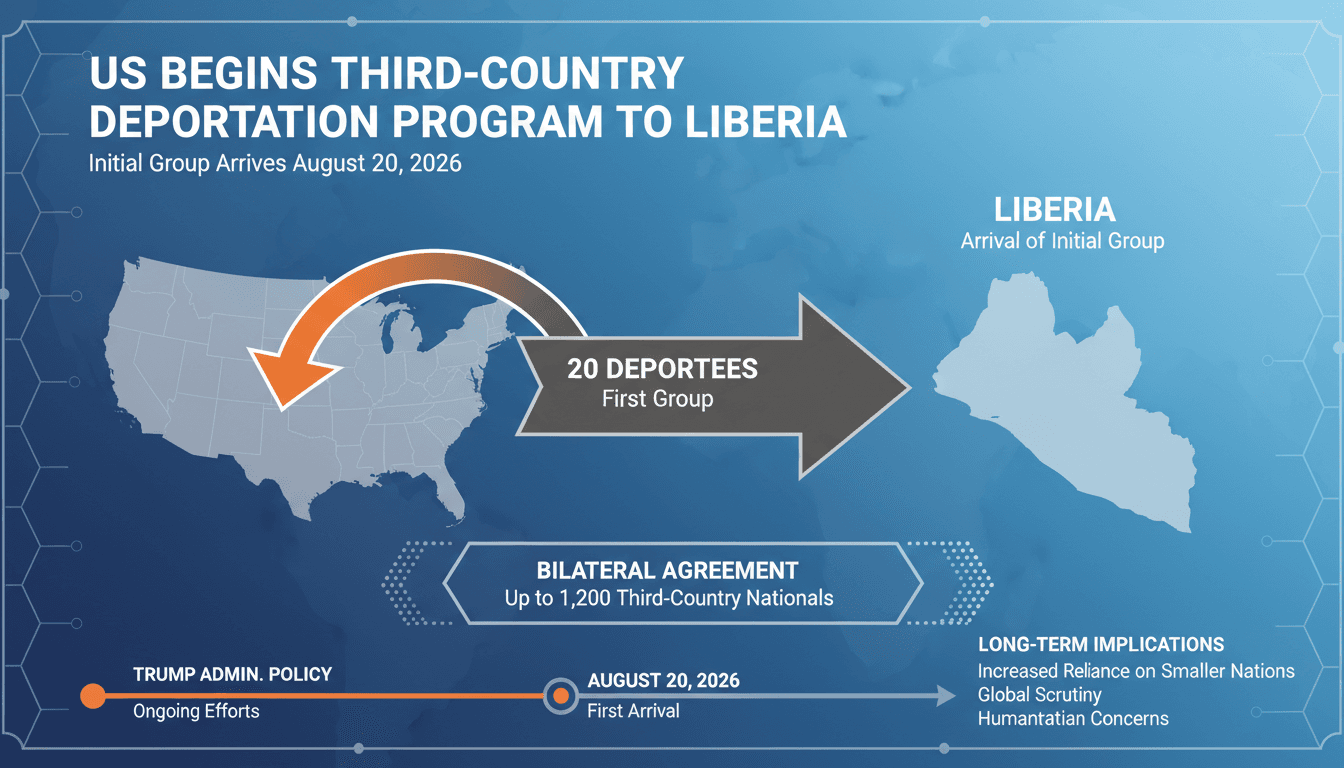
Here's what it means for you.
If you’re in the migration or humanitarian sectors, this new policy could reshape operational landscapes and funding opportunities.
Why it matters
This program reflects a growing trend of countries seeking to manage migration through bilateral agreements, impacting global migration dynamics.
What happened (in 30 seconds)
- On August 20, 2026, the first group of 20 US deportees arrived in Liberia under a new agreement.
- Liberia will host up to 1,200 deportees over the next year, primarily from Venezuela and Cuba.
- The US aims to deter illegal immigration by relocating individuals whose home countries refuse repatriation.
The context you actually need
- Historical refugee traditions: Liberia has a legacy of providing refuge, which the government cites in support of this agreement.
- US immigration policy shift: This initiative is part of a broader strategy under President Trump to negotiate third-country deportation agreements with at least 35 nations.
- Financial implications: Liberia received $5 million in US aid for migration management, raising questions about the sustainability of such arrangements.
What's really happening
The recent arrival of deportees in Liberia marks a significant shift in US immigration policy, particularly under the Trump administration. This third-country deportation program is designed to address the challenges posed by countries that refuse to accept their nationals back. By relocating individuals to Liberia, the US aims to alleviate pressure on its immigration system while also framing the initiative as a humanitarian effort.
Liberia's acceptance of these deportees is rooted in its historical context as a refuge for freed slaves, which the government emphasizes to garner public support. However, this arrangement raises critical questions about the adequacy of resources available to support the incoming population. Human rights organizations have expressed concerns that smaller nations like Liberia may struggle to provide sufficient assistance, potentially leading to humanitarian crises.
The agreement is also a strategic move for the US, which has been increasingly focused on deterrence in its immigration policies. By relocating individuals to a third country, the US can effectively manage its immigration flow without directly addressing the root causes of migration, such as political instability and economic hardship in the deportees' home countries. Critics argue that this approach is punitive, as it shifts the burden of care and support onto nations that may lack the infrastructure to handle such an influx.
As the program unfolds, the dynamics between the US and Liberia will be closely monitored. The success of this initiative will depend on the cooperation of both governments and the ability of Liberia to manage the arrivals effectively. The involvement of international organizations like the International Organization for Migration and UNHCR will be crucial in providing support and resources to the deportees, ensuring that their rights are respected and that they have access to necessary services.
Overall, this program exemplifies a growing trend in global migration management, where countries are increasingly looking to negotiate bilateral agreements to handle migration flows. The implications of this shift will be felt not only in Liberia but also in other nations that may consider similar arrangements in the future.
Who feels it first (and how)
- Migrants: Individuals from Venezuela and Cuba facing deportation will experience immediate changes in their living conditions and legal status.
- Liberian government: Officials will need to manage the logistics and resources for incoming deportees, impacting local governance and public services.
- Humanitarian organizations: NGOs and international bodies will be tasked with providing support, potentially altering funding and operational priorities.
What to watch next
- Monitoring deportee integration: Watch for reports on how well the deportees are being integrated into Liberian society and the resources allocated for their support.
- International response: Keep an eye on how other nations react to this program, particularly those with similar migration challenges.
- Human rights assessments: Look for evaluations from human rights organizations regarding the treatment and conditions of the deportees in Liberia.
The first group of deportees has arrived in Liberia, and the US plans to send up to 1,200 individuals over the next year.
The program will face scrutiny from human rights groups regarding the adequacy of resources and support for deportees.
The long-term impacts on Liberia's social and economic landscape remain to be seen, particularly regarding public sentiment and resource allocation.
Frequently Asked Questions
- Why it matters?
- This program reflects a growing trend of countries seeking to manage migration through bilateral agreements, impacting global migration dynamics.
- What happened (in 30 seconds)?
- On August 20, 2026, the first group of 20 US deportees arrived in Liberia under a new agreement. Liberia will host up to 1,200 deportees over the next year, primarily from Venezuela and Cuba. The US aims to deter illegal immigration by relocating individuals whose home countries refuse repatriation.
- What's really happening?
- The recent arrival of deportees in Liberia marks a significant shift in US immigration policy, particularly under the Trump administration. This third-country deportation program is designed to address the challenges posed by countries that refuse to accept their nationals back. By relocating individuals to Liberia, the US aims to alleviate pressure on its immigration system while also framing the initiative as a humanitarian effort. Liberia's acceptance of these deportees is rooted in its hist
- Who feels it first (and how)?
- Migrants: Individuals from Venezuela and Cuba facing deportation will experience immediate changes in their living conditions and legal status. Liberian government: Officials will need to manage the logistics and resources for incoming deportees, impacting local governance and public services. Humanitarian organizations: NGOs and international bodies will be tasked with providing support, potentially altering funding and operational priorities.
- What to watch next?
- Monitoring deportee integration: Watch for reports on how well the deportees are being integrated into Liberian society and the resources allocated for their support. International response: Keep an eye on how other nations react to this program, particularly those with similar migration challenges. Human rights assessments: Look for evaluations from human rights organizations regarding the treatment and conditions of the deportees in Liberia.
Global news coverage with extensive reporting on Middle Eastern conflicts and geopolitics.
"Al Jazeera is a Qatar-based broadcaster known for wide regional coverage and alternative perspectives."
— A47 Editor
First group of US deportees, out of an expected 1,200, arrive in Liberia
The first group of 20 US deportees has arrived in Liberia, marking the beginning of a larger repatriation effort that will see a total of 1,200 individuals accepted by the country. This initiative is part of an agreement reached between the US and Li...
Comprehensive coverage of Middle Eastern and global issues.
"Al Jazeera is a prominent voice from the Global South, especially the Middle East, with an emphasis on underreported stories."
— A47 Editor
First group of US deportees, out of an expected 1,200, arrive in Liberia
The first group of 20 US deportees has arrived in Liberia, marking the beginning of a larger repatriation effort that will see a total of 1,200 individuals accepted by the country. This initiative is part of an agreement reached between the US and Li...
Regional and international reporting focused on Middle Eastern politics, diplomacy, and economics.
"Asharq Al-Awsat is a Saudi-owned international newspaper reflecting mainstream Gulf political perspectives."
— A47 Editor
Liberia Says Taking up to 1,200 US Deportees
Liberia is preparing to accept up to 1,200 deportees from the United States, with the first group of 20 expected to arrive shortly. This decision follows ongoing discussions between the two nations regarding the repatriation of individuals who have f...
Pan-Arab news coverage spanning politics, business, sports, and regional affairs.
"Asharq Al-Awsat reflects a broad Arab editorial perspective with strong attention to regional geopolitics."
— A47 Editor
ليبيريا تعلن استقبال نحو 1200 شخص سترحّلهم الولايات المتحدة
Liberia announced on Tuesday that it will host up to 1,200 foreign nationals whom the United States intends to deport. This decision reflects Liberia's willingness to assist in the resettlement of individuals facing removal from the U.S. immigration ...
International stories from NPR’s global desk.
"NPR is an American public media organization known for thoughtful reporting and a slightly left-leaning editorial tone."
— A47 Editor
Liberia agrees to take 1,200 third-country deportees from the U.S.
Liberia has agreed to accept 1,200 third-country deportees from the United States, with the first group of 20 expected to arrive shortly. This decision follows ongoing discussions between the two nations regarding the repatriation of individuals who ...