
Saudi Arabia's Supreme Judicial Council Approves New Regulatory Rules for Judicial Governance
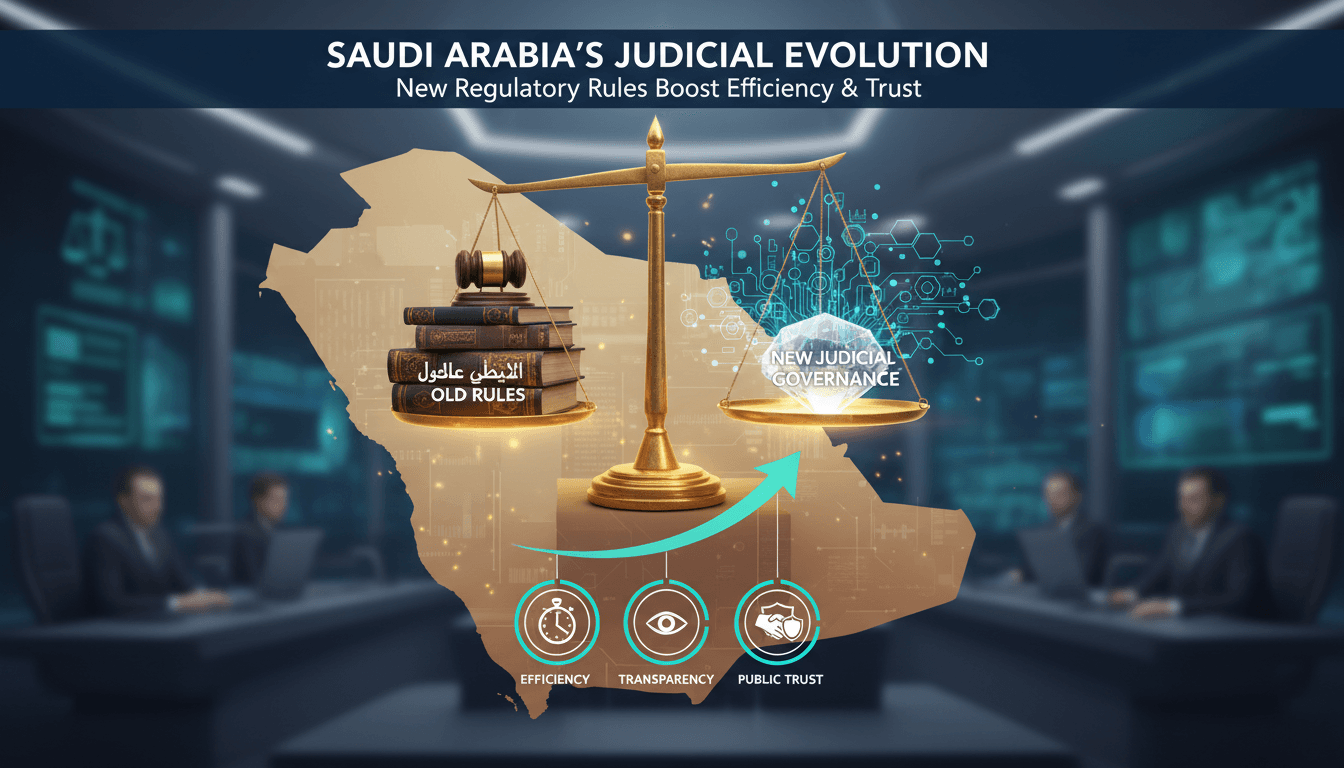
Here's what it means for you.
If you operate in or with Saudi Arabia, understanding these judicial reforms can enhance your strategic planning and compliance.
Why it matters
These reforms are part of Saudi Arabia's broader Vision 2030 initiative aimed at improving institutional efficiency and transparency.
What happened (in 30 seconds)
- Regulatory rules approved: The Supreme Judicial Council of Saudi Arabia approved new rules for court formation and case management on August 20, 2026.
- Focus on efficiency: The council emphasized enhancing judicial governance, procedural clarity, and the integration of artificial intelligence in judicial processes.
- Ongoing implementation: The approved measures are currently being implemented to strengthen the overall quality of the judiciary.
The context you actually need
- Judicial modernization: Saudi Arabia is pursuing judicial reforms as part of its Vision 2030 objectives, which aim to modernize various sectors, including the judiciary.
- Council authority: The Supreme Judicial Council has statutory authority over court administration and judge affairs, making its decisions pivotal for judicial operations.
- Technological integration: The exploration of artificial intelligence applications indicates a shift towards data-driven decision-making in judicial processes.
What's really happening
On August 20, 2026, the Supreme Judicial Council of Saudi Arabia convened in Riyadh to discuss and approve a set of regulatory rules designed to enhance judicial governance and institutional maturity. This meeting, chaired by Sheikh Dr. Walid bin Mohammed Al-Samaani, focused on several key areas: the formation of courts, the composition of chambers, and the referral and distribution of cases. The council's decisions are aimed at promoting procedural stability and optimizing case handling, which are critical for improving the efficiency of the judicial system.
The approved rules are part of a larger effort to modernize the judiciary in alignment with Saudi Arabia's Vision 2030, which emphasizes efficiency, transparency, and technological integration across public sector operations. The council also reviewed proposals for judge appointments and governance of technical offices, indicating a commitment to enhancing the quality of judicial personnel and their administrative support.
A significant aspect of the council's discussions was the exploration of artificial intelligence applications within judicial processes. This move reflects a growing trend towards leveraging technology to simplify procedures, improve quality, and support data-driven decision-making. By integrating AI, the judiciary aims to streamline operations and reduce the backlog of cases, which has been a persistent challenge.
The council's approval of these regulatory rules marks a critical step in the ongoing modernization of Saudi Arabia's judicial system. However, the immediate aftermath shows no significant local governmental responses or public reactions, suggesting that while the reforms are substantial, their impact may take time to materialize. The focus on procedural clarity and efficiency is expected to enhance the overall quality of the judiciary, but the long-term effects on the legal landscape and public trust in the system remain to be seen.
Who feels it first (and how)
- Legal professionals: Judges and lawyers will experience changes in case management and procedural clarity.
- Businesses: Companies operating in Saudi Arabia may face new compliance requirements and improved dispute resolution processes.
- Government agencies: Entities involved in judicial administration will need to adapt to new governance structures and technological tools.
What to watch next
- Implementation progress: Monitoring the rollout of these regulatory rules will be crucial to assess their effectiveness and impact on judicial efficiency.
- AI integration outcomes: Evaluating the success of AI applications in judicial processes will provide insights into the future of technology in the legal sector.
- Public perception: Tracking changes in public trust and confidence in the judiciary will be essential to understand the broader societal implications of these reforms.
The Supreme Judicial Council has approved new regulatory rules for court operations.
The integration of AI will lead to improved case management and procedural efficiency.
The long-term impact on public trust in the judiciary and the legal landscape remains uncertain.
Frequently Asked Questions
- Why it matters?
- These reforms are part of Saudi Arabia's broader Vision 2030 initiative aimed at improving institutional efficiency and transparency.
- What happened (in 30 seconds)?
- Regulatory rules approved: The Supreme Judicial Council of Saudi Arabia approved new rules for court formation and case management on August 20, 2026. Focus on efficiency: The council emphasized enhancing judicial governance, procedural clarity, and the integration of artificial intelligence in judicial processes. Ongoing implementation: The approved measures are currently being implemented to strengthen the overall quality of the judiciary.
- What's really happening?
- On August 20, 2026, the Supreme Judicial Council of Saudi Arabia convened in Riyadh to discuss and approve a set of regulatory rules designed to enhance judicial governance and institutional maturity. This meeting, chaired by Sheikh Dr. Walid bin Mohammed Al-Samaani, focused on several key areas: the formation of courts, the composition of chambers, and the referral and distribution of cases. The council's decisions are aimed at promoting procedural stability and optimizing case handling, which
- Who feels it first (and how)?
- Legal professionals: Judges and lawyers will experience changes in case management and procedural clarity. Businesses: Companies operating in Saudi Arabia may face new compliance requirements and improved dispute resolution processes. Government agencies: Entities involved in judicial administration will need to adapt to new governance structures and technological tools.
- What to watch next?
- Implementation progress: Monitoring the rollout of these regulatory rules will be crucial to assess their effectiveness and impact on judicial efficiency. AI integration outcomes: Evaluating the success of AI applications in judicial processes will provide insights into the future of technology in the legal sector. Public perception: Tracking changes in public trust and confidence in the judiciary will be essential to understand the broader societal implications of these reforms.
Arabic-language local and national news coverage from Saudi Arabia.
"Al-Jazirah is a major Saudi daily with strong emphasis on domestic reporting and official developments."
— A47 Editor
المجلس الأعلى للقضاء يعتمد قواعد تنظيمية تعزز الحوكمة والنضج المؤسسي
The Supreme Judicial Council held a meeting chaired by the Acting President, Sheikh Dr. Walid bin Mohammed Al-Samaani, to discuss various topics aimed at enhancing judicial efficiency and governance. The council adopted new regulatory rules to suppor...
English-language reporting on Saudi politics, policy, and society.
"Saudi Gazette reflects mainstream Saudi institutional perspectives."
— A47 Editor
Supreme Judiciary Council approves rules to enhance governance in judicial administration
The Supreme Judiciary Council, chaired by Minister of Justice Sheikh Walid Al-Samaani, convened in Riyadh to approve new regulatory rules aimed at enhancing governance in judicial administration. These rules focus on the formation of courts, case dis...
English-language reporting focused on Saudi Arabia and regional affairs.
"Saudi Gazette provides English-language coverage that often aligns with mainstream Saudi news priorities."
— A47 Editor
Supreme Judiciary Council approves rules to enhance governance in judicial administration
The Supreme Judiciary Council, chaired by Minister of Justice Sheikh Walid Al-Samaani, convened in Riyadh to approve new regulatory rules aimed at enhancing governance in judicial administration. These rules focus on the formation of courts, case dis...
Arabic-language reporting focused on domestic developments in Saudi Arabia.
"Okaz is a mainstream Saudi newspaper that often reflects domestic priorities and official-facing coverage."
— A47 Editor
المجلس الأعلى للقضاء يعتمد قواعد تنظيمية تعزز الحوكمة والنضج المؤسسي
The Supreme Judicial Council held a meeting chaired by the acting president, Sheikh Dr. Walid bin Muhammad Al-Samaani, to discuss various topics aimed at enhancing judicial efficiency. The council approved regulatory rules for court formation and cas...
Arabic-language coverage of Saudi, regional, and international affairs.
"Al Bilad offers mainstream Saudi newspaper coverage across domestic and broader Arab topics."
— A47 Editor
“مجلس القضاء” يبحث توظيف الذكاء الاصطناعي لتطوير الإجراءات
The Supreme Judicial Council of Saudi Arabia convened to explore the application of artificial intelligence in enhancing judicial procedures. The meeting, led by the acting president, Walid Al-Samaani, focused on the outcomes of various AI trials and...
Arabic-language reporting focused on domestic developments in Saudi Arabia.
"Okaz is a mainstream Saudi newspaper that often reflects domestic priorities and official-facing coverage."
— A47 Editor
وزير العدل يلتقي رئيس مجلس القضاء الأعلى العراقي
The Minister of Justice, Dr. Walid bin Mohammed Al-Samaani, met with the President of the Supreme Judicial Council of Iraq, Dr. Faik Zidan, in Riyadh during an official visit aimed at enhancing judicial cooperation between Saudi Arabia and Iraq. The ...