
318 RSF Fighters Defect to Sudanese Army Amid Ongoing Civil Conflict
Why it matters
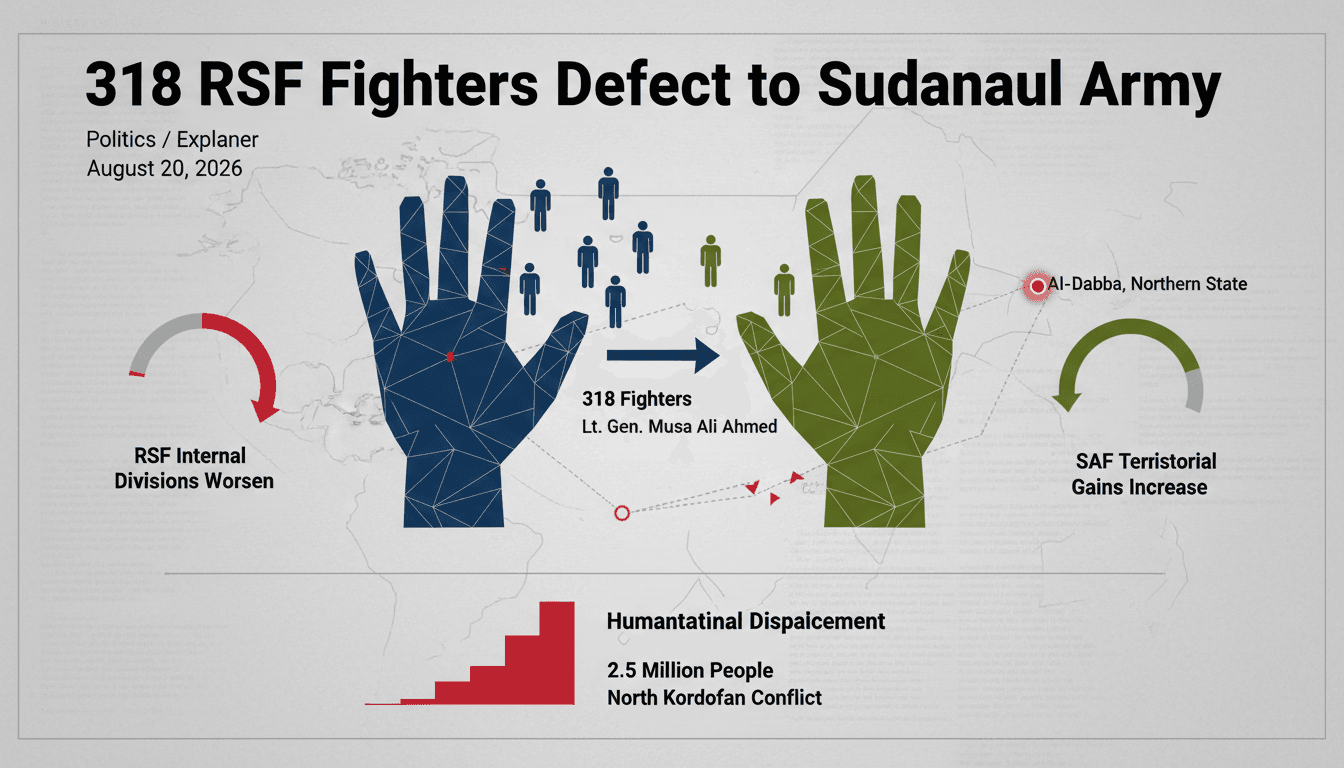
This defection highlights deepening fractures within the RSF, potentially altering the balance of power in Sudan's civil war and exacerbating humanitarian crises.
What happened (in 30 seconds)
- On August 20, 2026, 318 RSF fighters defected to the SAF, led by Lt. Gen. Musa Ali Ahmed.
- Intensified fighting in North Kordofan has led to significant territorial gains for the SAF amid ongoing RSF counterattacks.
- Humanitarian conditions are deteriorating, with over 5,000 civilians displaced and acute shortages of essential supplies reported.
The context you actually need
- Sudan's civil war began in April 2023, pitting the SAF against the RSF, with both sides vying for control over key territories.
- Defections from the RSF have been increasing since late 2024, driven by internal divisions and SAF's offers of amnesty.
- Humanitarian organizations are warning of worsening conditions for displaced populations, with critical shortages of food, medicine, and shelter.
What's really happening
The recent defection of 318 RSF fighters to the Sudanese Armed Forces (SAF) marks a significant shift in the ongoing civil war in Sudan. This event is not isolated; it reflects a broader trend of internal fractures within the RSF, which has been struggling to maintain cohesion amid increasing pressure from SAF advances and airstrikes. The defection, led by Lt. Gen. Musa Ali Ahmed, also known as Musa Khamsin, is emblematic of the challenges the RSF faces as it attempts to counteract SAF's territorial gains in North Kordofan.
The SAF has been capitalizing on these defections, welcoming the fighters as part of a strategic effort to exploit divisions within the RSF. This tactic not only bolsters SAF's military strength but also undermines the RSF's operational capabilities. The SAF's recent advances, including control over key locations like Jabal Abu Hadid, have been accompanied by airstrikes targeting RSF positions, further intensifying the conflict.
As the fighting escalates, the humanitarian situation in Sudan is deteriorating rapidly. The UN has reported that over 5,000 civilians have been displaced from conflict zones in Kordofan and Blue Nile states, with many fleeing to areas like Qaysan and ad-Damazin. Humanitarian organizations are sounding alarms over acute shortages of food, medicine, and shelter for these displaced populations. The ongoing violence not only threatens the safety of civilians but also complicates efforts to deliver much-needed aid.
The RSF's internal issues, including tribal dynamics and organizational challenges, have been cited as reasons for the defections. Prominent commanders have left the RSF in recent months, indicating a potential unraveling of the group as it faces mounting pressure from the SAF. This trend raises questions about the future of the RSF and its ability to sustain its operations in the face of SAF's growing strength.
In summary, the defection of RSF fighters to the SAF is a critical development in Sudan's civil war, reflecting deeper issues within the RSF and contributing to a worsening humanitarian crisis. As the conflict continues, the implications for regional stability and the safety of civilians remain significant.
Who feels it first (and how)
- Sudanese civilians: Facing displacement and acute shortages of essential supplies.
- Humanitarian organizations: Struggling to provide aid amid escalating violence and logistical challenges.
- Expatriate communities: Monitoring the conflict for potential impacts on remittances and family safety.
What to watch next
- Further defections from the RSF: Increased defections could weaken the RSF and shift the balance of power further in favor of the SAF.
- Humanitarian aid responses: Watch for international responses to the worsening humanitarian crisis, including potential increases in aid funding.
- Regional stability indicators: Monitor how the conflict affects neighboring countries and regional security dynamics, particularly in relation to refugee flows.
The RSF is experiencing internal fractures, leading to defections.
The humanitarian crisis will worsen as fighting continues and displacement increases.
The long-term implications for the RSF's operational capabilities and the overall outcome of the civil war.
Frequently Asked Questions
- Why it matters?
- This defection highlights deepening fractures within the RSF, potentially altering the balance of power in Sudan's civil war and exacerbating humanitarian crises.
- What happened (in 30 seconds)?
- On August 20, 2026, 318 RSF fighters defected to the SAF, led by Lt. Gen. Musa Ali Ahmed. Intensified fighting in North Kordofan has led to significant territorial gains for the SAF amid ongoing RSF counterattacks. Humanitarian conditions are deteriorating, with over 5,000 civilians displaced and acute shortages of essential supplies reported.
- What's really happening?
- The recent defection of 318 RSF fighters to the Sudanese Armed Forces (SAF) marks a significant shift in the ongoing civil war in Sudan. This event is not isolated; it reflects a broader trend of internal fractures within the RSF, which has been struggling to maintain cohesion amid increasing pressure from SAF advances and airstrikes. The defection, led by Lt. Gen. Musa Ali Ahmed, also known as Musa Khamsin, is emblematic of the challenges the RSF faces as it attempts to counteract SAF's territo
- Who feels it first (and how)?
- Sudanese civilians: Facing displacement and acute shortages of essential supplies. Humanitarian organizations: Struggling to provide aid amid escalating violence and logistical challenges. Expatriate communities: Monitoring the conflict for potential impacts on remittances and family safety.
- What to watch next?
- Further defections from the RSF: Increased defections could weaken the RSF and shift the balance of power further in favor of the SAF. Humanitarian aid responses: Watch for international responses to the worsening humanitarian crisis, including potential increases in aid funding. Regional stability indicators: Monitor how the conflict affects neighboring countries and regional security dynamics, particularly in relation to refugee flows.
Arabic-language coverage of Saudi, regional, and international affairs.
"Al Bilad offers mainstream Saudi newspaper coverage across domestic and broader Arab topics."
— A47 Editor
وسط تصاعد المعارك في كردفان ونزوح الآلاف.. انشقاق جديد يهز «الدعم السريع»
Recent developments in Sudan have seen a new split within the Rapid Support Forces amid escalating fighting in Kordofan, as the Sudanese army makes advances in northern regions and intensifies airstrikes on Rapid Support positions in Kordofan and Dar...
Arabic-language coverage of political affairs and current events.
"Okaz political coverage typically follows mainstream Saudi framing on national and regional affairs."
— A47 Editor
انشقاق جديد يضرب الدعم السريع شمال كردفان
Ongoing battles in North Kordofan between the Sudanese army and the Rapid Support Forces (RSF) have led to the surrender and defection of several RSF groups, which handed over 50 combat vehicles to the army. This development coincides with the army's...
Pan-Arab news coverage spanning politics, business, sports, and regional affairs.
"Asharq Al-Awsat reflects a broad Arab editorial perspective with strong attention to regional geopolitics."
— A47 Editor
الحرب توسّع النزوح والحشود مستمرة في جبهات السودان
More than 12 people have died and others have been injured in North Kordofan as the Sudanese army conducted airstrikes against gatherings of the Rapid Support Forces in the state. The ongoing conflict has led to increased displacement and military mo...