
Trump Orders Reduction of U.S.-South Korea Military Exercises Amid North Korean Dismissal
Here's what it means for you.
If you’re in the defense sector or involved in international relations, this shift could reshape strategic alliances and military readiness in the Asia-Pacific region.
Why it matters
This decision reflects changing U.S. military priorities and could influence regional security dynamics, impacting global markets and defense contracts.
What happened (in 30 seconds)
- Trump ordered a reduction in the Ulchi Freedom Shield military exercises with South Korea, shortening them from August 27 to August 21, 2026.
- Kim Yo Jong dismissed the move as insignificant, asserting that the drills remain provocative despite their reduced scale.
- South Korea confirmed the changes without prior consultation, indicating potential strains in U.S.-South Korea relations.
The context you actually need
- Long-standing tensions: U.S.-South Korea joint military exercises have historically been viewed by North Korea as rehearsals for invasion, escalating tensions on the Korean Peninsula.
- Trump's previous engagement: During his first term, Trump engaged in diplomacy with Kim Jong Un, leading to a temporary halt in some military drills, which he cites as a reason for the current reduction.
- Fiscal considerations: Trump cited high costs and South Korea's lack of support for U.S. actions against Iran as reasons for scaling back the exercises, reflecting a shift in U.S. defense spending priorities.
What's really happening
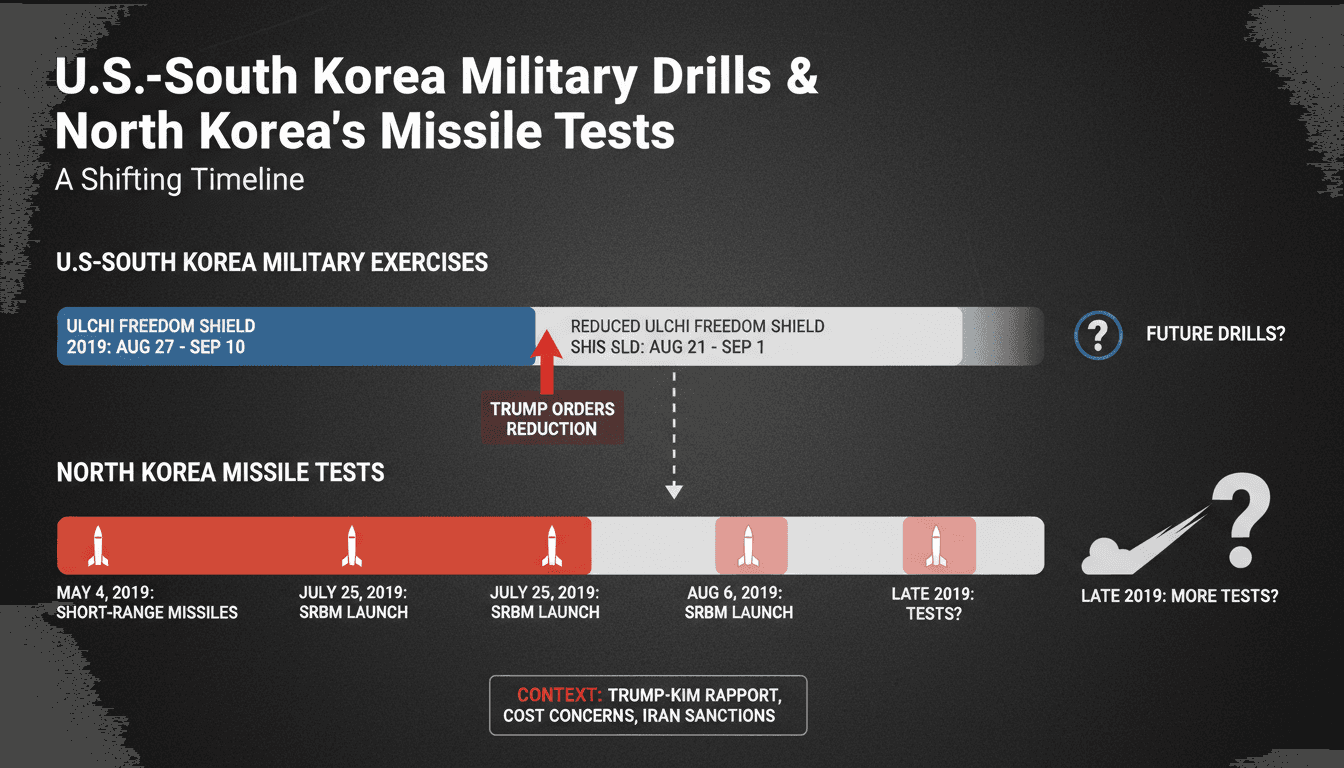
On August 16, 2026, President Donald Trump announced via Truth Social that he had ordered the Pentagon to significantly reduce the scale of the annual Ulchi Freedom Shield military exercises, which are conducted jointly with South Korea. This decision came as a surprise to many, particularly South Korean officials, who were not consulted prior to the announcement. The exercises, originally set to run until August 27, were cut short by six days, ending on August 21.
Trump's rationale for this reduction centers on his "very good relationship" with North Korean leader Kim Jong Un, as well as concerns over the financial burden of these military drills. He expressed dissatisfaction with the scale of the exercises and highlighted South Korea's refusal to assist the U.S. in its actions against Iran as a contributing factor. This move is part of a broader trend in U.S. foreign policy, where military engagements are being reassessed in light of fiscal constraints and shifting geopolitical priorities.
In response, Kim Yo Jong, the sister of Kim Jong Un, publicly dismissed the U.S. decision, stating that North Korea has "no interest at all" in the scaled-back drills. She emphasized that the aggressive nature of the exercises remains unchanged, suggesting that North Korea views any military activity by the U.S. and South Korea as a threat, regardless of its scale. This dismissal indicates that North Korea may continue its provocative actions, including missile tests, as a means of asserting its stance against perceived threats.
The South Korean military confirmed the adjusted timeline of the exercises but stated that it would maintain its combined defense posture with the U.S. This situation highlights the delicate balance of military readiness and diplomatic relations in the region. The reduction of military exercises could lead to a perception of weakness or disengagement by the U.S., potentially emboldening North Korea to escalate its military activities further.
Overall, this decision reflects a complex interplay of diplomatic relations, military strategy, and fiscal responsibility, with implications that extend beyond the Korean Peninsula. The U.S. is navigating a challenging landscape where it must balance its commitments to allies with the realities of budget constraints and shifting global dynamics.
Who feels it first (and how)
- Defense contractors: Companies involved in military equipment and technology may see shifts in contracts and funding based on reduced military exercises.
- U.S. military personnel: Troops stationed in South Korea may experience changes in training and readiness protocols.
- South Korean government: Officials may face pressure to reassess their defense strategies and diplomatic relations with both the U.S. and North Korea.
What to watch next
- Future military exercises: Monitor any announcements regarding the rescheduling or further scaling back of military drills, as they will indicate U.S. commitment to regional security.
- North Korean missile tests: Keep an eye on North Korea's military activities, as increased provocations could lead to heightened tensions and potential responses from the U.S. and South Korea.
- U.S.-South Korea relations: Watch for diplomatic communications between the U.S. and South Korea, as any signs of strain could impact regional stability and defense strategies.
The Ulchi Freedom Shield exercises have been shortened from August 27 to August 21, 2026.
North Korea may continue its missile tests and military provocations in response to perceived threats.
The long-term impact on U.S.-South Korea relations and regional security dynamics remains uncertain.
Frequently Asked Questions
- Why it matters?
- This decision reflects changing U.S. military priorities and could influence regional security dynamics, impacting global markets and defense contracts.
- What happened (in 30 seconds)?
- Trump ordered a reduction in the Ulchi Freedom Shield military exercises with South Korea, shortening them from August 27 to August 21, 2026. Kim Yo Jong dismissed the move as insignificant, asserting that the drills remain provocative despite their reduced scale. South Korea confirmed the changes without prior consultation, indicating potential strains in U.S.-South Korea relations.
- What's really happening?
- On August 16, 2026, President Donald Trump announced via Truth Social that he had ordered the Pentagon to significantly reduce the scale of the annual Ulchi Freedom Shield military exercises, which are conducted jointly with South Korea. This decision came as a surprise to many, particularly South Korean officials, who were not consulted prior to the announcement. The exercises, originally set to run until August 27, were cut short by six days, ending on August 21. Trump's rationale for this re
- Who feels it first (and how)?
- Defense contractors: Companies involved in military equipment and technology may see shifts in contracts and funding based on reduced military exercises. U.S. military personnel: Troops stationed in South Korea may experience changes in training and readiness protocols. South Korean government: Officials may face pressure to reassess their defense strategies and diplomatic relations with both the U.S. and North Korea.
- What to watch next?
- Future military exercises: Monitor any announcements regarding the rescheduling or further scaling back of military drills, as they will indicate U.S. commitment to regional security. North Korean missile tests: Keep an eye on North Korea's military activities, as increased provocations could lead to heightened tensions and potential responses from the U.S. and South Korea. U.S.-South Korea relations: Watch for diplomatic communications between the U.S. and South Korea, as any signs of strai
Arabic-language coverage of political affairs and current events.
"Okaz political coverage typically follows mainstream Saudi framing on national and regional affairs."
— A47 Editor
ترمب يقلّص المناورات مع سول.. شقيقة زعيم كوريا الشمالية: لا نهتم
Kim Yo-jong, sister of North Korean leader Kim Jong-un, downplayed the significance of the U.S. decision to reduce joint military exercises with South Korea, stating that Pyongyang is not interested in the matter. She emphasized that the nature of th...
Arabic-language coverage of international news and geopolitics.
"RT Arabic is a Russian state-funded outlet often criticized for promoting Kremlin-aligned narratives."
— A47 Editor
كيم يو جونغ تهدد اليابان بـ"ضربة مدمرة فورية" في حال أي توسع عسكري
Kim Yo Jong, the sister of North Korean leader Kim Jong Un, has threatened Japan with an 'immediate devastating strike' if it attempts any military expansion. This statement underscores the heightened tensions in the region regarding military activit...
Arabic-language coverage of international news and geopolitics.
"RT Arabic is a Russian state-funded outlet often criticized for promoting Kremlin-aligned narratives."
— A47 Editor
شقيقة زعيم كوريا الشمالية تعلق على قرار واشنطن تقليص حجم التدريبات المشتركة مع سيئول
North Korea has expressed complete indifference to the decision made by the United States and South Korea to halve the scale of their joint military exercises, regardless of their size or duration. This statement reflects the ongoing tensions in the ...
Pan-Arab news coverage spanning politics, business, sports, and regional affairs.
"Asharq Al-Awsat reflects a broad Arab editorial perspective with strong attention to regional geopolitics."
— A47 Editor
ترمب يلمّح إلى تواصل مع كيم بعد تقليص المناورات العسكرية مع كوريا الجنوبية
U.S. President Donald Trump indicated that North Korean leader Kim Jong-un has responded positively to his recent initiatives, following a reduction in military exercises with South Korea. This move comes as part of an effort to ease tensions on the ...