
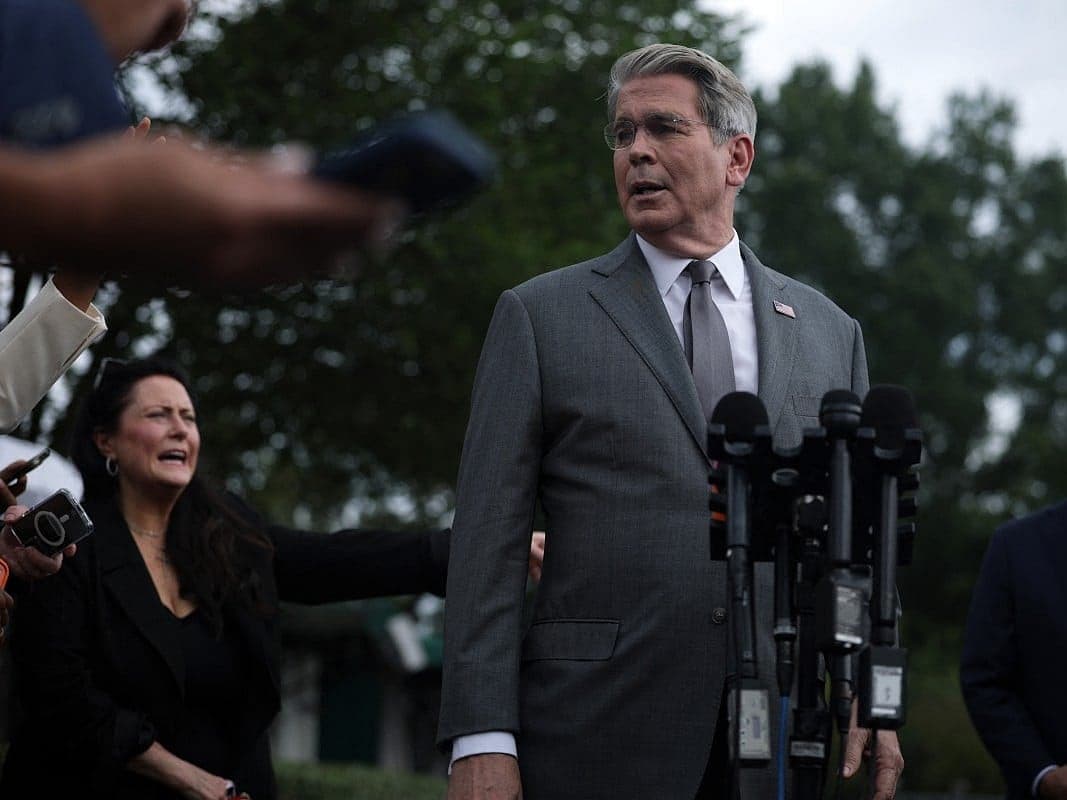
US Treasury Secretary Scott Bessent Calls for Global Support in Economic Pressure Campaign Against Iran
Why it matters
This campaign could reshape international economic relations and impact global oil markets.
What happened (in 30 seconds)
- On August 20, 2026, US Treasury Secretary Scott Bessent called for allied and Chinese support for intensified sanctions against Iran.
- The US-Iran conflict, now six months old, has prompted a shift from military to economic strategies amid domestic political pressures.
- Bessent framed the initiative as the "greatest coordinated economic isolation in the history of the world," issuing a stark ultimatum to nations.
The context you actually need
- The US-Iran conflict escalated from military engagements and Iranian actions in the Strait of Hormuz, leading to a complex geopolitical landscape.
- Domestic opposition in the US regarding the war's costs has forced a pivot to economic measures, aiming to avoid further military escalation.
- China's role is crucial, as its cooperation is sought to enhance the effectiveness of sanctions, while it simultaneously advocates for diplomatic solutions.
What's really happening
The US Treasury's call for a coordinated economic pressure campaign against Iran marks a significant shift in strategy, moving from military engagement to economic warfare. This pivot comes at a time when the US-Iran conflict has reached a critical six-month mark, characterized by military strikes and heightened tensions in the Gulf region. The decision to emphasize economic measures is largely influenced by domestic political pressures, particularly with midterm elections looming. The Trump administration is keen to demonstrate a strong stance against Iran while mitigating the costs associated with prolonged military operations.
Treasury Secretary Scott Bessent's declaration of the campaign as the "greatest coordinated economic isolation in the history of the world" underscores the ambition behind this initiative. By framing the situation as a binary choice—"with us or against us"—the US aims to galvanize international support, particularly from allies and China. The upcoming summit between President Trump and Chinese President Xi Jinping on September 24, 2026, is pivotal, as it will likely focus on Iran and the broader implications of the sanctions.
The economic strategy hinges on leveraging existing sanctions while seeking broader international enforcement. This approach aims to collapse the Iranian regime through crippling economic isolation, which could have far-reaching consequences not only for Iran but also for global markets, particularly oil. The potential for supply disruptions could lead to increased volatility in oil prices, affecting economies reliant on stable energy supplies.
Moreover, the response from China has been cautious, as it advocates for diplomatic resolutions rather than economic warfare. This divergence in approach highlights the complexities of international relations and the potential for friction between the US and China, especially as both nations navigate their respective interests in the Middle East.
As the situation unfolds, the implications for regional stability and global trade are significant. Dubai, for instance, may experience economic strain due to disrupted trade routes and reduced tourism, reflecting the interconnectedness of global markets in the face of geopolitical tensions.
Who feels it first (and how)
- Global traders: Increased volatility in oil prices and potential supply disruptions.
- Financial institutions: Heightened risk assessments and adjustments in investment strategies.
- Middle Eastern economies: Vulnerabilities in trade-dependent models, particularly in Dubai.
- US allies: Pressure to align with US sanctions, impacting their own economic relations with Iran.
- Iranian officials: Balancing military preparedness with a willingness to negotiate under pressure.
What to watch next
- Details of additional sanctions: Expected on August 24, 2026, these will clarify the extent of economic measures and their potential impact.
- Reactions from China: The outcome of the Xi-Trump summit will indicate whether China will support or resist US efforts, shaping future diplomatic relations.
- Market responses: Watch for fluctuations in oil prices and regional market stability as the campaign unfolds.
The US is pursuing a coordinated economic pressure campaign against Iran.
Increased volatility in global oil markets and potential disruptions in trade routes.
The long-term effectiveness of sanctions in achieving US objectives without military escalation.
Frequently Asked Questions
- Why it matters?
- This campaign could reshape international economic relations and impact global oil markets.
- What happened (in 30 seconds)?
- On August 20, 2026, US Treasury Secretary Scott Bessent called for allied and Chinese support for intensified sanctions against Iran. The US-Iran conflict, now six months old, has prompted a shift from military to economic strategies amid domestic political pressures. Bessent framed the initiative as the "greatest coordinated economic isolation in the history of the world," issuing a stark ultimatum to nations.
- What's really happening?
- The US Treasury's call for a coordinated economic pressure campaign against Iran marks a significant shift in strategy, moving from military engagement to economic warfare. This pivot comes at a time when the US-Iran conflict has reached a critical six-month mark, characterized by military strikes and heightened tensions in the Gulf region. The decision to emphasize economic measures is largely influenced by domestic political pressures, particularly with midterm elections looming. The Trump adm
- Who feels it first (and how)?
- Global traders: Increased volatility in oil prices and potential supply disruptions. Financial institutions: Heightened risk assessments and adjustments in investment strategies. Middle Eastern economies: Vulnerabilities in trade-dependent models, particularly in Dubai. US allies: Pressure to align with US sanctions, impacting their own economic relations with Iran. Iranian officials: Balancing military preparedness with a willingness to negotiate under pressure.
- What to watch next?
- Details of additional sanctions: Expected on August 24, 2026, these will clarify the extent of economic measures and their potential impact. Reactions from China: The outcome of the Xi-Trump summit will indicate whether China will support or resist US efforts, shaping future diplomatic relations. Market responses: Watch for fluctuations in oil prices and regional market stability as the campaign unfolds.
Global news coverage with extensive reporting on Middle Eastern conflicts and geopolitics.
"Al Jazeera is a Qatar-based broadcaster known for wide regional coverage and alternative perspectives."
— A47 Editor
US allies in Asia wary as Trump moves military assets for Iran war
U.S. allies in Asia are expressing concern as President Trump reallocates military assets to prepare for potential conflict with Iran, raising fears about the U.S. ability to deter China while focusing on the Middle East. This shift in military strat...
Comprehensive coverage of Middle Eastern and global issues.
"Al Jazeera is a prominent voice from the Global South, especially the Middle East, with an emphasis on underreported stories."
— A47 Editor
US allies in Asia wary as Trump moves military assets for Iran war
U.S. allies in Asia are expressing concern as President Trump reallocates military assets to prepare for potential conflict with Iran, raising fears about the U.S. ability to deter China while focusing on the Middle East. This shift in military strat...
UAE-based newspaper covering Gulf politics, society, and international developments.
"Gulf News is one of the UAE’s most prominent English-language publications."
— A47 Editor
US pushes allies, China to back Trump's economic war on Iran
The United States is intensifying its economic campaign against Iran, urging allies and China to support President Trump's strategy of economic warfare. This includes threats of severe sanctions against any nation that engages in trade with Iran, whi...
A curated Gulf News feed featuring major stories across news, business, opinion, and lifestyle.
"Gulf News is a major UAE newspaper whose featured stories feed reflects a broad editorial mix shaped for a Gulf audience."
— A47 Editor
US pushes allies, China to back Trump's economic war on Iran
The United States is intensifying its economic campaign against Iran, urging allies and China to support President Trump's strategy of economic warfare. This includes threats of severe sanctions against any nation that engages in trade with Iran, whi...
English-language news from Qatar covering domestic and regional affairs.
"Gulf Times reflects Qatari perspectives on regional developments."
— A47 Editor
US warns allies, China to back economic war on Iran
The United States has issued a warning to its allies and China, urging them to support President Donald Trump's economic campaign aimed at isolating Iran and destabilizing its government. This initiative follows a series of escalating tensions and mi...