
US Treasury Redesignates Hezbollah as Iranian Proxy and Imposes Sanctions on Cash Smuggling Network
Why it matters
This redesignation and the accompanying sanctions could reshape financial flows in the Middle East, impacting businesses and individuals connected to these networks.
What happened (in 30 seconds)
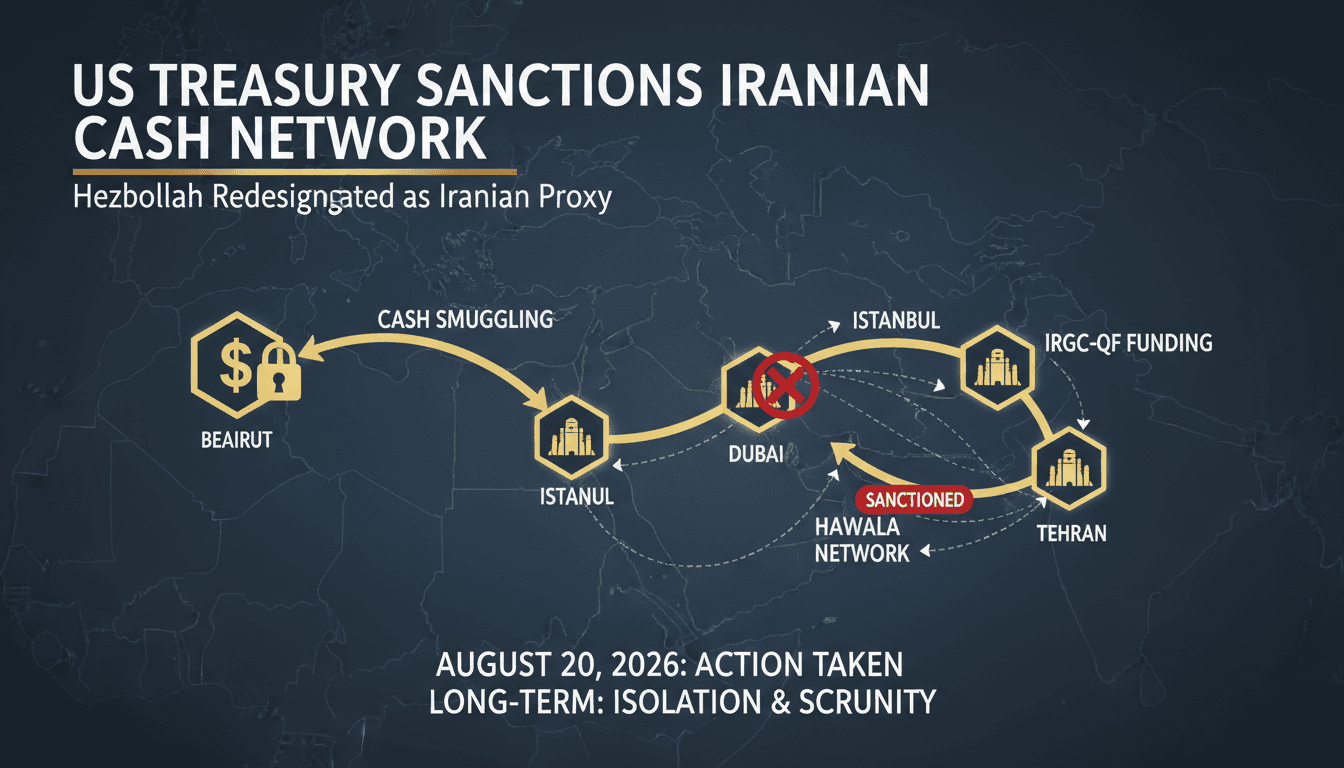
- On August 20, 2026, the US Treasury redesignated Hezbollah as an Iranian proxy under the IRGC-QF, emphasizing its operational ties to Iran.
- Ten individuals, including Turkish businessman Yunus Alper Yilmaz, were sanctioned for facilitating a cash smuggling network transferring hundreds of millions of dollars.
- This action aligns with ongoing US efforts to economically isolate Iran amid escalating regional conflicts and stalled ceasefire talks.
The context you actually need
- Hezbollah has been designated a terrorist organization by the US since 1997, with documented ties to the IRGC-QF, indicating a long-standing relationship.
- The sanctions target a cash smuggling network that allegedly moves funds outside formal banking channels, complicating enforcement of existing sanctions.
- The backdrop includes ongoing hostilities in the region, with Hezbollah's rocket attacks on Israel and subsequent military responses, highlighting the urgency of US actions.
What's really happening
The US Treasury's redesignation of Hezbollah as an Iranian proxy under the command of the IRGC-QF is a strategic move aimed at tightening the economic noose around Iran and its affiliates. By explicitly framing Hezbollah as an extension of Iranian military influence, the US is signaling a shift in its approach to countering Iranian activities in the region. This action is not merely symbolic; it has real implications for how Hezbollah operates financially and logistically.
The sanctions imposed on individuals involved in a cash smuggling network reveal a sophisticated method of circumventing existing financial restrictions. The network reportedly facilitated the transfer of hundreds of millions of dollars using commercial airline couriers, a tactic that exploits the gaps in international financial oversight. This method allows Hezbollah to maintain its operational capabilities while evading scrutiny from traditional banking systems.
The US aims to disrupt these financial flows, which are crucial for Hezbollah's operations, especially in light of the ongoing conflict with Israel. By targeting the financial underpinnings of Hezbollah, the US hopes to weaken its military capabilities and influence in Lebanon and beyond. This move also serves to reinforce the US's commitment to its allies in the region, particularly Israel, by demonstrating a proactive stance against Iranian proxies.
Moreover, the sanctions could lead to increased scrutiny of financial transactions involving the UAE, a key player in the region's economy. The explicit mention of cash movements through the UAE suggests that businesses and individuals engaged in trade or financial activities linked to Lebanon may face heightened regulatory oversight. This could impact everything from banking practices to the operations of businesses that rely on informal value transfer systems.
As the US continues to apply economic pressure on Iran, the implications of these sanctions extend beyond Hezbollah. They signal a broader strategy to isolate Iran economically and politically, potentially leading to further regional instability. The interconnectedness of financial systems means that these sanctions could have ripple effects, influencing markets and trade relationships across the Middle East.
Who feels it first (and how)
- Financial institutions: Increased compliance requirements and scrutiny on transactions linked to Lebanon and the UAE.
- Businesses in the UAE: Potential disruptions in trade and increased regulatory oversight on financial dealings.
- Individuals involved in cash transfers: Heightened risk of sanctions enforcement and legal repercussions for facilitating informal financial networks.
What to watch next
- Increased regulatory scrutiny: Watch for changes in compliance requirements for financial institutions dealing with Lebanon and the UAE, which could impact transaction speeds and costs.
- Responses from Iran and Hezbollah: Monitor how Iran and Hezbollah adapt to these sanctions, including potential shifts in funding strategies or operational tactics.
- Regional diplomatic developments: Keep an eye on US mediation efforts in Israel-Lebanon talks, as these sanctions could influence negotiations and regional stability.
The US has officially redesignated Hezbollah as an Iranian proxy and imposed sanctions on individuals facilitating cash transfers.
Increased scrutiny on financial transactions involving Lebanon and the UAE will affect businesses and individuals connected to these networks.
The long-term impact on Hezbollah's operational capabilities and the broader geopolitical landscape in the Middle East remains uncertain.
Frequently Asked Questions
- Why it matters?
- This redesignation and the accompanying sanctions could reshape financial flows in the Middle East, impacting businesses and individuals connected to these networks.
- What happened (in 30 seconds)?
- On August 20, 2026, the US Treasury redesignated Hezbollah as an Iranian proxy under the IRGC-QF, emphasizing its operational ties to Iran. Ten individuals, including Turkish businessman Yunus Alper Yilmaz, were sanctioned for facilitating a cash smuggling network transferring hundreds of millions of dollars. This action aligns with ongoing US efforts to economically isolate Iran amid escalating regional conflicts and stalled ceasefire talks.
- What's really happening?
- The US Treasury's redesignation of Hezbollah as an Iranian proxy under the command of the IRGC-QF is a strategic move aimed at tightening the economic noose around Iran and its affiliates. By explicitly framing Hezbollah as an extension of Iranian military influence, the US is signaling a shift in its approach to countering Iranian activities in the region. This action is not merely symbolic; it has real implications for how Hezbollah operates financially and logistically. The sanctions imposed
- Who feels it first (and how)?
- Financial institutions: Increased compliance requirements and scrutiny on transactions linked to Lebanon and the UAE. Businesses in the UAE: Potential disruptions in trade and increased regulatory oversight on financial dealings. Individuals involved in cash transfers: Heightened risk of sanctions enforcement and legal repercussions for facilitating informal financial networks.
- What to watch next?
- Increased regulatory scrutiny: Watch for changes in compliance requirements for financial institutions dealing with Lebanon and the UAE, which could impact transaction speeds and costs. Responses from Iran and Hezbollah: Monitor how Iran and Hezbollah adapt to these sanctions, including potential shifts in funding strategies or operational tactics. Regional diplomatic developments: Keep an eye on US mediation efforts in Israel-Lebanon talks, as these sanctions could influence negotiations an
Global news coverage with extensive reporting on Middle Eastern conflicts and geopolitics.
"Al Jazeera is a Qatar-based broadcaster known for wide regional coverage and alternative perspectives."
— A47 Editor
US designates Hezbollah an Iranian proxy, sanctions funding network
The US Treasury has officially designated Hezbollah as an Iranian proxy, labeling the group as an extension of Iran's Islamic Revolutionary Guard Corps (IRGC) Quds Force, and has imposed sanctions targeting its funding network. This move underscores ...
Comprehensive coverage of Middle Eastern and global issues.
"Al Jazeera is a prominent voice from the Global South, especially the Middle East, with an emphasis on underreported stories."
— A47 Editor
US designates Hezbollah an Iranian proxy, sanctions funding network
The US Treasury has officially designated Hezbollah as an Iranian proxy, labeling the group as an extension of Iran's Islamic Revolutionary Guard Corps (IRGC) Quds Force, and has imposed sanctions targeting its funding network. This move underscores ...
Regional and international reporting focused on Middle Eastern politics, diplomacy, and economics.
"Asharq Al-Awsat is a Saudi-owned international newspaper reflecting mainstream Gulf political perspectives."
— A47 Editor
US Hits Hezbollah with Fresh Sanctions, Says Iran Controls it
The United States has imposed fresh sanctions on Hezbollah, designating the group as an Iranian proxy and emphasizing its ties to Iran's Islamic Revolutionary Guard Corps (IRGC). This action targets individuals and networks involved in financing Hezb...
UAE-based English-language newspaper covering regional politics, economics, and global affairs.
"The National reflects Emirati policy perspectives while maintaining international editorial standards."
— A47 Editor
US redesignates Hezbollah as terrorist group under Iran's control and targets its cash-smuggling networks
Regional coverage and analysis focused on politics, diplomacy, and business across the Middle East.
"Al-Monitor is known for analytical reporting on Middle East politics and policy developments."
— A47 Editor
US Treasury issues Hezbollah sanctions, labels group Iran-linked
The US Treasury has imposed sanctions targeting couriers transporting funds for Hezbollah on commercial flights across the region, labeling the group as linked to Iran. This action reflects ongoing concerns about Hezbollah's financing and its implica...
Regional coverage and analysis focused on politics, diplomacy, and business across the Middle East.
"Al-Monitor is known for analytical reporting on Middle East politics and policy developments."
— A47 Editor
US hits Hezbollah with fresh sanctions, emphasizing ties to Iranian government
The United States has imposed new sanctions on Hezbollah, re-designating the group for its actions on behalf of the Iranian government, particularly under the command of Iran’s Islamic Revolutionary Guard Corps-Quds Force. This move underscores the U...