
USS Abraham Lincoln Faces Operational Strains Amid Ongoing Iran Conflict
Why it matters
The ongoing logistical challenges faced by the US Navy highlight vulnerabilities in military readiness and supply chains, which could have broader implications for international stability.
What happened (in 30 seconds)
- Reports surfaced on August 19, 2026, detailing operational strains aboard the USS Abraham Lincoln due to extended deployment amid the Iran conflict.
- Supply shortages and maintenance challenges have intensified, with the carrier operating over 250 days at sea without port calls.
- Democratic lawmakers are calling for congressional probes into the Navy's logistics and readiness as the USS Lincoln prepares to rotate out with the USS George Washington.
The context you actually need
- The US-Israeli military campaign against Iran began in February 2026, following escalating tensions in the region.
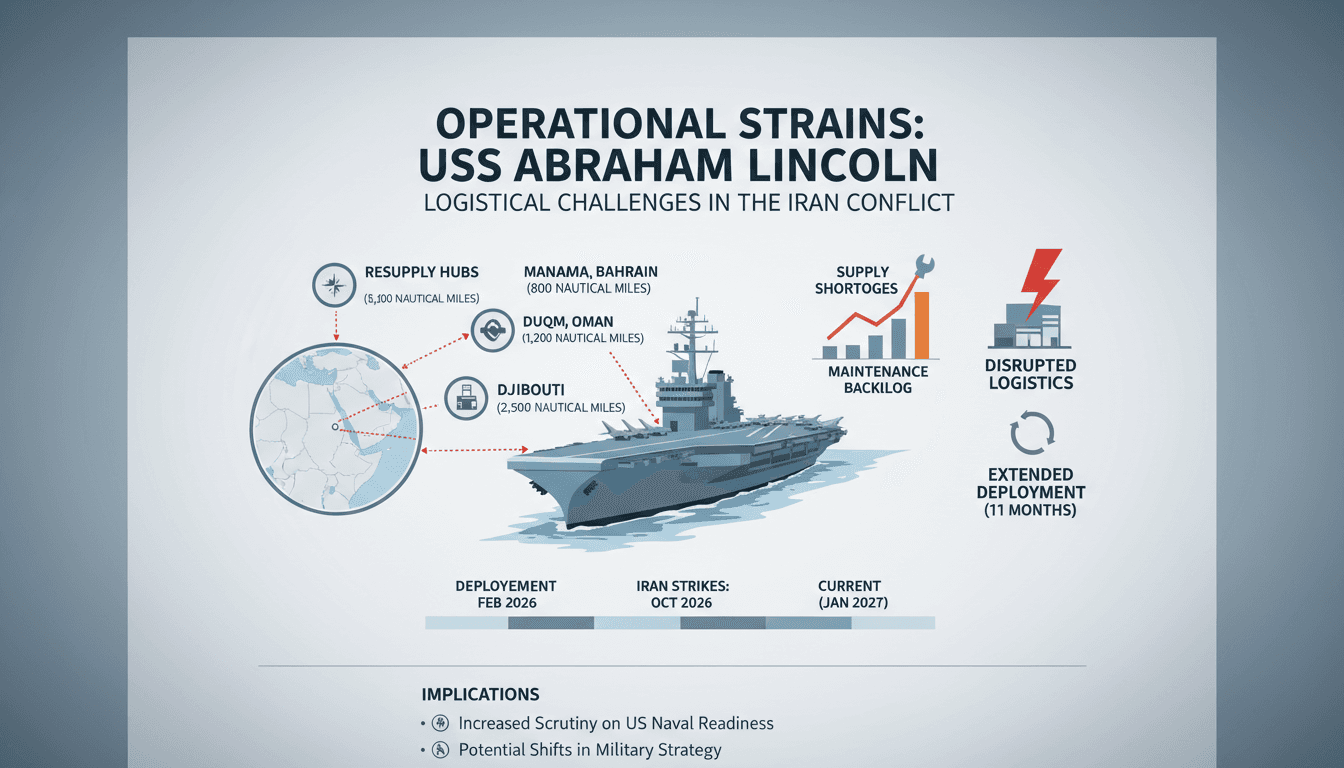
- Iranian strikes on the Bahrain naval base disrupted established logistics chains, forcing reliance on distant resupply hubs like Diego Garcia, located 3,540 km away.
- The conflict has evolved into a stalemate, complicating US objectives and increasing the strain on naval resources.
What's really happening
The USS Abraham Lincoln's extended deployment is a direct response to the ongoing military conflict with Iran, which has now entered a protracted phase. Initially deployed in November 2025, the carrier has faced unprecedented operational demands, resulting in over 250 days at sea without the opportunity for crew rest or resupply. This situation has led to significant logistical challenges, including shortages of essential supplies and maintenance issues that have raised concerns about crew welfare.
The damage to the Bahrain naval base early in the conflict forced the US Navy to pivot to resupply operations from Diego Garcia, a logistics hub located approximately 3,540 km away. This distance complicates timely resupply efforts, leading to shortages of basic items and increasing the mental strain on the crew. Reports of incidents related to crew mental health, including overboard attempts, underscore the human cost of prolonged deployments under austere conditions.
The Pentagon has acknowledged the challenging wartime conditions but has disputed characterizations of a dire status aboard the USS Lincoln. However, the operational strains have prompted Democratic lawmakers to express concerns about the Navy's readiness and the sustainability of its current strategy. They have drawn parallels to previous issues faced by the USS Gerald Ford, suggesting systemic problems within the Navy's logistics and operational planning.
As the USS Lincoln prepares to return home, the USS George Washington is being redeployed from Japan to take its place. This rotation raises questions about the US Navy's ability to maintain a robust presence in the region, especially given the depletion of carrier resources in the western Pacific. Experts have highlighted the asymmetrical threats posed by Iranian forces, including drone and missile capabilities, which further complicate the Navy's operational effectiveness.
The implications of these logistical challenges extend beyond military readiness. They could impact US deterrence posture in the region and raise questions about the sustainability of the current military strategy against Iran. As the conflict continues, the US Navy's ability to project power and maintain operational effectiveness will be critical in shaping the outcome of this prolonged engagement.
Who feels it first (and how)
- US Navy personnel: Facing extended deployments and operational strains, impacting morale and mental health.
- Defense contractors: Potential shifts in military contracts and logistics support due to changing operational needs.
- Energy markets: Increased tensions in the Strait of Hormuz could lead to fluctuations in oil prices and supply chain disruptions.
- Gulf states, including Dubai: Heightened security measures and potential impacts on maritime traffic and energy routes.
What to watch next
- Carrier rotations: Monitor the effectiveness of the USS George Washington as it takes over operations from the USS Lincoln, which could indicate the Navy's logistical adaptability.
- Congressional inquiries: Watch for developments from Democratic lawmakers regarding Navy logistics and readiness, which could lead to policy changes or increased funding.
- Iranian military actions: Keep an eye on Iranian responses to US naval deployments, as escalations could further strain US resources and impact global markets.
The USS Abraham Lincoln has faced significant operational strains during its extended deployment.
The US Navy will continue to experience logistical challenges as the conflict with Iran persists.
The long-term implications for US military strategy and regional stability remain uncertain.
Frequently Asked Questions
- Why it matters?
- The ongoing logistical challenges faced by the US Navy highlight vulnerabilities in military readiness and supply chains, which could have broader implications for international stability.
- What happened (in 30 seconds)?
- Reports surfaced on August 19, 2026, detailing operational strains aboard the USS Abraham Lincoln due to extended deployment amid the Iran conflict. Supply shortages and maintenance challenges have intensified, with the carrier operating over 250 days at sea without port calls. Democratic lawmakers are calling for congressional probes into the Navy's logistics and readiness as the USS Lincoln prepares to rotate out with the USS George Washington.
- What's really happening?
- The USS Abraham Lincoln's extended deployment is a direct response to the ongoing military conflict with Iran, which has now entered a protracted phase. Initially deployed in November 2025, the carrier has faced unprecedented operational demands, resulting in over 250 days at sea without the opportunity for crew rest or resupply. This situation has led to significant logistical challenges, including shortages of essential supplies and maintenance issues that have raised concerns about crew welfa
- Who feels it first (and how)?
- US Navy personnel: Facing extended deployments and operational strains, impacting morale and mental health. Defense contractors: Potential shifts in military contracts and logistics support due to changing operational needs. Energy markets: Increased tensions in the Strait of Hormuz could lead to fluctuations in oil prices and supply chain disruptions. Gulf states, including Dubai: Heightened security measures and potential impacts on maritime traffic and energy routes.
- What to watch next?
- Carrier rotations: Monitor the effectiveness of the USS George Washington as it takes over operations from the USS Lincoln, which could indicate the Navy's logistical adaptability. Congressional inquiries: Watch for developments from Democratic lawmakers regarding Navy logistics and readiness, which could lead to policy changes or increased funding. Iranian military actions: Keep an eye on Iranian responses to US naval deployments, as escalations could further strain US resources and impact
Global news coverage with extensive reporting on Middle Eastern conflicts and geopolitics.
"Al Jazeera is a Qatar-based broadcaster known for wide regional coverage and alternative perspectives."
— A47 Editor
USS Lincoln woes highlight US Navy limits in prolonged Iran war: Experts
The USS Lincoln is currently facing severe operational challenges during its prolonged deployment in the Middle East, including food shortages and plumbing failures, which have raised significant concerns about the well-being of its crew. Reports ind...
Comprehensive coverage of Middle Eastern and global issues.
"Al Jazeera is a prominent voice from the Global South, especially the Middle East, with an emphasis on underreported stories."
— A47 Editor
USS Lincoln woes highlight US Navy limits in prolonged Iran war: Experts
The USS Lincoln is currently facing severe operational challenges during its prolonged deployment in the Middle East, including food shortages and plumbing failures, which have raised significant concerns about the well-being of its crew. Reports ind...
International coverage of politics, culture, and current affairs.
"BBC News is widely regarded as a reputable international news organization, known for its impartial tone and public service mandate."
— A47 Editor
Tracking USS Lincoln's months-long mission as concerns about conditions grow
The USS Lincoln has been on a prolonged deployment in the Middle East, with reports indicating severe conditions aboard, including food shortages and plumbing failures. Satellite imagery from BBC Verify has tracked the warship during one of the longe...
International coverage of politics, culture, and current affairs.
"BBC News is widely regarded as a reputable international news organization, known for its impartial tone and public service mandate."
— A47 Editor
'A floating prison' - sailors describe life on warships like USS Abraham Lincoln
Concerns have escalated regarding the living conditions aboard the USS Abraham Lincoln, which has been deployed since December 11, 2025. Reports indicate severe issues such as food shortages, plumbing failures, and a mental health crisis among sailor...