
US Treasury Sanctions Hezbollah Financial Network and Reclassifies Group as Iranian Proxy
Why it matters
These sanctions heighten financial pressure on Hezbollah while complicating compliance for Lebanese institutions and businesses.
What happened (in 30 seconds)
- On August 20, 2026, the US Treasury imposed sanctions on a Hezbollah-linked cash-smuggling network, designating ten individuals involved.
- Hezbollah was reclassified as an Iranian proxy under the IRGC-Quds Force, shifting its portrayal from an independent actor to a direct agent of Iran.
- Lebanese institutions are now under increased scrutiny for compliance with anti-money laundering regulations, potentially straining the local economy.
The context you actually need
- Hezbollah has been designated a Foreign Terrorist Organization since 1997, with ongoing sanctions targeting its financing networks.
- The August 2026 sanctions build on previous measures, including those from June 2026, which targeted Lebanese officials linked to Hezbollah.
- The US aims to isolate Hezbollah financially amid rising tensions with Iran and its regional affiliates, framing the group as a direct extension of Iranian influence.
What's really happening
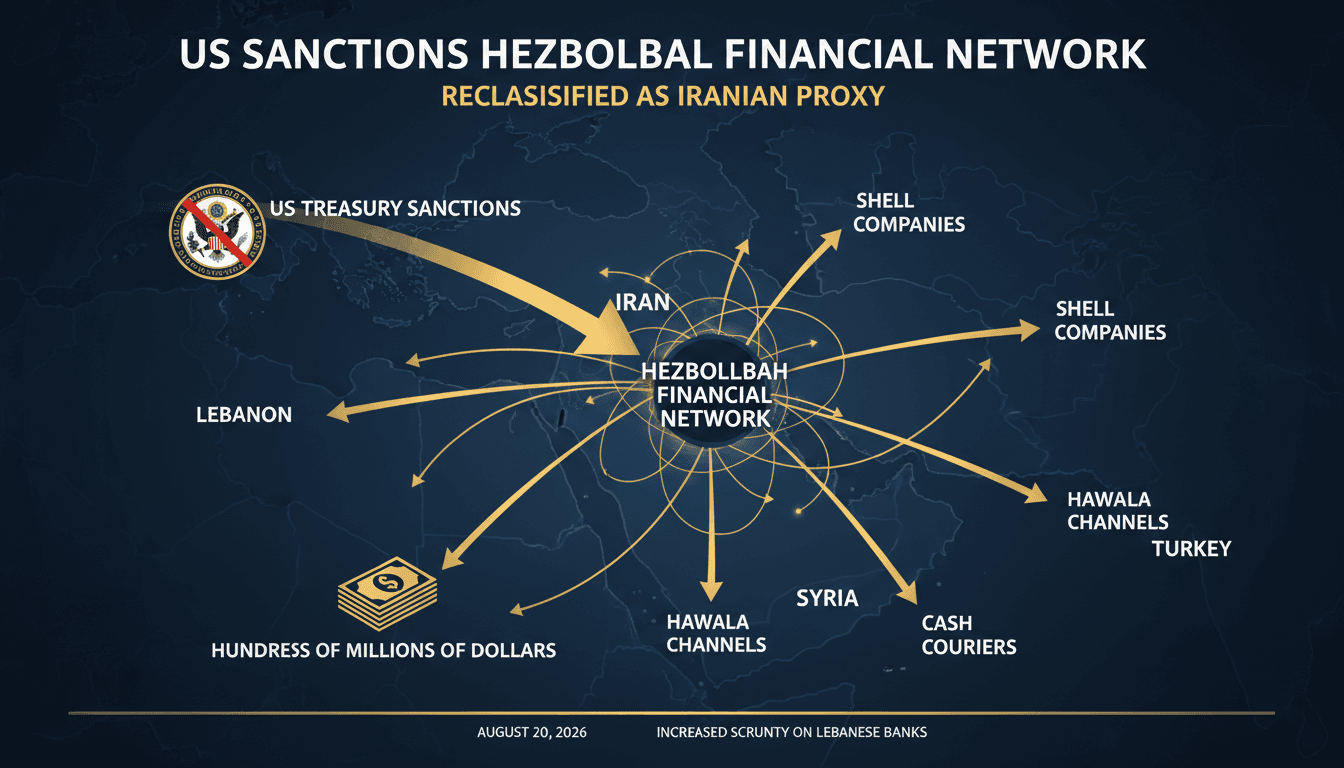
The recent sanctions imposed by the US Treasury on Hezbollah's financial network represent a significant escalation in the ongoing battle against the group's funding mechanisms. By designating ten individuals involved in a cash-smuggling operation that allegedly moved hundreds of millions of dollars, the US is tightening the noose around Hezbollah's financial lifelines. This network facilitated the transfer of cash through commercial flights between Lebanon, Turkey, the UAE, and Iran, allowing Hezbollah to operate outside formal banking channels.
The reclassification of Hezbollah as an Iranian proxy under the command of the IRGC-Quds Force marks a strategic shift in how the US perceives and portrays the group. Previously viewed as a domestic Lebanese faction, Hezbollah is now framed as a direct agent of Iranian interests. This change in narrative not only intensifies the financial pressure on Hezbollah but also complicates the landscape for Lebanese institutions, which must now navigate heightened compliance requirements.
Lebanese officials have acknowledged the need for improved oversight of financial flows, recognizing that the sanctions could strain the already fragile economy. The Lebanese banking sector, already under scrutiny, faces increased pressure to comply with international anti-money laundering standards. This could lead to a slowdown in cross-border transactions, particularly those involving Lebanese or Iranian counterparties, as financial institutions in Dubai and elsewhere ramp up due diligence.
The implications of these sanctions extend beyond Hezbollah and Lebanon. European capitals are closely monitoring the situation, assessing whether to align their policies with the US measures. This could lead to a broader international effort to isolate Hezbollah financially, impacting its operational capabilities and regional influence.
As the US continues to apply pressure, Hezbollah has rejected the sanctions, asserting its commitment to resistance and its Lebanese identity. This defiance underscores the complex interplay between local and regional dynamics, as Hezbollah seeks to maintain its standing in Lebanon while navigating the challenges posed by international sanctions.
Who feels it first (and how)
- Lebanese banks: Increased compliance costs and scrutiny on transactions could strain operations.
- Businesses in Dubai: Heightened due diligence requirements may slow cross-border transfers and increase operational costs.
- Hezbollah supporters: Potentially reduced funding and operational capabilities could impact their activities and influence in the region.
What to watch next
- Compliance audits: Monitor how Lebanese banks adapt to increased scrutiny and whether they can meet international standards without exacerbating economic strain.
- Regional financial flows: Watch for changes in transaction patterns involving Lebanese and Iranian entities, particularly in Dubai, as businesses adjust to new compliance requirements.
- International alignment: Observe whether European countries adopt similar sanctions or measures against Hezbollah, which could further isolate the group financially.
The US Treasury has imposed sanctions on Hezbollah's financial network.
Lebanese institutions will face increased scrutiny and compliance challenges.
The long-term economic impact on Lebanon and its banking sector remains uncertain.
Frequently Asked Questions
- Why it matters?
- These sanctions heighten financial pressure on Hezbollah while complicating compliance for Lebanese institutions and businesses.
- What happened (in 30 seconds)?
- On August 20, 2026, the US Treasury imposed sanctions on a Hezbollah-linked cash-smuggling network, designating ten individuals involved. Hezbollah was reclassified as an Iranian proxy under the IRGC-Quds Force, shifting its portrayal from an independent actor to a direct agent of Iran. Lebanese institutions are now under increased scrutiny for compliance with anti-money laundering regulations, potentially straining the local economy.
- What's really happening?
- The recent sanctions imposed by the US Treasury on Hezbollah's financial network represent a significant escalation in the ongoing battle against the group's funding mechanisms. By designating ten individuals involved in a cash-smuggling operation that allegedly moved hundreds of millions of dollars, the US is tightening the noose around Hezbollah's financial lifelines. This network facilitated the transfer of cash through commercial flights between Lebanon, Turkey, the UAE, and Iran, allowing H
- Who feels it first (and how)?
- Lebanese banks: Increased compliance costs and scrutiny on transactions could strain operations. Businesses in Dubai: Heightened due diligence requirements may slow cross-border transfers and increase operational costs. Hezbollah supporters: Potentially reduced funding and operational capabilities could impact their activities and influence in the region.
- What to watch next?
- Compliance audits: Monitor how Lebanese banks adapt to increased scrutiny and whether they can meet international standards without exacerbating economic strain. Regional financial flows: Watch for changes in transaction patterns involving Lebanese and Iranian entities, particularly in Dubai, as businesses adjust to new compliance requirements. International alignment: Observe whether European countries adopt similar sanctions or measures against Hezbollah, which could further isolate the gr
Pan-Arab news coverage spanning politics, business, sports, and regional affairs.
"Asharq Al-Awsat reflects a broad Arab editorial perspective with strong attention to regional geopolitics."
— A47 Editor
عقوبات أميركية جديدة تخنق «حزب الله»... وتختبر لبنان
New U.S. sanctions targeting Hezbollah are not merely financial measures aimed at disrupting money transfer networks, but represent a new approach to the party's nature and its relationship with the Lebanese state.
Jordanian news and regional updates.
"Roya News is a Jordanian outlet focused on breaking news and local affairs."
— A47 Editor
تُحاول إثارة الاضطرابات.. حزب الله يرد على عقوبات الخزانة الأمريكية
Hezbollah has responded to the recent sanctions imposed by the U.S. Treasury, claiming that these measures are an attempt to incite unrest. The organization has characterized the sanctions as a direct attack on its operations and influence in the reg...
Jordanian news and regional updates.
"Roya News is a Jordanian outlet focused on breaking news and local affairs."
— A47 Editor
واشنطن تفرض عقوبات جديدة على حزب الله اللبناني لـتهديده أمن المنطقة
The U.S. Department of the Treasury has announced new sanctions against Hezbollah, citing the group's threats to regional security. This move reflects ongoing concerns regarding Hezbollah's activities and their implications for stability in the Middl...