
U.S. Military Establishes Covert Shipping Corridor Through Strait of Hormuz Amid Iran Conflict
Here's what it means for you.
If you rely on global oil markets, this operation could stabilize prices and ensure consistent supply.
Why it matters
The U.S. military's covert shipping corridor through the Strait of Hormuz is crucial for maintaining global oil supply amid regional tensions.
What happened (in 30 seconds)
- On August 19, 2026, Axios reported that the U.S. military established a shipping corridor through the Strait of Hormuz to transport oil.
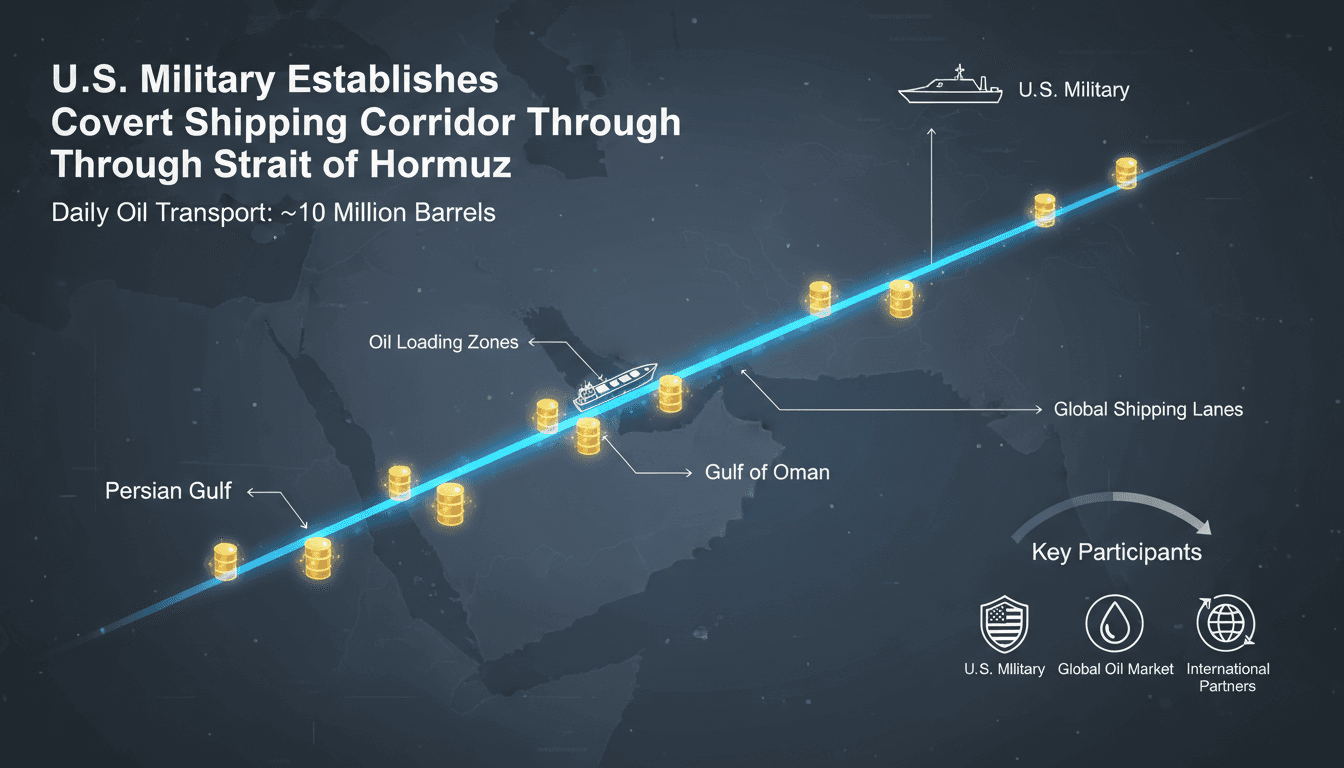
- The operation, ongoing since June 2026, allows 15–20 tankers to transit nightly, moving approximately 10 million barrels of oil per day.
- U.S. coordination ensures military protection for tankers, mitigating potential disruptions from the ongoing Iran conflict.
The context you actually need
- The Strait of Hormuz is a critical chokepoint for global energy supplies, with about 20% of the world's oil passing through it.
- Iran's actions have included claims of control over the strait and attacks on shipping, raising concerns about oil supply disruptions.
- U.S. military efforts aim to secure alternative transit routes and maintain energy flows to international markets, especially amid rising crude prices.
What's really happening
The U.S. military's covert operation in the Strait of Hormuz represents a strategic response to ongoing tensions with Iran, which has threatened oil exports through this vital maritime route. The operation began several weeks before the Axios report, with U.S. Central Command establishing control over the southern lane of the strait. This involves a systematic approach where empty tankers enter the Persian Gulf from the Arabian Sea to load oil at regional ports. They then exit in coordinated nightly convoys, escorted by U.S. military forces.
This initiative is not merely about transporting oil; it is a calculated move to stabilize global oil markets that have been shaken by the Iran conflict. The U.S. military's prior campaign to degrade Iranian radar and surveillance capabilities has been crucial in limiting interference from the Islamic Revolutionary Guard Corps (IRGC). By ensuring that tankers can operate under military protection, the U.S. is effectively mitigating the risk of attacks that could disrupt oil supply.
The operation has successfully stabilized exports at around 10 million barrels per day, which is approximately half of the pre-war volume. This is significant, as it helps to alleviate the pressure on global oil prices that have surged due to fears of supply disruptions. The coordination of tanker movements is managed from a task force at Fort Bragg, North Carolina, which schedules inbound and outbound movements in protected time slots, ensuring that the operation runs smoothly.
Moreover, this corridor is vital for Gulf oil exporters, including the UAE, Bahrain, and Kuwait, as it allows them to continue exporting oil to international markets. The stability of oil exports from these countries is particularly important for economies like Dubai, where fluctuations in global crude prices can directly impact local fuel costs and economic stability.
In summary, the U.S. military's establishment of this shipping corridor is a multifaceted operation aimed at securing oil supply routes, protecting economic interests, and maintaining stability in a region fraught with conflict. The implications of this operation extend beyond military strategy; they resonate through global markets and local economies, influencing everything from fuel prices to international trade dynamics.
Who feels it first (and how)
- Oil exporters in the Gulf region, particularly the UAE, Bahrain, and Kuwait, who rely on stable shipping routes for their economies.
- Global oil markets, which may see moderated price volatility due to increased supply stability.
- Consumers and businesses in regions dependent on oil imports, who could benefit from more stable fuel prices.
What to watch next
- Iran's response: Monitor any retaliatory actions from Iran that could threaten the corridor's security and oil supply.
- Global oil prices: Watch for fluctuations in crude prices as the corridor stabilizes supply; this could impact fuel costs worldwide.
- U.S. military strategy: Keep an eye on any changes in U.S. military presence or strategy in the region, which could affect the operation's longevity.
The U.S. military has established a shipping corridor through the Strait of Hormuz.
Oil exports will stabilize at around 10 million barrels per day, helping to moderate global crude prices.
The long-term effectiveness of the corridor in the face of potential Iranian retaliation or further conflict.
Frequently Asked Questions
- Why it matters?
- The U.S. military's covert shipping corridor through the Strait of Hormuz is crucial for maintaining global oil supply amid regional tensions.
- What happened (in 30 seconds)?
- On August 19, 2026, Axios reported that the U.S. military established a shipping corridor through the Strait of Hormuz to transport oil. The operation, ongoing since June 2026, allows 15–20 tankers to transit nightly, moving approximately 10 million barrels of oil per day. U.S. coordination ensures military protection for tankers, mitigating potential disruptions from the ongoing Iran conflict.
- What's really happening?
- The U.S. military's covert operation in the Strait of Hormuz represents a strategic response to ongoing tensions with Iran, which has threatened oil exports through this vital maritime route. The operation began several weeks before the Axios report, with U.S. Central Command establishing control over the southern lane of the strait. This involves a systematic approach where empty tankers enter the Persian Gulf from the Arabian Sea to load oil at regional ports. They then exit in coordinated nig
- Who feels it first (and how)?
- Oil exporters in the Gulf region, particularly the UAE, Bahrain, and Kuwait, who rely on stable shipping routes for their economies. Global oil markets, which may see moderated price volatility due to increased supply stability. Consumers and businesses in regions dependent on oil imports, who could benefit from more stable fuel prices.
- What to watch next?
- Iran's response: Monitor any retaliatory actions from Iran that could threaten the corridor's security and oil supply. Global oil prices: Watch for fluctuations in crude prices as the corridor stabilizes supply; this could impact fuel costs worldwide. U.S. military strategy: Keep an eye on any changes in U.S. military presence or strategy in the region, which could affect the operation's longevity.
Jordanian news and regional updates.
"Roya News is a Jordanian outlet focused on breaking news and local affairs."
— A47 Editor
أكسيوس: الجيش الأمريكي ينشئ ممرا بحريا سريا عبر مضيق هرمز
A report by Axios reveals that the U.S. military is establishing a secret maritime corridor through the Strait of Hormuz. This strategic move is likely aimed at enhancing military logistics and ensuring safe passage in a region critical for global oi...
Arabic-language coverage of international news and geopolitics.
"RT Arabic is a Russian state-funded outlet often criticized for promoting Kremlin-aligned narratives."
— A47 Editor
"أكسيوس": الولايات المتحدة أقامت ممرا سريا لنقل النفط عبر مضيق هرمز
Axios reported that the United States has established a secret corridor for the daily transport of millions of barrels of oil through the Strait of Hormuz, according to two American officials. This development highlights the strategic importance of t...
Pan-Arab political news and analysis.
"Al-Quds Al-Arabi is a London-based Arabic newspaper known for political coverage."
— A47 Editor
أكسيوس: عملية أمريكية سرية لتأمين نقل ملايين براميل النفط عبر مضيق هرمز
The United States has revealed a secret military operation aimed at securing the movement of oil tankers through the Strait of Hormuz, enabling the transport of millions of barrels of oil daily to global markets, despite ongoing tensions with Iran. T...