
Protests Erupt in Tunisia Over Extreme Heat-Induced Utility Crisis
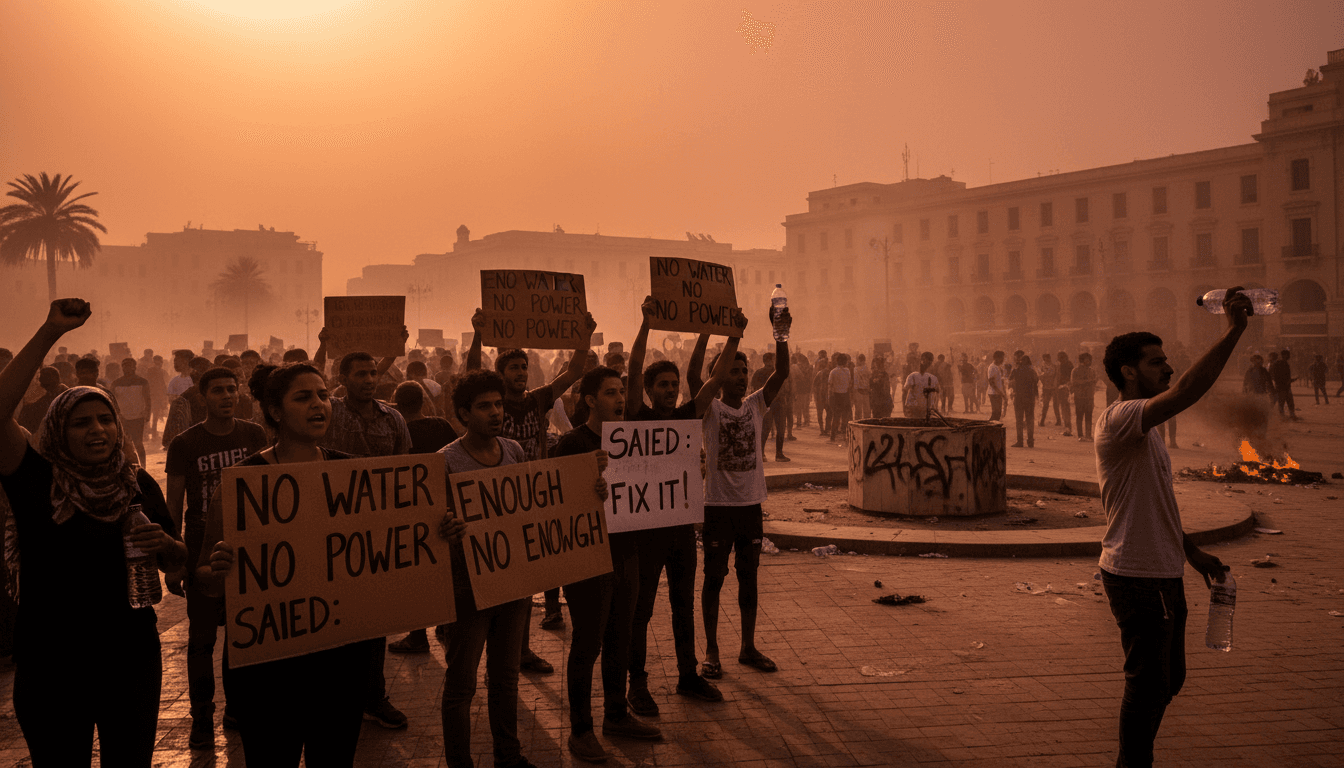
The Vibe
Protests are surging in Tunis, fueled by extreme heat and utility shortages, reflecting a broader discontent with governance and living conditions.
What it signals
This unrest signals a critical intersection of climate change and political stability. As extreme weather events become more frequent, the ability of governments to manage basic services will increasingly define their legitimacy and the social contract with citizens.
Why it's happening now
1. Record-breaking temperatures have pushed national electricity consumption to unprecedented levels, straining already fragile utility systems. 2. The political landscape has shifted dramatically since President Kais Saied's consolidation of power in 2021, leading to public frustration over deteriorating living conditions. 3. Chronic underinvestment in infrastructure has left Tunisia's state-owned utilities unable to cope with surging demand, exacerbating the crisis.
Who it's for (and who it leaves out)
The core beneficiaries of potential reforms are the citizens demanding reliable access to basic services. However, the elite and political class, insulated from the immediate impacts of these shortages, remain largely excluded from the urgency of these demands.
What to watch next
1. Monitor the response from President Saied and the government; any significant policy changes could indicate a shift in governance strategy. 2. Watch for international investor reactions; instability may lead to decreased foreign investment, impacting Tunisia's economic recovery.
Protests are ongoing with no official government response reported.
Continued unrest may prompt the government to reconsider its approach to utility management and public services.
The long-term impact on Tunisia's political landscape and economic stability remains uncertain.
Regional coverage and analysis focused on politics, diplomacy, and business across the Middle East.
"Al-Monitor is known for analytical reporting on Middle East politics and policy developments."
— A47 Editor
Tunisia’s water, power crisis fuels growing protests against Saied: What to know
Tunisia is currently facing a severe utility crisis, characterized by widespread water shortages and power outages, which have sparked growing protests against President Kais Saied. Citizens are expressing their dissatisfaction with the government's ...
Regional coverage and analysis focused on politics, diplomacy, and business across the Middle East.
"Al-Monitor is known for analytical reporting on Middle East politics and policy developments."
— A47 Editor
Hundreds of Tunisians protest against government, water shortages
Hundreds of Tunisians protested in the capital on Thursday against President Kais Saied, voicing their frustrations over severe power cuts and drinking water shortages amid extreme heat. Protesters displayed signs highlighting their plight, with form...
Conservative-leaning political and national coverage.
"The Washington Times is a conservative-leaning newspaper known for its political coverage and advocacy of right-of-center viewpoints."
— A47 Editor
New opposition group plans protest in Tunisia after extreme heat-driven power and water cuts
A new opposition group in Tunisia is organizing a protest in the capital, Tunis, in response to severe power and water shortages caused by extreme summer heat. This situation has led to widespread frustration among the population towards the country'...