
Australia Passes Legislation Mandating Tech Platforms to Compensate Local News Publishers
Why it matters
This legislation represents a significant shift in how tech companies engage with local journalism, impacting the broader media landscape.
What happened (in 30 seconds)
- On August 20, 2026, Australia enacted the News Bargaining Incentive, requiring major tech platforms to negotiate with local news publishers.
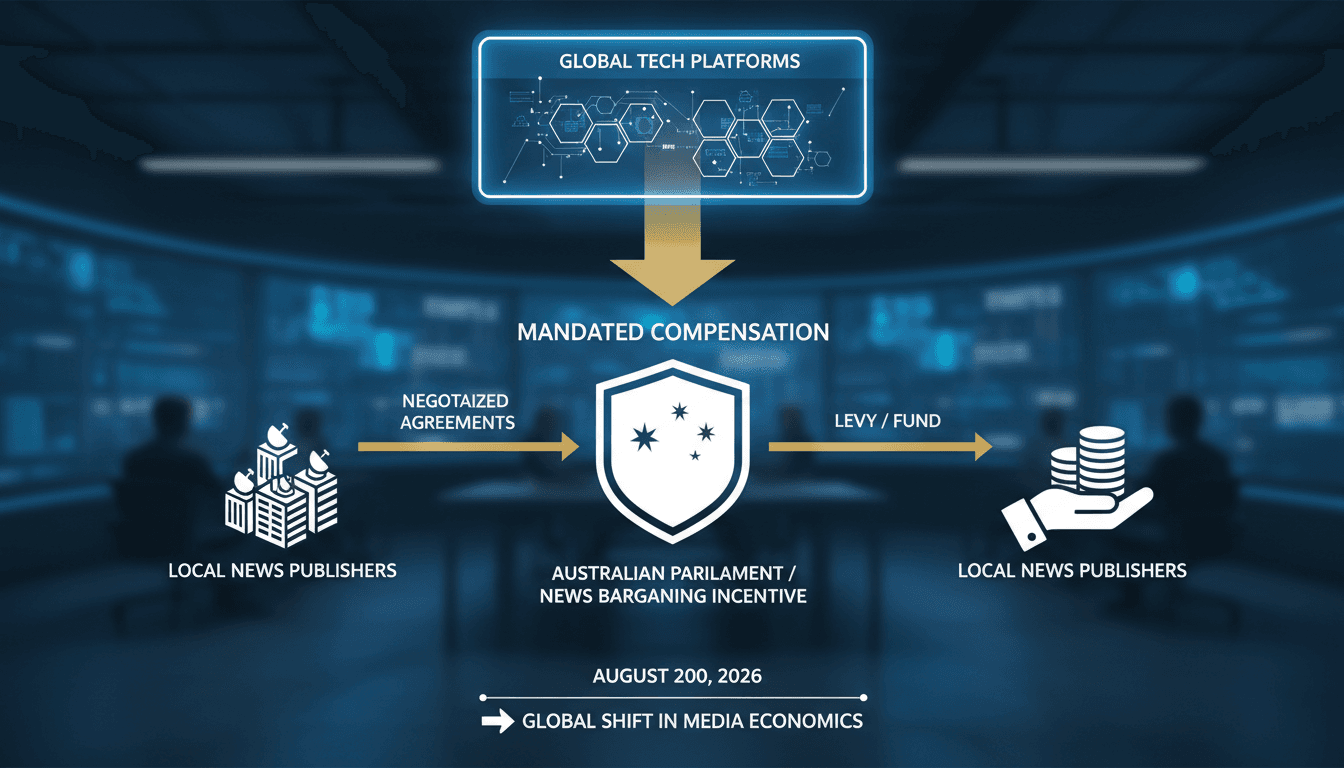
- Platforms like Meta and Google must either finalize agreements with at least eight publishers or pay a 2.5% levy on their Australian digital ad revenue exceeding A$250 million.
- The law aims to sustain local journalism by ensuring that tech companies contribute to the news content that drives user engagement and ad revenue.
The context you actually need
- This law builds on the 2021 News Media Bargaining Code, which faced challenges when platforms circumvented its requirements by limiting news distribution.
- The legislation includes a 2.5% levy on digital advertising revenue, which is a direct financial incentive for platforms to negotiate with local publishers.
- Proceeds from the levy will support journalism, with specific allocations to organizations like the Australian Associated Press, aiming to bolster the media sector.
What's really happening
The enactment of the News Bargaining Incentive legislation marks a pivotal moment in the relationship between technology platforms and local news publishers in Australia. This law is designed to address the financial struggles faced by journalism in the digital age, where tech giants have historically profited from news content without compensating the creators.
The legislation mandates that major platforms, including Meta, Google, TikTok, and LinkedIn, must negotiate commercial agreements with at least eight Australian news publishers. If they fail to do so, they will incur a 2.5% levy on their Australian digital advertising revenue that exceeds A$250 million. This approach not only incentivizes platforms to engage with local publishers but also ensures that they contribute to the sustainability of journalism, which is crucial for a functioning democracy.
The law is a response to the shortcomings of the previous News Media Bargaining Code, which was intended to compel platforms to pay for news content but was undermined when Meta reduced or eliminated news distribution on its platforms. By reinstating a levy that applies regardless of whether platforms host news content, the new framework aims to close loopholes and create a more equitable environment for news publishers.
The financial implications are significant. The Australian Treasury estimates that the annual revenue generated from commercial deals under this scheme could range between A$200 million and A$250 million. This revenue is expected to support journalism initiatives, including a 5% allocation to the Australian Associated Press, which plays a vital role in news distribution across the country.
Moreover, the law encourages platforms to prioritize agreements with smaller and medium-sized publishers, enhancing their financial viability. This could lead to a more diverse media landscape, where various voices and perspectives are represented, ultimately benefiting consumers.
As the law takes effect, platforms are under pressure to finalize qualifying deals by the end of their financial reporting periods to offset their liabilities. This urgency may accelerate negotiations between tech companies and publishers, reshaping the media landscape in Australia and potentially influencing similar legislative efforts in other countries.
Who feels it first (and how)
- Local news publishers: They stand to gain financially from new agreements, enhancing their operational stability.
- Tech platforms: Companies like Meta and Google will need to adjust their business models to accommodate the new financial obligations.
- Advertisers: Businesses relying on digital advertising may see changes in costs as platforms adjust to the new levy.
- Consumers: Readers may benefit from a more robust local news ecosystem, leading to better-informed communities.
What to watch next
- Negotiation outcomes: Monitor the agreements reached between tech platforms and local publishers, as these will set precedents for future interactions.
- Revenue impacts: Keep an eye on how the levy affects the financial performance of tech companies operating in Australia.
- Global reactions: Watch for potential legislative responses in other countries inspired by Australia's approach to tech and media relations.
The law is enacted and requires platforms to negotiate with local publishers or pay a levy.
Increased negotiations between tech platforms and publishers will occur as deadlines approach.
The long-term impact on the global tech landscape and potential retaliatory measures from other countries remains uncertain.
Frequently Asked Questions
- Why it matters?
- This legislation represents a significant shift in how tech companies engage with local journalism, impacting the broader media landscape.
- What happened (in 30 seconds)?
- On August 20, 2026, Australia enacted the News Bargaining Incentive, requiring major tech platforms to negotiate with local news publishers. Platforms like Meta and Google must either finalize agreements with at least eight publishers or pay a 2.5% levy on their Australian digital ad revenue exceeding A$250 million. The law aims to sustain local journalism by ensuring that tech companies contribute to the news content that drives user engagement and ad revenue.
- What's really happening?
- The enactment of the News Bargaining Incentive legislation marks a pivotal moment in the relationship between technology platforms and local news publishers in Australia. This law is designed to address the financial struggles faced by journalism in the digital age, where tech giants have historically profited from news content without compensating the creators. The legislation mandates that major platforms, including Meta, Google, TikTok, and LinkedIn, must negotiate commercial agreements wit
- Who feels it first (and how)?
- Local news publishers: They stand to gain financially from new agreements, enhancing their operational stability. Tech platforms: Companies like Meta and Google will need to adjust their business models to accommodate the new financial obligations. Advertisers: Businesses relying on digital advertising may see changes in costs as platforms adjust to the new levy. Consumers: Readers may benefit from a more robust local news ecosystem, leading to better-informed communities.
- What to watch next?
- Negotiation outcomes: Monitor the agreements reached between tech platforms and local publishers, as these will set precedents for future interactions. Revenue impacts: Keep an eye on how the levy affects the financial performance of tech companies operating in Australia. Global reactions: Watch for potential legislative responses in other countries inspired by Australia's approach to tech and media relations.
International stories from NPR’s global desk.
"NPR is an American public media organization known for thoughtful reporting and a slightly left-leaning editorial tone."
— A47 Editor
Big tech companies will have to pay to publish Australian news content under new laws
Australia has enacted a law mandating that major tech companies, including Google and Meta, negotiate agreements with local news publishers or face a levy on their advertising revenue. This legislation aims to ensure that news organizations receive f...
Consumer technology news with AI coverage.
"Gadget and tech site reporting on AI in products."
— A47 Editor
Australia passes law to charge tech companies levies unless they reach deals with news publishers
Australia has enacted a new law requiring major tech companies, including Meta, Google, TikTok, and LinkedIn, to pay levies unless they negotiate agreements with local news publishers, aiming to bolster the struggling news industry.
Covers consumer technology, electronics, gadgets, and product reviews.
"Engadget is a trusted source for gadget reviews and consumer tech news, known for its hands-on analysis and industry coverage."
— A47 Editor
Australia passes law to charge tech companies levies unless they reach deals with news publishers
Australia has enacted a new law requiring major tech companies, including Meta, Google, TikTok, and LinkedIn, to pay levies unless they negotiate agreements with local news publishers, aiming to bolster the struggling news industry.
Curated tech headlines including AI stories.
"Influential aggregator surfacing the day’s top tech/AI links."
— A47 Editor
Australia passes the News Bargaining Incentive, which will tax tech giants 2.5% on their Australian ad revenue unless they strike deals with local news media (Christine Chen/Reuters)
Australia has enacted the News Bargaining Incentive, a new law that imposes a 2.5% tax on the advertising revenue of tech giants unless they negotiate agreements with local news media. This legislation aims to ensure that digital platforms contribute...