
Republican Concerns Over AI Data Centers Emerge in Ohio Senate Race
The Vibe
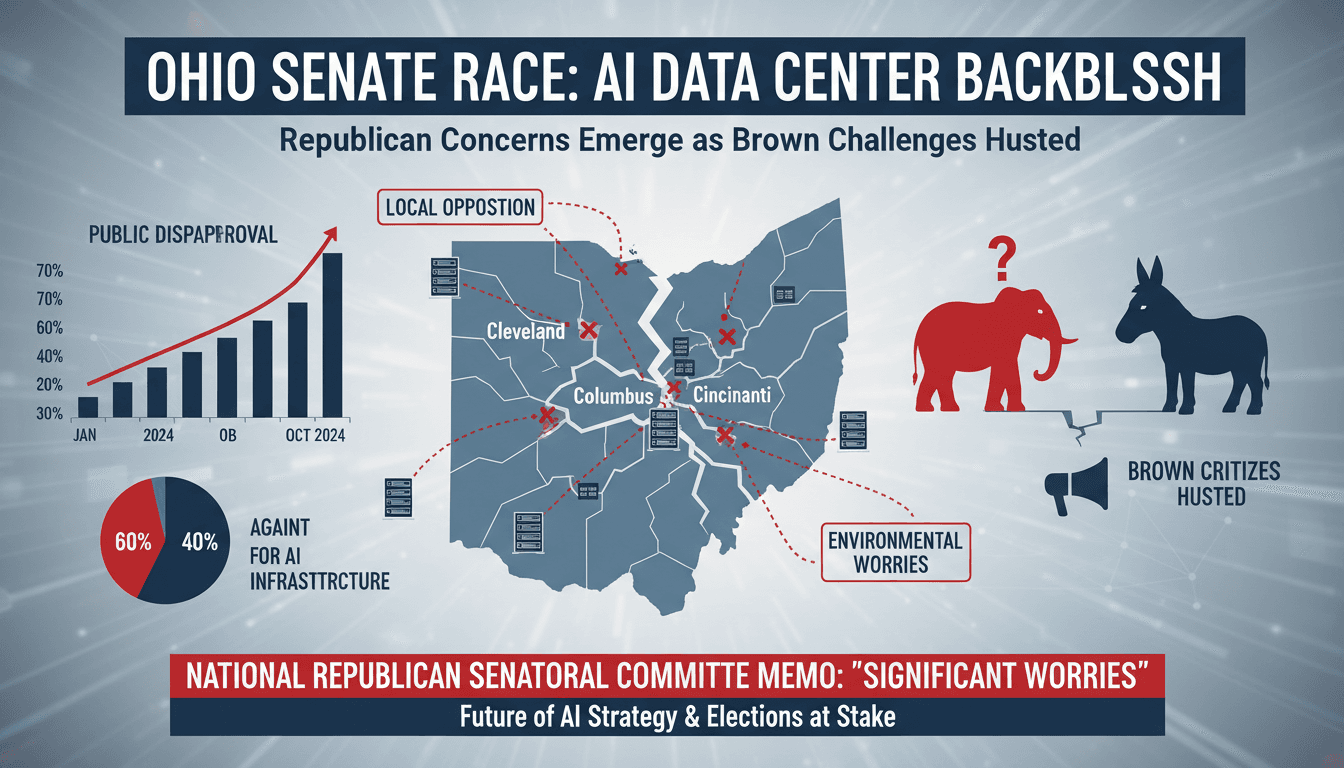
A growing unease is palpable in Ohio regarding the rapid expansion of AI data centers, with public sentiment turning against these developments.
What it signals
This backlash signals a critical intersection of technology and local governance. As AI companies push for infrastructure growth, they must navigate rising public discontent that threatens not only their projects but also the political careers of those who support them. This situation highlights the fragility of tech-driven economic growth in the face of community concerns, potentially reshaping how companies engage with local populations.
Why it's happening now
1. The rapid proliferation of AI data centers has outpaced public understanding and acceptance, leading to a backlash fueled by rising utility costs and environmental concerns. 2. Political candidates are leveraging local grievances to gain traction, with Democratic candidate Sherrod Brown effectively using the issue to challenge Republican Senator Jon Husted. 3. The leaked NRSC memo underscores a growing awareness among political operatives that public perception can significantly impact electoral outcomes, prompting urgent calls for AI companies to improve their image.
Who it's for (and who it leaves out)
The core beneficiaries of this trend are local communities and voters who are increasingly vocal about their concerns, while the excluded segment includes AI companies and political figures who may struggle to align their interests with public sentiment.
What to watch next
1. Monitor the effectiveness of advertising campaigns by AI companies aimed at improving public perception and mitigating backlash. 2. Keep an eye on polling data and campaign strategies as the Ohio Senate race progresses, particularly how they adapt to local concerns over data centers.
Public opposition to AI data centers in Ohio is significant, with 65% of registered voters expressing disapproval.
The ongoing Senate race will continue to spotlight the issue, influencing campaign strategies and voter turnout.
The long-term impact on AI infrastructure projects in Ohio remains uncertain as public sentiment evolves.
Future-focused tech headlines including AI breakthroughs.
"Consumer-friendly future-tech site with frequent AI coverage."
— A47 Editor
Leaked Memo Shows Republicans Are Terrified of the Backlash Against AI Data Centers
A leaked memo reveals that Republicans are increasingly concerned about the backlash against AI data centers, which have become a significant issue in the current election cycle. The memo suggests that the party is worried about voter sentiment as co...
AI news with an enterprise and cloud focus.
"Covers AI in the context of data infrastructure, cloud, and enterprise stacks."
— A47 Editor
Politics hits data centers, OpenAI falls behind Anthropic and now AI is too big to fail… quietly
Data centers are emerging as a significant political issue, with a Gallup survey indicating that 71% of respondents oppose their presence in their communities, surpassing opposition to nuclear plants. This sentiment is influencing the GOP's strategy ...
Business and tech news excluding paywalled content.
"High-volume business/tech outlet with frequent AI coverage."
— A47 Editor
Overcoming the bad vibes around data centers is a battle on multiple fronts
Americans are increasingly pushing back against data centers, posing significant challenges for tech companies that are heavily investing in the expansion of artificial intelligence (AI). This resistance is rooted in growing concerns over the environ...