
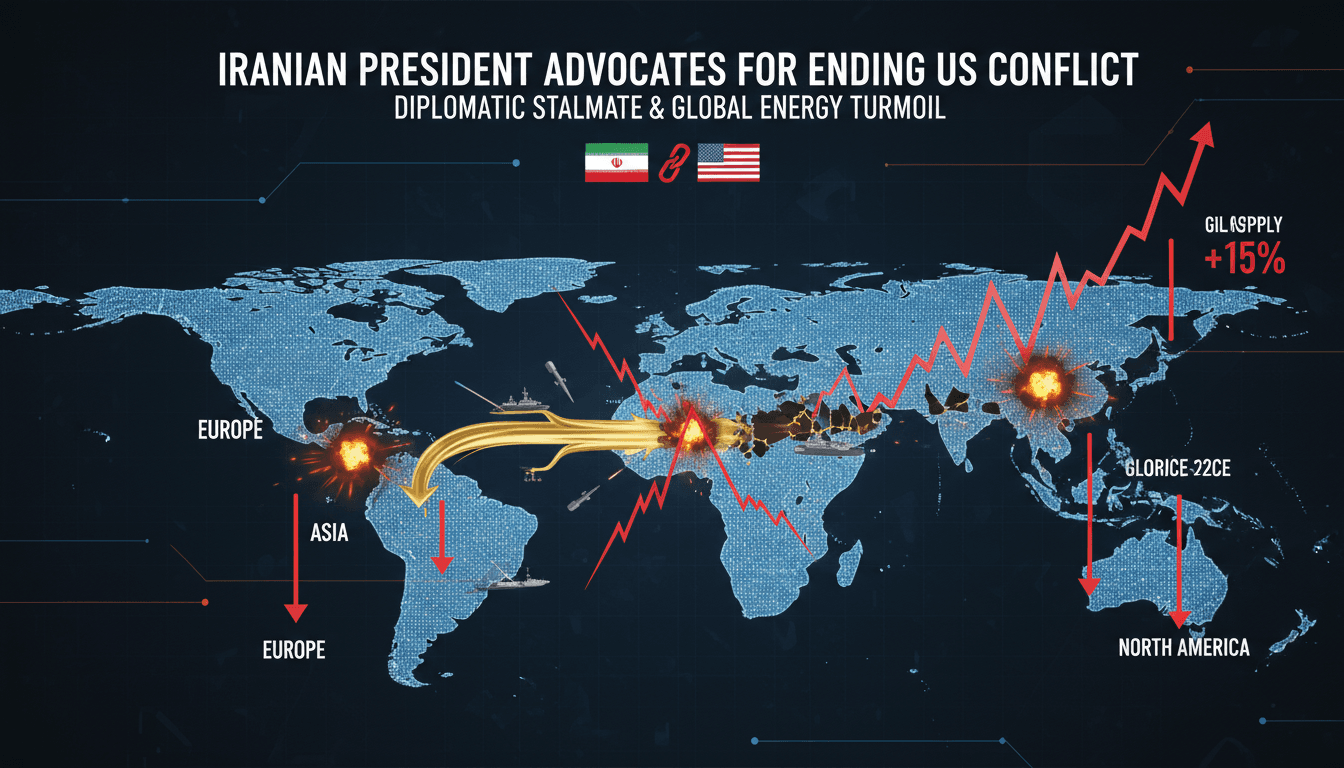
Iranian President Advocates for Ending US Conflict Amid Diplomatic Stalemate
Here's what it means for you.
The ongoing conflict between the US and Iran could significantly impact global energy markets and regional stability.
Why it matters
The outcome of this conflict will influence oil prices and shipping routes, affecting economies worldwide.
What happened (in 30 seconds)
- On August 21, 2026, Iranian President Masoud Pezeshkian called for an end to the war with the US from a position of strength.
- Diplomatic talks have stalled following the expiration of a June memorandum, with ongoing disruptions in the Strait of Hormuz.
- US President Donald Trump expressed skepticism about Iran's willingness to negotiate, indicating potential new economic sanctions.
The context you actually need
- The conflict began with US and Israeli military operations against Iran on February 28, 2026, leading to Iranian retaliation and control efforts in the Strait of Hormuz.
- The death of Ayatollah Ali Khamenei on the same day marked a leadership transition to Mojtaba Khamenei, influencing Iran's current diplomatic stance.
- Ongoing disruptions in the Strait of Hormuz have exacerbated global energy market pressures, with oil exports through US-protected convoys continuing amid Iranian closures.
What's really happening
President Pezeshkian's recent statement reflects a strategic pivot in Iran's approach to the ongoing conflict with the United States. By advocating for an end to hostilities from a position of strength, he aims to project confidence and resilience in the face of international pressure. This rhetoric is not merely symbolic; it is rooted in Iran's perception of having gained a degree of global recognition for its stance against US military actions, which they argue violate international norms.
The backdrop of this statement is critical. The conflict escalated following US and Israeli military operations against Iran, which began in February 2026. The Iranian response included aggressive maneuvers in the Strait of Hormuz, a vital shipping route for global oil supplies. The death of Ayatollah Ali Khamenei on the same day as the conflict's escalation marked a significant leadership change, with Mojtaba Khamenei taking the helm. This transition has led to a more assertive Iranian foreign policy, as evidenced by Pezeshkian's remarks.
The expired June memorandum of understanding had temporarily eased tensions, but the resumption of hostilities in July, particularly attacks on shipping, has reignited fears of a prolonged conflict. Pezeshkian's assertion of Iran's dignity and strength is a direct response to these developments, aiming to rally domestic support while countering external pressures.
Simultaneously, Iranian military leadership has signaled readiness for a robust response to perceived threats, indicating a willingness to escalate if necessary. This dual approach—diplomatic overtures coupled with military readiness—highlights the complexity of Iran's strategy. The discussions between Omani and Iranian foreign ministers suggest a desire for dialogue, yet the US administration's skepticism and impending economic sanctions complicate the landscape.
The implications of this conflict extend beyond the immediate region. The Strait of Hormuz is a critical artery for global oil transport, with approximately 5-10 million barrels per day exported through US-protected convoys amid Iranian closures. Disruptions here can lead to significant fluctuations in oil prices, impacting economies worldwide. The ongoing uncertainty surrounding the conflict is already affecting financial sectors and tourism recovery in regions like Dubai, which has faced Iranian missile and drone attacks.
Who feels it first (and how)
- Energy Sector: Companies reliant on oil exports will face volatility in prices and supply disruptions.
- Shipping Industries: Increased risks in the Strait of Hormuz could lead to higher insurance costs and rerouting of vessels.
- Tourism and Hospitality: Regions like Dubai may see reduced tourist inflow and economic activity due to security concerns.
What to watch next
- US Economic Sanctions: New sanctions could further strain Iran's economy and escalate tensions, impacting global markets.
- Diplomatic Engagements: Any resumption of talks between Iran and the US or regional partners could signal a shift in conflict dynamics.
- Energy Market Reactions: Watch for fluctuations in oil prices as the situation evolves, particularly in response to shipping disruptions.
The conflict has disrupted shipping in the Strait of Hormuz, affecting global oil supply.
The US will implement new economic sanctions in response to Iran's military actions.
The potential for renewed diplomatic talks remains uncertain amid escalating tensions.
Frequently Asked Questions
- Why it matters?
- The outcome of this conflict will influence oil prices and shipping routes, affecting economies worldwide.
- What happened (in 30 seconds)?
- On August 21, 2026, Iranian President Masoud Pezeshkian called for an end to the war with the US from a position of strength. Diplomatic talks have stalled following the expiration of a June memorandum, with ongoing disruptions in the Strait of Hormuz. US President Donald Trump expressed skepticism about Iran's willingness to negotiate, indicating potential new economic sanctions.
- What's really happening?
- President Pezeshkian's recent statement reflects a strategic pivot in Iran's approach to the ongoing conflict with the United States. By advocating for an end to hostilities from a position of strength, he aims to project confidence and resilience in the face of international pressure. This rhetoric is not merely symbolic; it is rooted in Iran's perception of having gained a degree of global recognition for its stance against US military actions, which they argue violate international norms. Th
- Who feels it first (and how)?
- Energy Sector: Companies reliant on oil exports will face volatility in prices and supply disruptions. Shipping Industries: Increased risks in the Strait of Hormuz could lead to higher insurance costs and rerouting of vessels. Tourism and Hospitality: Regions like Dubai may see reduced tourist inflow and economic activity due to security concerns.
- What to watch next?
- US Economic Sanctions: New sanctions could further strain Iran's economy and escalate tensions, impacting global markets. Diplomatic Engagements: Any resumption of talks between Iran and the US or regional partners could signal a shift in conflict dynamics. Energy Market Reactions: Watch for fluctuations in oil prices as the situation evolves, particularly in response to shipping disruptions.
Global news coverage with extensive reporting on Middle Eastern conflicts and geopolitics.
"Al Jazeera is a Qatar-based broadcaster known for wide regional coverage and alternative perspectives."
— A47 Editor
Iranian president says time to end war with US from ‘position of strength’
Iranian President Masoud Pezeshkian has stated that it is time to end the ongoing conflict with the United States from a position of strength, coinciding with a call between Omani and Iranian foreign ministers as Washington prepares to impose economi...
Comprehensive coverage of Middle Eastern and global issues.
"Al Jazeera is a prominent voice from the Global South, especially the Middle East, with an emphasis on underreported stories."
— A47 Editor
Iranian president says time to end war with US from ‘position of strength’
Iranian President Masoud Pezeshkian has stated that it is time to end the ongoing conflict with the United States from a position of strength, coinciding with a call between Omani and Iranian foreign ministers as Washington prepares to impose economi...
Macro commentary, policy analysis, growth/inflation themes, and global outlooks.
"Contextual macro coverage that complements day-to-day market headlines."
— A47 Editor
Iran’s president calls for end to war with US
Iran's president has called for an end to the ongoing conflict with the United States, emphasizing the need for dialogue amidst escalating tensions and economic pressures. This statement comes as Iran faces intensified sanctions from the U.S., which ...
Regional and international reporting focused on Middle Eastern politics, diplomacy, and economics.
"Asharq Al-Awsat is a Saudi-owned international newspaper reflecting mainstream Gulf political perspectives."
— A47 Editor
Iran President Says Time to End War while in Position of Strength
Iranian President Masoud Pezeshkian has declared that it is time to end the ongoing conflict with the United States, asserting that Iran is currently in a position of strength. This statement comes amid escalating tensions and military posturing, par...