
US Intensifies Sanctions Against Iran Amid Diplomatic Efforts
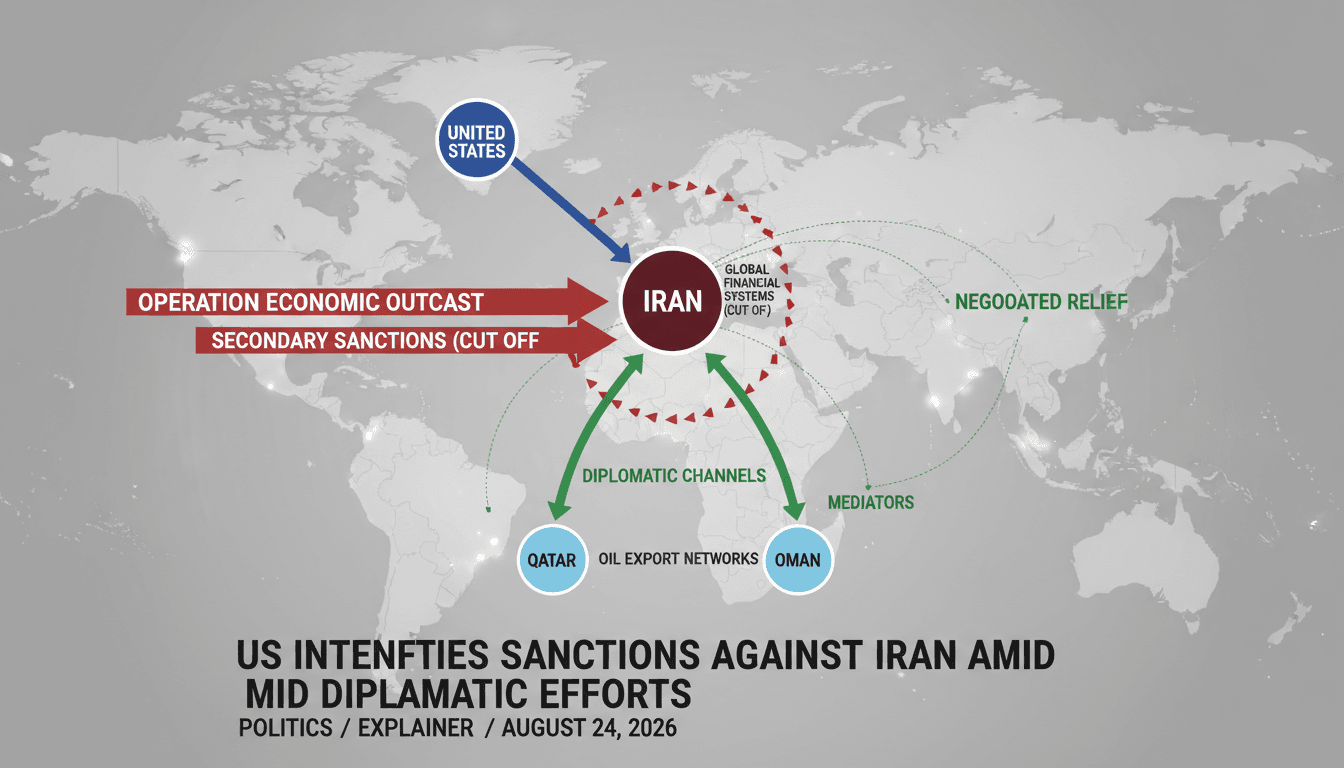
Here's what it means for you.
If you operate in global trade or finance, the escalating sanctions on Iran could disrupt your supply chains and financial transactions.
Why it matters
The intensified sanctions could reshape regional trade dynamics and impact global energy markets.
What happened (in 30 seconds)
- On August 24, 2026, the US launched Operation Economic Outcast, imposing secondary sanctions on over 60 Iranian-linked entities.
- Iran responded by reviving diplomatic talks through mediators, including Qatar and Oman, while conditioning negotiations on the cessation of US pressure.
- The UAE suspended trade with Iran, potentially disrupting Dubai's role as a regional trade hub.
The context you actually need
- The sanctions target key sectors such as digital assets, technology, gold, aviation, and shipping, aiming to cut Iran off from global finance.
- Iran has maintained networks for oil exports, primarily through partnerships with countries like China, despite previous sanctions.
- The Strait of Hormuz remains a critical point for negotiations, as Iran seeks to leverage its strategic position in any diplomatic discussions.
What's really happening
On August 24, 2026, the US Treasury Secretary Scott Bessent announced Operation Economic Outcast, likening it to an "economic D-Day." This operation marks a significant escalation in the US's economic warfare against Iran, targeting over 60 entities, individuals, and vessels linked to Iran's nuclear, missile, and oil programs. The sanctions are designed to sever Iran's connections to global finance, shipping, aviation, technology, gold, and digital assets, with the US warning of secondary sanctions against foreign enablers, including potential Chinese banks.
The backdrop to this operation is a collapsed June 2026 memorandum of understanding between the US and Iran, which had aimed to stabilize Gulf security dynamics after six months of conflict. With military options off the table, the US pivoted to economic measures, building on existing sanctions regimes. Iran, on the other hand, has been actively seeking to maintain its oil export networks and evade sanctions through strategic partnerships, particularly with China, while also leveraging its control over the Strait of Hormuz in negotiations.
In response to the sanctions, Iran has engaged in diplomatic overtures, particularly through Qatari mediation. Iranian Foreign Minister Abbas Araghchi described the talks as constructive but reiterated that any meaningful dialogue would require the cessation of US pressure and a resolution of issues related to the Strait of Hormuz. Parallel discussions with Oman have also focused on traffic management and revenue sharing in the Strait, indicating Iran's willingness to negotiate while maintaining its stance against US sanctions.
Iranian officials have condemned the US actions as "state terrorism," reflecting the heightened tensions and the potential for further escalation. The sanctions have already led to increased volatility in the Iranian rial and uncertainty in energy shipping markets, with the UAE's suspension of trade with Iran posing additional challenges for regional commerce. The US has emphasized that it will continue to apply pressure until it sees meaningful engagement from Iran, setting the stage for a complex interplay of sanctions and diplomacy in the coming months.
Who feels it first (and how)
- Global traders: Those involved in shipping and logistics may face disruptions in supply chains and increased costs.
- Financial institutions: Banks and financial entities with ties to Iran or operating in the region could experience heightened scrutiny and compliance challenges.
- Energy markets: Companies reliant on Iranian oil exports may see volatility in pricing and availability.
What to watch next
- Iran's diplomatic engagements: Monitor the outcomes of talks mediated by Qatar and Oman, as they could influence future sanctions or negotiations.
- US enforcement actions: Watch for announcements regarding additional sanctions or enforcement measures against foreign entities that engage with Iran.
- Market reactions: Keep an eye on fluctuations in energy prices and the Iranian rial, as these will signal the broader economic impact of the sanctions.
The US has imposed sanctions on over 60 Iranian-linked entities.
Iran will continue to seek diplomatic channels while maintaining its oil export networks.
The long-term effectiveness of the sanctions in achieving US objectives remains uncertain.
Frequently Asked Questions
- Why it matters?
- The intensified sanctions could reshape regional trade dynamics and impact global energy markets.
- What happened (in 30 seconds)?
- On August 24, 2026, the US launched Operation Economic Outcast, imposing secondary sanctions on over 60 Iranian-linked entities. Iran responded by reviving diplomatic talks through mediators, including Qatar and Oman, while conditioning negotiations on the cessation of US pressure. The UAE suspended trade with Iran, potentially disrupting Dubai's role as a regional trade hub.
- What's really happening?
- On August 24, 2026, the US Treasury Secretary Scott Bessent announced Operation Economic Outcast, likening it to an "economic D-Day." This operation marks a significant escalation in the US's economic warfare against Iran, targeting over 60 entities, individuals, and vessels linked to Iran's nuclear, missile, and oil programs. The sanctions are designed to sever Iran's connections to global finance, shipping, aviation, technology, gold, and digital assets, with the US warning of secondary sancti
- Who feels it first (and how)?
- Global traders: Those involved in shipping and logistics may face disruptions in supply chains and increased costs. Financial institutions: Banks and financial entities with ties to Iran or operating in the region could experience heightened scrutiny and compliance challenges. Energy markets: Companies reliant on Iranian oil exports may see volatility in pricing and availability.
- What to watch next?
- Iran's diplomatic engagements: Monitor the outcomes of talks mediated by Qatar and Oman, as they could influence future sanctions or negotiations. US enforcement actions: Watch for announcements regarding additional sanctions or enforcement measures against foreign entities that engage with Iran. Market reactions: Keep an eye on fluctuations in energy prices and the Iranian rial, as these will signal the broader economic impact of the sanctions.
Pan-Arab news coverage spanning politics, business, sports, and regional affairs.
"Asharq Al-Awsat reflects a broad Arab editorial perspective with strong attention to regional geopolitics."
— A47 Editor
واشنطن كثّفت عملية «المنبوذ الاقتصادي»... وطهران تلوّح بالدبلوماسية مجدداً
After six months of conflict, U.S. President Donald Trump confirmed that Washington is not engaging in talks with Tehran but is instead focusing on economically punishing Iran through the 'economic pariah' initiative.
Arabic-language coverage of political affairs and current events.
"Okaz political coverage typically follows mainstream Saudi framing on national and regional affairs."
— A47 Editor
العزلة الكبرى.. واشنطن تُشهر «السلاح الاقتصادي» في وجه إيران
The ongoing confrontation between Washington and Tehran is nearing its sixth month, evolving from traditional military strikes to a prolonged war of attrition, primarily utilizing economic sanctions as a weapon. The Trump administration's maximum pre...
Regional coverage and analysis focused on politics, diplomacy, and business across the Middle East.
"Al-Monitor is known for analytical reporting on Middle East politics and policy developments."
— A47 Editor
Trump says the U.S. is not talking with Iran as economic war in focus
President Donald Trump announced that the United States is not engaging in talks with Iran, focusing instead on an economic campaign aimed at punishing Tehran. This statement was made during a press briefing where White House Press Secretary Karoline...
Sports reporting with a focus on Saudi and regional competitions.
"Okaz sports coverage is broad and audience-friendly, with strong attention to Saudi teams and leagues."
— A47 Editor
«المنبوذ الاقتصادي» تُعيد تشكيل معادلة النفوذ بين واشنطن وبكين
The United States has launched a pivotal phase in its campaign against Iran, termed the 'Economic Pariah' operation, which pressures countries and companies to choose between engaging with Tehran or maintaining access to the U.S. dollar-based financi...
Arabic political reporting and analysis.
"Arabic Post is a digital outlet focused on politics and regional affairs."
— A47 Editor
ما ملامح حرب ترامب الاقتصادية على إيران؟
On August 20, Donald Trump announced the initiation of what he termed an 'economic war' against Iran, marking a shift from traditional military confrontations to economic sanctions. Four days later, the U.S. Treasury launched the 'Economic Outcast Op...