
US Federal Judge Overturns Immigrant Visa Suspension Affecting 75 Countries
Here's what it means for you.
If you’re navigating the U.S. immigration system, this ruling could significantly impact your visa application process.
Why it matters
This ruling restores individualized evaluations for immigrant visas, potentially increasing opportunities for applicants from previously affected countries.
What happened (in 30 seconds)
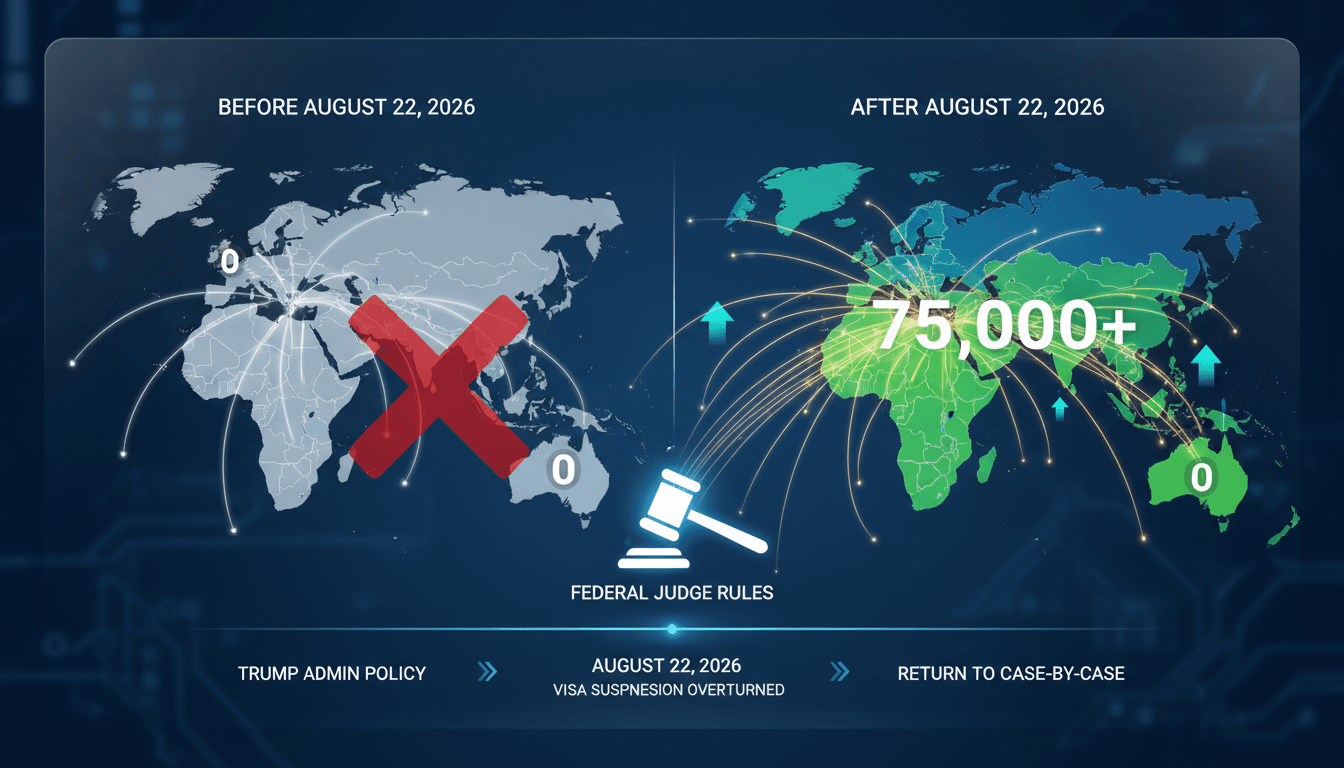
- On August 22, 2026, U.S. District Judge Jeannette Vargas struck down a Trump administration policy that suspended immigrant visas for applicants from 75 countries.
- The ruling determined that the policy exceeded the Secretary of State's authority and violated the Immigration and Nationality Act.
- Immigrant rights organizations successfully challenged the policy, leading to a mandate for case-by-case visa processing.
The context you actually need
- The policy was announced in January 2026, citing concerns over public benefits usage among nationals from 75 countries, including regions like Latin America and Africa.
- Immigrant rights groups argued that the blanket suspension was unlawful and violated statutory limits on the Secretary of State's authority.
- Judge Vargas's ruling mandates the restoration of standard visa evaluations, eliminating nationality-based pauses in processing.
What's really happening
The recent ruling by Judge Jeannette Vargas marks a significant shift in U.S. immigration policy, particularly regarding how immigrant visas are processed for individuals from certain countries. The Trump administration's directive, which paused visa processing for nationals from 75 countries, was framed as a measure to prevent reliance on public benefits. However, this broad approach faced legal challenges from immigrant rights organizations, which argued that it violated the Immigration and Nationality Act by imposing a nationality-based prohibition.
The court's decision to invalidate this policy underscores a critical legal principle: that immigration laws must be applied fairly and without discrimination based on nationality. By ruling that the Secretary of State exceeded his statutory authority, the court has reinforced the importance of individualized assessments in visa applications. This means that applicants will no longer face blanket denials based solely on their country of origin, but rather will be evaluated on their specific circumstances.
The implications of this ruling extend beyond the immediate restoration of visa processing. It signals a potential shift in the U.S. government's approach to immigration, moving away from broad, categorical restrictions towards a more nuanced and case-by-case evaluation process. This could lead to an increase in the number of visas granted to individuals from the affected countries, fostering greater diversity and inclusion within the U.S. immigrant population.
Moreover, the ruling may inspire further legal challenges against other restrictive immigration policies, as advocacy groups continue to push for fair treatment of immigrants. The absence of an immediate response from the State Department indicates a period of adjustment as they navigate the implications of this ruling and work to restore normal processing procedures.
In the broader context, this decision reflects ongoing tensions in U.S. immigration policy, where the balance between national security concerns and the rights of individuals seeking to immigrate remains a contentious issue. As the legal landscape evolves, stakeholders in the immigration system—including applicants, advocacy groups, and policymakers—will need to stay vigilant and responsive to changes that could affect their interests.
Who feels it first (and how)
- Immigrant applicants from the 75 affected countries will experience a more favorable visa application process.
- U.S. citizen sponsors of immigrants from these countries may see their family reunification efforts expedited.
- Immigrant rights organizations will likely gain momentum in advocating for further reforms in immigration policy.
What to watch next
- State Department response: Monitor how the State Department adjusts its policies and procedures in light of the ruling, as this will affect processing times and applicant experiences.
- Legal challenges: Watch for potential new lawsuits aimed at other immigration policies that may be perceived as discriminatory or overly restrictive.
- Visa application trends: Keep an eye on the number of visas issued to nationals from the previously affected countries, as this will indicate the ruling's immediate impact.
The ruling has been issued, and the policy has been struck down.
There will be an increase in visa applications from the affected countries as processing resumes.
The long-term implications for U.S. immigration policy and future legal challenges remain uncertain.
Frequently Asked Questions
- Why it matters?
- This ruling restores individualized evaluations for immigrant visas, potentially increasing opportunities for applicants from previously affected countries.
- What happened (in 30 seconds)?
- On August 22, 2026, U.S. District Judge Jeannette Vargas struck down a Trump administration policy that suspended immigrant visas for applicants from 75 countries. The ruling determined that the policy exceeded the Secretary of State's authority and violated the Immigration and Nationality Act. Immigrant rights organizations successfully challenged the policy, leading to a mandate for case-by-case visa processing.
- What's really happening?
- The recent ruling by Judge Jeannette Vargas marks a significant shift in U.S. immigration policy, particularly regarding how immigrant visas are processed for individuals from certain countries. The Trump administration's directive, which paused visa processing for nationals from 75 countries, was framed as a measure to prevent reliance on public benefits. However, this broad approach faced legal challenges from immigrant rights organizations, which argued that it violated the Immigration and Na
- Who feels it first (and how)?
- Immigrant applicants from the 75 affected countries will experience a more favorable visa application process. U.S. citizen sponsors of immigrants from these countries may see their family reunification efforts expedited. Immigrant rights organizations will likely gain momentum in advocating for further reforms in immigration policy.
- What to watch next?
- State Department response: Monitor how the State Department adjusts its policies and procedures in light of the ruling, as this will affect processing times and applicant experiences. Legal challenges: Watch for potential new lawsuits aimed at other immigration policies that may be perceived as discriminatory or overly restrictive. Visa application trends: Keep an eye on the number of visas issued to nationals from the previously affected countries, as this will indicate the ruling's immedia
Arabic-language coverage of Saudi, regional, and international affairs.
"Al Bilad offers mainstream Saudi newspaper coverage across domestic and broader Arab topics."
— A47 Editor
قاضية أميركية توقف قرار تعليق التأشيرات لـ75 دولة
A U.S. District Judge, Janet Vargas, has overturned a policy from the Trump administration that suspended immigration visas for applicants from 75 countries, deeming the decision to exceed the legal authority granted to Secretary of State Marco Rubio...
Arabic-language coverage of international news and geopolitics.
"RT Arabic is a Russian state-funded outlet often criticized for promoting Kremlin-aligned narratives."
— A47 Editor
قاضية أمريكية تبطل سياسة تعليق تأشيرات الهجرة لمواطني 75 دولة
A U.S. federal judge has overturned a policy established by the Trump administration that suspended the issuance of immigration visas to applicants from 75 countries, ruling that the decision exceeded the legal authority of Secretary of State Marco R...
Pan-Arab political news and analysis.
"Al-Quds Al-Arabi is a London-based Arabic newspaper known for political coverage."
— A47 Editor
قاضية أمريكية تلغي سياسة تعلق إصدار تأشيرات هجرة لمواطني 75 دولة
A U.S. judge has overturned a policy from the Trump administration that suspended immigration visa issuance for applicants from 75 countries, stating that the policy exceeded the legal authority granted to Secretary of State Marco Rubio. Judge Janet ...