
Israeli Government Labels Gaza Children's Kites as Security Threat Amid Election Pressure
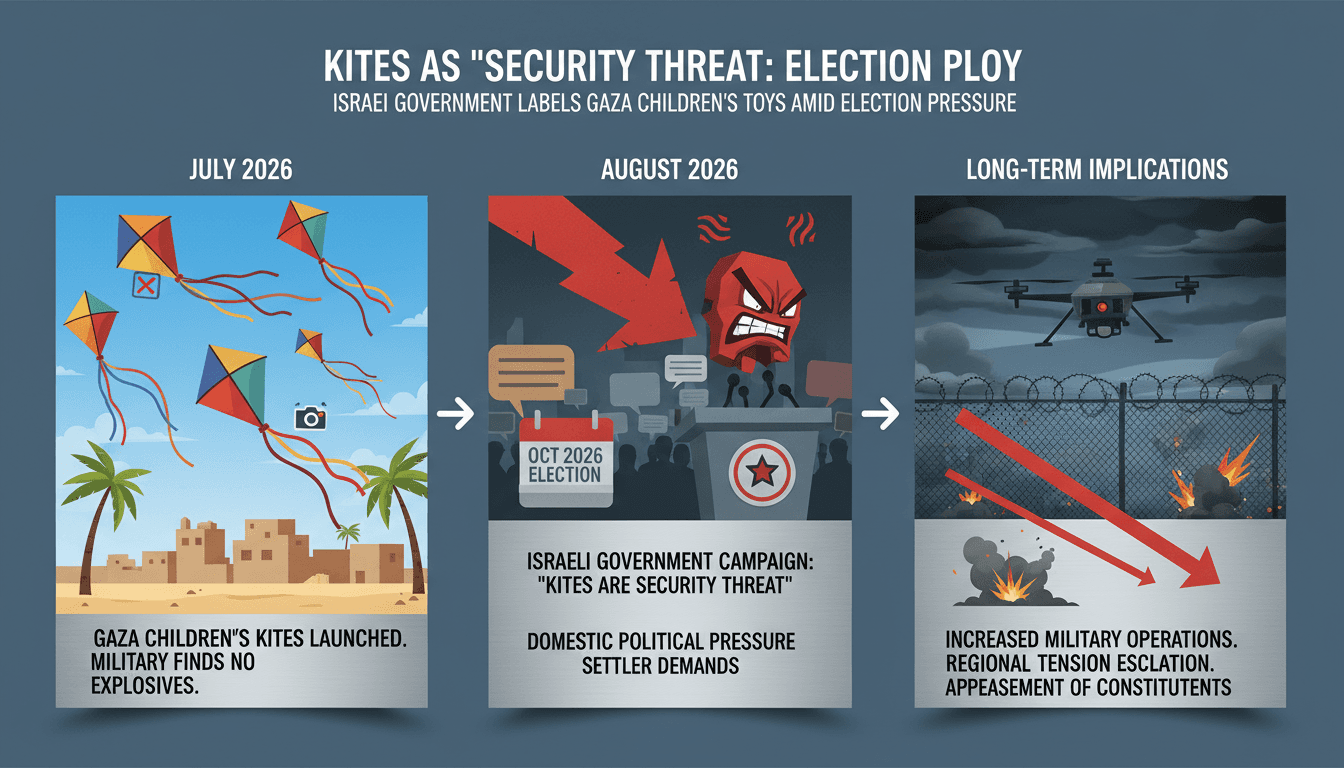
Here's what it means for you.
The portrayal of children's kites as security threats could escalate regional tensions, impacting expatriate sentiment and stability perceptions.
Why it matters
This incident reflects the ongoing volatility in Israeli-Palestinian relations, which can influence broader geopolitical dynamics in the region.
What happened (in 30 seconds)
- On August 24, 2026, Israeli officials launched a campaign labeling kites from Gaza as security threats, despite military assessments indicating no danger.
- Prime Minister Netanyahu and Defense Minister Katz threatened military escalations, including targeted strikes and evacuations, amid rising domestic political pressure.
- Hamas denied involvement, attributing the kites to children's play, while local Gaza committees banned kite flying to prevent further provocations.
The context you actually need
- Historical precedents show that similar incidents involving kites and balloons have been used to justify military actions in past conflicts.
- The October 2023 Hamas attack and subsequent military operations have heightened sensitivities among Israeli border communities, leading to increased scrutiny of cross-border activities.
- Upcoming Israeli elections in October 2026 are creating pressure on the Netanyahu government, which is facing declining poll numbers and demands for a strong security response.
What's really happening
In mid-August 2026, reports emerged of kites crossing from Gaza into Israeli border settlements, prompting immediate military scrutiny. The Israeli Defense Forces (IDF) examined six to ten kites and confirmed they were simple, lightweight structures with no explosives or incendiary materials. Despite this, local settler leaders expressed concerns and called for enhanced detection systems, framing the kites as part of a recurring security issue.
On August 23, Netanyahu and Katz convened a security meeting where they issued threats of intensified military operations, including targeted killings and evacuations of launch areas if the kite launches continued. This rhetoric was not supported by the IDF's assessments, which downplayed the risk posed by the kites. The situation reflects a broader trend where political leaders leverage security narratives to galvanize support, particularly in the lead-up to elections.
Hamas, for its part, denied any organized involvement in the kite launches, attributing them to children's recreational activities. In response to the escalating tensions, popular committees in Gaza's displacement camps issued bans on kite flying to avoid providing pretexts for Israeli military action. This move underscores the complex interplay between civilian activities and military responses in the region.
The Israeli government's framing of the kites as security threats serves multiple purposes. It allows for a show of strength in the face of perceived vulnerabilities, appeases settler demands for action, and distracts from internal political challenges. The historical context of using similar incidents to justify military responses adds a layer of complexity, as it raises questions about the proportionality and motivations behind such escalations.
As the situation unfolds, the ongoing monitoring by the IDF and the rhetoric from Israeli officials indicate a readiness to respond aggressively to any perceived threats, regardless of the actual risk involved. This dynamic not only affects the immediate communities along the Gaza border but also has broader implications for regional stability and international perceptions of the Israeli government's approach to security.
Who feels it first (and how)
- Israeli settlers in border communities, who may experience heightened security measures and military presence.
- Gaza residents, particularly children, who face restrictions on recreational activities and potential military reprisals.
- Political analysts and voters in Israel, who will be influenced by the government's handling of security issues leading up to the elections.
What to watch next
- Election outcomes in October 2026: The results could shift the Israeli government's approach to security and relations with Gaza.
- Responses from Hamas: Any escalation in rhetoric or actions from Hamas could lead to further military responses from Israel.
- International reactions: Watch for how global powers respond to the Israeli government's framing of the situation, which could influence diplomatic relations.
The kites examined by Israeli forces contained no explosives or suspicious materials.
The Israeli government will continue to use security narratives to justify military actions as elections approach.
The long-term impact of this incident on Israeli-Palestinian relations and regional stability remains uncertain.
Frequently Asked Questions
- Why it matters?
- This incident reflects the ongoing volatility in Israeli-Palestinian relations, which can influence broader geopolitical dynamics in the region.
- What happened (in 30 seconds)?
- On August 24, 2026, Israeli officials launched a campaign labeling kites from Gaza as security threats, despite military assessments indicating no danger. Prime Minister Netanyahu and Defense Minister Katz threatened military escalations, including targeted strikes and evacuations, amid rising domestic political pressure. Hamas denied involvement, attributing the kites to children's play, while local Gaza committees banned kite flying to prevent further provocations.
- What's really happening?
- In mid-August 2026, reports emerged of kites crossing from Gaza into Israeli border settlements, prompting immediate military scrutiny. The Israeli Defense Forces (IDF) examined six to ten kites and confirmed they were simple, lightweight structures with no explosives or incendiary materials. Despite this, local settler leaders expressed concerns and called for enhanced detection systems, framing the kites as part of a recurring security issue. On August 23, Netanyahu and Katz convened a securi
- Who feels it first (and how)?
- Israeli settlers in border communities, who may experience heightened security measures and military presence. Gaza residents, particularly children, who face restrictions on recreational activities and potential military reprisals. Political analysts and voters in Israel, who will be influenced by the government's handling of security issues leading up to the elections.
- What to watch next?
- Election outcomes in October 2026: The results could shift the Israeli government's approach to security and relations with Gaza. Responses from Hamas: Any escalation in rhetoric or actions from Hamas could lead to further military responses from Israel. International reactions: Watch for how global powers respond to the Israeli government's framing of the situation, which could influence diplomatic relations.
Pan-Arab news coverage spanning politics, business, sports, and regional affairs.
"Asharq Al-Awsat reflects a broad Arab editorial perspective with strong attention to regional geopolitics."
— A47 Editor
الحكومة تخوِّف الإسرائيليين من الطائرات الورقية لأطفال غزة
Israeli Prime Minister Benjamin Netanyahu and his Defense Minister have initiated a campaign to instill fear among Israeli citizens regarding kite-flying by children in Gaza, suggesting that such activities could lead to a resumption of military acti...
Arabic-language coverage of political affairs and current events.
"Okaz political coverage typically follows mainstream Saudi framing on national and regional affairs."
— A47 Editor
«طائرات ورقية» تُربك إسرائيل.. نتنياهو وكاتس يهددان غزة بالاغتيالات والإخلاء
Tensions have escalated in Israel following the launch of kites from Gaza, prompting Prime Minister Benjamin Netanyahu and Defense Minister Israel Katz to threaten intensified assassinations and evacuations in response. Israeli media reported several...
Arabic-language coverage of international news and geopolitics.
"RT Arabic is a Russian state-funded outlet often criticized for promoting Kremlin-aligned narratives."
— A47 Editor
نتنياهو يهدد بعمليات تهجير واسعة لسكان غزة بعد إطلاق بالونات وطائرات ورقية وصلت إسرائيل
Israeli Prime Minister Benjamin Netanyahu threatened large-scale displacement of Gaza residents following the launch of balloons and kites that reached Israel. In a video message via Telegram, he indicated that attempts are being made in Gaza to use ...