
Trump Claims US-Iran Conflict Nears End as Shipping Resumes in Strait of Hormuz
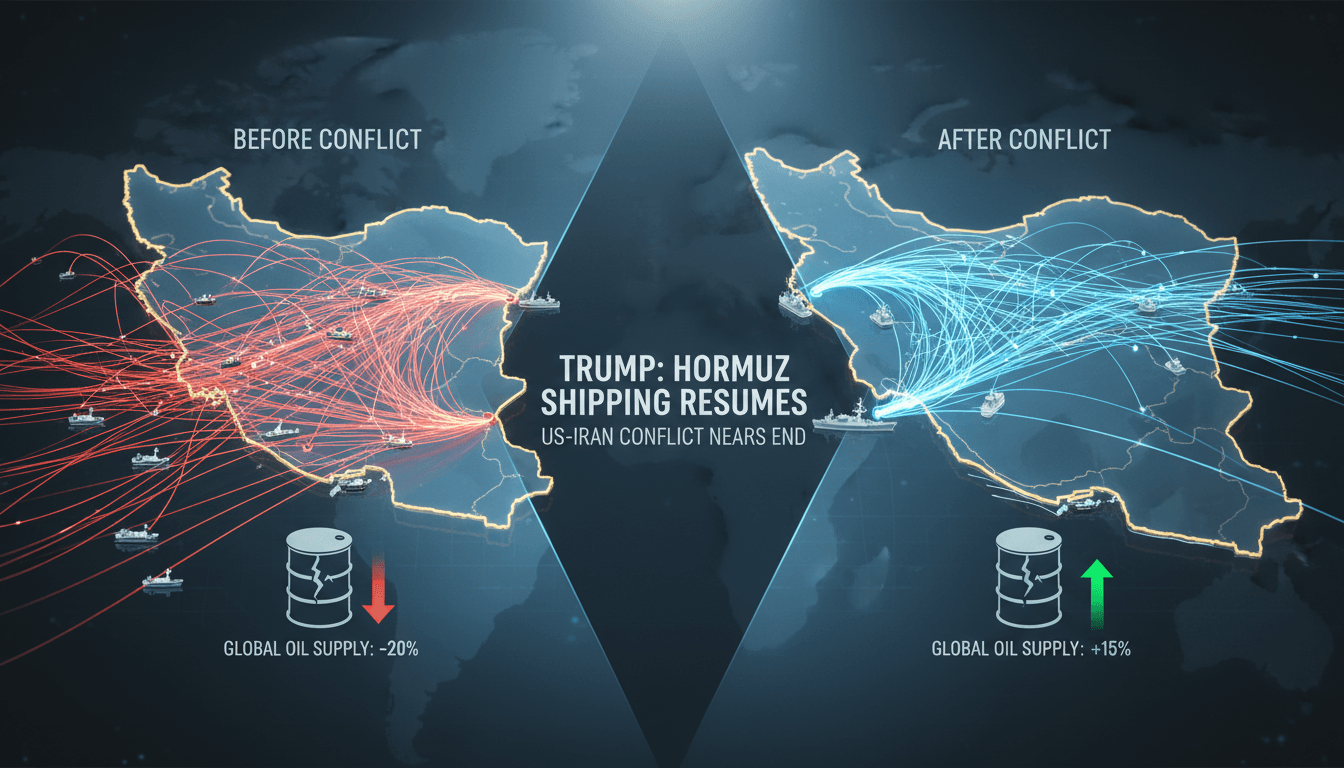
Here's what it means for you.
The resumption of shipping through the Strait of Hormuz could stabilize energy prices, impacting global markets and your business costs.
Why it matters
The Strait of Hormuz is a critical chokepoint for global oil shipments, and its stability directly affects energy prices worldwide.
What happened (in 30 seconds)
- Trump announced that U.S. forces have cleared mines in the Strait of Hormuz, allowing commercial shipping to resume.
- Vessel traffic has begun to increase, although it remains below pre-war levels, indicating cautious optimism.
- Ongoing tensions between the U.S. and Iran persist, with both sides asserting control over navigation routes.
The context you actually need
- The U.S.-Iran conflict escalated on February 28, 2026, leading to significant disruptions in maritime traffic through the Strait of Hormuz.
- Pre-war averages saw about 130 vessels transiting daily; recent data shows only 236 vessels crossed between August 1 and August 19, 2026, indicating a sharp decline.
- Iran's negotiations with Oman for passage terms highlight the complexities of regional diplomacy amid U.S. military operations.
What's really happening
On August 26, 2026, President Trump declared that U.S. military operations had successfully cleared mines from the Strait of Hormuz, a vital waterway for global oil transport. This announcement coincided with a notable uptick in vessel traffic, suggesting that commercial shipping is tentatively resuming after months of conflict. The U.S.-Iran war, which began earlier in the year, has seen various military engagements, including Iranian mine-laying and attacks on vessels, leading to a significant drop in maritime traffic.
Despite the optimistic tone of Trump's statement, the reality on the ground remains complex. The U.S. military's mine clearance operations were a response to Iranian actions that threatened shipping routes, and while the strait is now operational, traffic levels are still significantly below pre-war averages. This indicates that while some vessels are willing to navigate the strait again, many others remain cautious due to ongoing tensions and the potential for renewed hostilities.
The geopolitical landscape is further complicated by Iran's insistence on negotiating passage terms through its territorial waters, primarily with Oman acting as a mediator. This reflects a broader struggle for influence in the region, where both the U.S. and Iran are vying for control over critical maritime routes. The U.S. has reiterated its commitment to maintaining control over the strait, warning against any further Iranian mine-laying, which could disrupt shipping once again.
The implications of these developments extend beyond immediate shipping concerns. The resumption of traffic through the Strait of Hormuz could ease upward pressure on global energy prices, which have been volatile due to the conflict. For Dubai, a city heavily reliant on imports and logistics, this stabilization could have significant economic benefits. However, the persistent low volumes of traffic and the underlying regional instability continue to pose risks to UAE tanker operations and port throughput.
Who feels it first (and how)
- Shipping companies: They will closely monitor traffic levels and adjust routes and pricing based on perceived risks.
- Energy sector: Oil and gas companies will be affected by fluctuations in supply and pricing as shipping resumes.
- Logistics firms: Companies operating in Dubai and the UAE will need to adapt to changes in shipping costs and timelines.
- Consumers: Ultimately, any changes in energy prices will trickle down to consumers, affecting everything from fuel costs to goods prices.
What to watch next
- Traffic data: Monitor daily vessel transits through the Strait of Hormuz to gauge the stability of shipping operations.
- Diplomatic negotiations: Watch for developments in U.S.-Iran talks, especially regarding navigation rights and regional security.
- Energy prices: Keep an eye on global oil prices, as fluctuations could signal shifts in supply dynamics related to the Strait.
The U.S. has cleared mines in the Strait of Hormuz, allowing for resumed shipping.
Vessel traffic will gradually increase, but may remain below pre-war levels for the foreseeable future.
The long-term stability of the region and the potential for renewed conflict remain uncertain.
Frequently Asked Questions
- Why it matters?
- The Strait of Hormuz is a critical chokepoint for global oil shipments, and its stability directly affects energy prices worldwide.
- What happened (in 30 seconds)?
- Trump announced that U.S. forces have cleared mines in the Strait of Hormuz, allowing commercial shipping to resume. Vessel traffic has begun to increase, although it remains below pre-war levels, indicating cautious optimism. Ongoing tensions between the U.S. and Iran persist, with both sides asserting control over navigation routes.
- What's really happening?
- On August 26, 2026, President Trump declared that U.S. military operations had successfully cleared mines from the Strait of Hormuz, a vital waterway for global oil transport. This announcement coincided with a notable uptick in vessel traffic, suggesting that commercial shipping is tentatively resuming after months of conflict. The U.S.-Iran war, which began earlier in the year, has seen various military engagements, including Iranian mine-laying and attacks on vessels, leading to a significant
- Who feels it first (and how)?
- Shipping companies: They will closely monitor traffic levels and adjust routes and pricing based on perceived risks. Energy sector: Oil and gas companies will be affected by fluctuations in supply and pricing as shipping resumes. Logistics firms: Companies operating in Dubai and the UAE will need to adapt to changes in shipping costs and timelines. Consumers: Ultimately, any changes in energy prices will trickle down to consumers, affecting everything from fuel costs to goods prices.
- What to watch next?
- Traffic data: Monitor daily vessel transits through the Strait of Hormuz to gauge the stability of shipping operations. Diplomatic negotiations: Watch for developments in U.S.-Iran talks, especially regarding navigation rights and regional security. Energy prices: Keep an eye on global oil prices, as fluctuations could signal shifts in supply dynamics related to the Strait.
Arabic-language coverage of Saudi, regional, and international affairs.
"Al Bilad offers mainstream Saudi newspaper coverage across domestic and broader Arab topics."
— A47 Editor
أكد أن سفناً كثيرة بدأت في عبور المضيق.. ترمب: حرب إيران تقترب من النهاية والملاحة تعود لـ«هرمز»
U.S. President Donald Trump stated that the war between the United States and Iran is nearing its end, coinciding with efforts to resolve ongoing tensions that have impacted maritime navigation and global energy markets. His remarks come as many ship...
Arabic-language coverage of political affairs and current events.
"Okaz political coverage typically follows mainstream Saudi framing on national and regional affairs."
— A47 Editor
ترمب: لا جدول زمنياً للمفاوضات.. والحرب تقترب من نهايتها
U.S. President Donald Trump predicted the imminent end of the war between the United States and Iran, stating there is no timeline for returning to negotiations. He emphasized that the Strait of Hormuz is open and that U.S. forces have successfully e...
Arabic-language coverage of international news and geopolitics.
"RT Arabic is a Russian state-funded outlet often criticized for promoting Kremlin-aligned narratives."
— A47 Editor
ترامب يكشف سببا منعه من عقد صفقة مع الإيرانيين ويتعهد بإعلان "النصر الكبير" قريبا
U.S. President Donald Trump announced that the actions taken by the United States against Iran may soon come to an end, revealing that he was prevented from finalizing a deal with the Iranians.
Jordanian news and regional updates.
"Roya News is a Jordanian outlet focused on breaking news and local affairs."
— A47 Editor
ترمب يعلن تطهير مضيق هرمز من الألغام البحرية ويهدد بإبادة أي سفينة إيرانية مخالفة
President Donald Trump announced the removal of naval mines from the Strait of Hormuz and threatened to destroy any Iranian vessel that violates maritime regulations. This declaration was made through his social media platform, Truth Social, highligh...
Arabic-language coverage of political affairs and current events.
"Okaz political coverage typically follows mainstream Saudi framing on national and regional affairs."
— A47 Editor
«أرض أمريكية».. خطاب ترمب يغيّر معادلة النفوذ في مضيق هرمز
In a significant escalation of tensions between Washington and Tehran, President Donald Trump reaffirmed that the Strait of Hormuz is now considered 'American territory,' following the release of a map on his platform, Truth Social, labeled as 'New A...