
United States Cancels Joint Military Drills with South Korea Amid Iran War Constraints
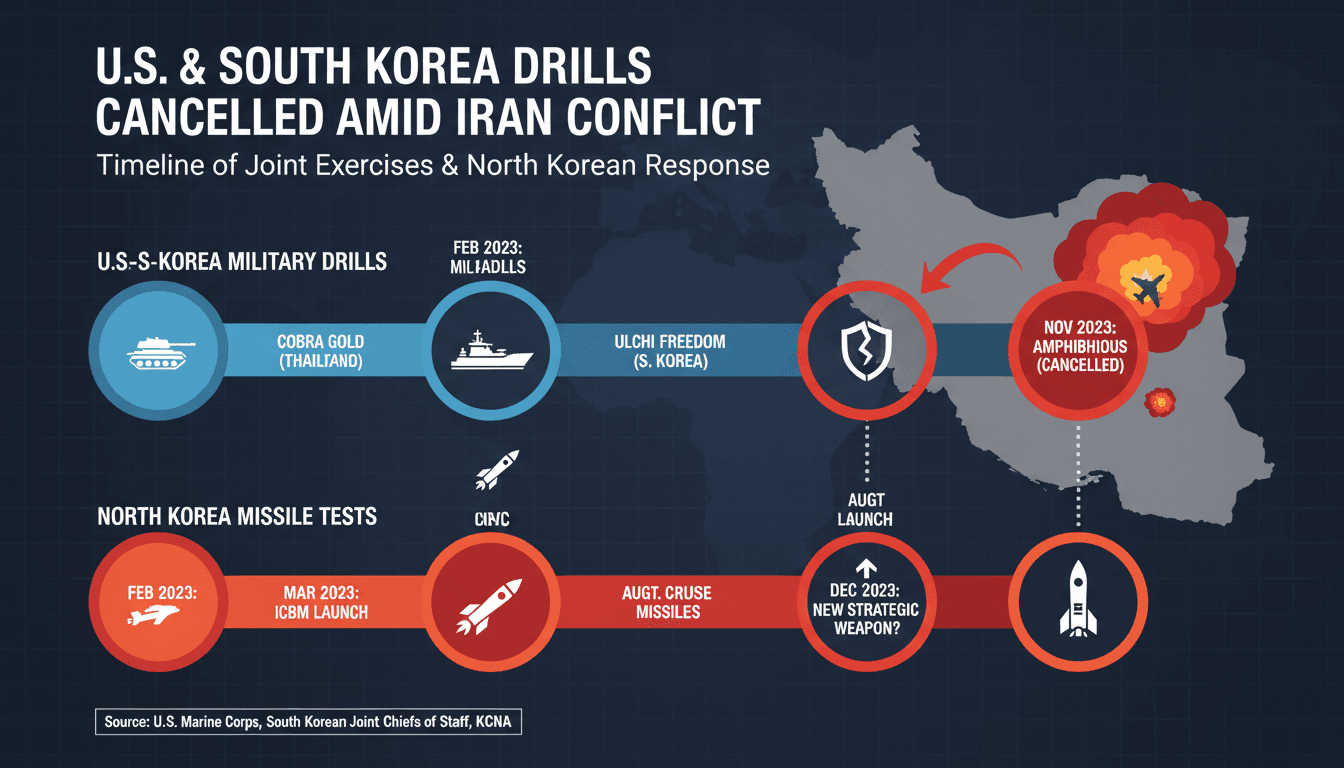
Here's what it means for you.
The cancellation of U.S.-South Korea military drills could impact regional security dynamics and international relations.
Why it matters
This decision reflects shifting U.S. military priorities and may influence North Korea's strategic calculations.
What happened (in 30 seconds)
- On August 24, 2026, the U.S. canceled a joint amphibious exercise with South Korea due to troop constraints from the Iran conflict.
- The decision follows President Trump's directive to reduce military exercises, citing costs and South Korea's non-participation in Iran operations.
- North Korea responded by launching ten short-range missiles, escalating tensions in the region.
The context you actually need
- The U.S. military is currently engaged in an active conflict in Iran, which has strained its global force availability.
- Joint exercises with South Korea have historically served as a deterrent against North Korean aggression, which views them as invasion rehearsals.
- The Trump administration's focus on cost reduction and burden-sharing has led to significant changes in military collaboration with allies.
What's really happening
The cancellation of the Ssangyong amphibious drills is a direct consequence of the U.S. military's ongoing commitments in Iran, which have limited troop availability for other operations. This situation is emblematic of a broader trend in U.S. defense policy under President Trump's administration, which has prioritized cost efficiency and alliance burden-sharing. The decision to scale back military exercises, including the recent Ulchi Freedom Shield drills, reflects a strategic pivot that aims to reduce expenses while still maintaining a semblance of military readiness.
Historically, joint military exercises between the U.S. and South Korea have been crucial for demonstrating military strength and deterrence against North Korea. These exercises are often condemned by Pyongyang, which perceives them as rehearsals for invasion. The recent cancellation, however, signals a shift in U.S. military strategy, as the focus on the Iran conflict takes precedence over traditional deterrence measures in East Asia.
The implications of this shift are multifaceted. For one, it may embolden North Korea, which has already responded to the reduced military presence by launching ten short-range missiles. This escalation could lead to increased tensions in the region, as North Korea may feel less constrained in its military actions without the deterrent effect of U.S.-South Korea exercises.
Moreover, the ongoing consultations between U.S. and South Korean officials regarding the potential resumption of joint drills indicate that both nations are aware of the strategic importance of these exercises. However, the lack of immediate policy shifts or market movements following the cancellation suggests that the broader geopolitical landscape is still in flux, with stakeholders closely monitoring developments.
The U.S. State Department's emphasis on continued coordination with South Korea highlights the importance of maintaining strong alliances, even amid operational constraints. As the situation evolves, the balance of military power in the region may shift, necessitating a reevaluation of defense strategies by both the U.S. and its allies.
Who feels it first (and how)
- U.S. Military Personnel: Troops may face increased operational demands due to the Iran conflict, affecting their deployment schedules.
- South Korean Government: Officials must navigate the implications of reduced military collaboration while managing regional security concerns.
- North Korean Regime: The leadership may exploit the situation to assert military strength and challenge U.S. influence in the region.
- Regional Allies: Countries in East Asia may reassess their defense strategies in light of changing U.S. military commitments.
What to watch next
- Future U.S.-South Korea Military Consultations: Ongoing discussions may reveal whether joint exercises will resume and how that impacts regional security.
- North Korea's Military Activities: Increased missile tests or military provocations could indicate a shift in North Korea's strategic posture in response to U.S. actions.
- U.S. Military Engagement in Iran: Developments in the Iran conflict will directly influence U.S. military capabilities and commitments in other regions.
The U.S. has canceled the Ssangyong military exercises due to troop constraints.
North Korea will continue to test missiles and assert military capabilities in response to perceived weaknesses in U.S. deterrence.
The long-term implications for U.S.-South Korea relations and regional security dynamics remain uncertain.
Frequently Asked Questions
- Why it matters?
- This decision reflects shifting U.S. military priorities and may influence North Korea's strategic calculations.
- What happened (in 30 seconds)?
- On August 24, 2026, the U.S. canceled a joint amphibious exercise with South Korea due to troop constraints from the Iran conflict. The decision follows President Trump's directive to reduce military exercises, citing costs and South Korea's non-participation in Iran operations. North Korea responded by launching ten short-range missiles, escalating tensions in the region.
- What's really happening?
- The cancellation of the Ssangyong amphibious drills is a direct consequence of the U.S. military's ongoing commitments in Iran, which have limited troop availability for other operations. This situation is emblematic of a broader trend in U.S. defense policy under President Trump's administration, which has prioritized cost efficiency and alliance burden-sharing. The decision to scale back military exercises, including the recent Ulchi Freedom Shield drills, reflects a strategic pivot that aims
- Who feels it first (and how)?
- U.S. Military Personnel: Troops may face increased operational demands due to the Iran conflict, affecting their deployment schedules. South Korean Government: Officials must navigate the implications of reduced military collaboration while managing regional security concerns. North Korean Regime: The leadership may exploit the situation to assert military strength and challenge U.S. influence in the region. Regional Allies: Countries in East Asia may reassess their defense strategies in l
- What to watch next?
- Future U.S.-South Korea Military Consultations: Ongoing discussions may reveal whether joint exercises will resume and how that impacts regional security. North Korea's Military Activities: Increased missile tests or military provocations could indicate a shift in North Korea's strategic posture in response to U.S. actions. U.S. Military Engagement in Iran: Developments in the Iran conflict will directly influence U.S. military capabilities and commitments in other regions.
Pan-Arab news coverage spanning politics, business, sports, and regional affairs.
"Asharq Al-Awsat reflects a broad Arab editorial perspective with strong attention to regional geopolitics."
— A47 Editor
أميركا تلغي تدريبات مع مشاة بحرية كوريا الجنوبية بسبب حرب إيران
The United States has canceled a scheduled joint amphibious landing exercise with South Korea, which was set to take place next month, according to the South Korean Marine Corps. This decision comes amid ongoing tensions related to the Iran conflict,...
Capitol Hill news, legislation, and policy insight.
"The Hill specializes in U.S. politics and policy, with a focus on Capitol Hill developments and a reputation for insider reporting."
— A47 Editor
Marines cancel joint drill with South Korea
The United States Marine Corps has canceled a significant joint amphibious landing exercise with South Korean forces, originally scheduled for September, due to resource constraints linked to the ongoing U.S.-Israeli conflict in Iran. This decision w...
Conservative-leaning political and national coverage.
"The Washington Times is a conservative-leaning newspaper known for its political coverage and advocacy of right-of-center viewpoints."
— A47 Editor
Another South Korea-U.S. military drill is cut as Iran conflict overshadows the Indo-Pacific
The U.S. Marine Corps has canceled its biennial military drills with South Korea, following President Trump's recent directive to downscale joint exercises, including the Ulchi Freedom Shield drills. This decision comes amid ongoing tensions related ...
Global news coverage with extensive reporting on Middle Eastern conflicts and geopolitics.
"Al Jazeera is a Qatar-based broadcaster known for wide regional coverage and alternative perspectives."
— A47 Editor
South Korea says US cancelled upcoming joint marine exercises over Iran war
South Korea announced that the United States has canceled upcoming joint marine exercises, a decision linked to President Trump's recent directive to scale back military drills amid the ongoing conflict in Iran. This cancellation follows Trump's earl...
Comprehensive coverage of Middle Eastern and global issues.
"Al Jazeera is a prominent voice from the Global South, especially the Middle East, with an emphasis on underreported stories."
— A47 Editor
South Korea says US cancelled upcoming joint marine exercises over Iran war
South Korea announced that the United States has canceled upcoming joint marine exercises, a decision linked to President Trump's recent directive to scale back military drills amid the ongoing conflict in Iran. This cancellation follows Trump's earl...
Arabic-language coverage of political affairs and current events.
"Okaz political coverage typically follows mainstream Saudi framing on national and regional affairs."
— A47 Editor
لماذا ألغت واشنطن تدريبات برية مشتركة مع كوريا الجنوبية؟
The United States has canceled joint amphibious landing exercises with South Korea, originally scheduled for next month, due to limited U.S. military resources available because of the ongoing conflict in Iran. A South Korean Marine Corps spokesperso...
Regional and international reporting focused on Middle Eastern politics, diplomacy, and economics.
"Asharq Al-Awsat is a Saudi-owned international newspaper reflecting mainstream Gulf political perspectives."
— A47 Editor
US Cancels Joint Marine Drills with SKorea over Iran War
The United States has canceled upcoming joint marine exercises with South Korea, a decision linked to President Trump's directive to reduce military drills amid escalating tensions related to the conflict in Iran. This cancellation reflects a shift i...
Pan-Arab news coverage spanning politics, business, sports, and regional affairs.
"Asharq Al-Awsat reflects a broad Arab editorial perspective with strong attention to regional geopolitics."
— A47 Editor
أميركا تلغي تدريبات مع مشاة بحرية كوريا الجنوبية بسبب حرب إيران
The United States has canceled joint amphibious landing exercises with South Korea that were scheduled for next month, citing the ongoing conflict in Iran as the reason for this decision. This cancellation reflects the shifting priorities and concern...
Regional coverage and analysis focused on politics, diplomacy, and business across the Middle East.
"Al-Monitor is known for analytical reporting on Middle East politics and policy developments."
— A47 Editor
US cancels joint marine drills with South Korea over Iran war-related force constraints
The United States has canceled a joint amphibious landing drill with South Korea, known as Ssangyong, scheduled for next month, citing constraints on U.S. forces due to the ongoing conflict in Iran. The U.S. Marine Corps informed its South Korean cou...
Pan-Arab political news and analysis.
"Al-Quds Al-Arabi is a London-based Arabic newspaper known for political coverage."
— A47 Editor
أمريكا تلغي تدريبات مع مشاة بحرية كوريا الجنوبية بسبب حرب إيران
The United States has canceled joint amphibious landing exercises with South Korea that were scheduled for next month, citing limited available U.S. forces due to the ongoing war in Iran. A spokesperson for the South Korean Marine Corps confirmed thi...