
Trump Threatens 50% Tariffs on Canadian Autos Following Trade Negotiation Collapse
Here's what it means for you.
If you invest in the auto sector, this tariff threat could impact your portfolio significantly.
Why it matters
The escalation of tariffs threatens the integrated North American auto supply chain, potentially leading to higher consumer prices and reduced production.
What happened (in 30 seconds)
- On August 24, 2026, President Trump announced a 50% tariff on Canadian automotive imports effective January 1, 2027.
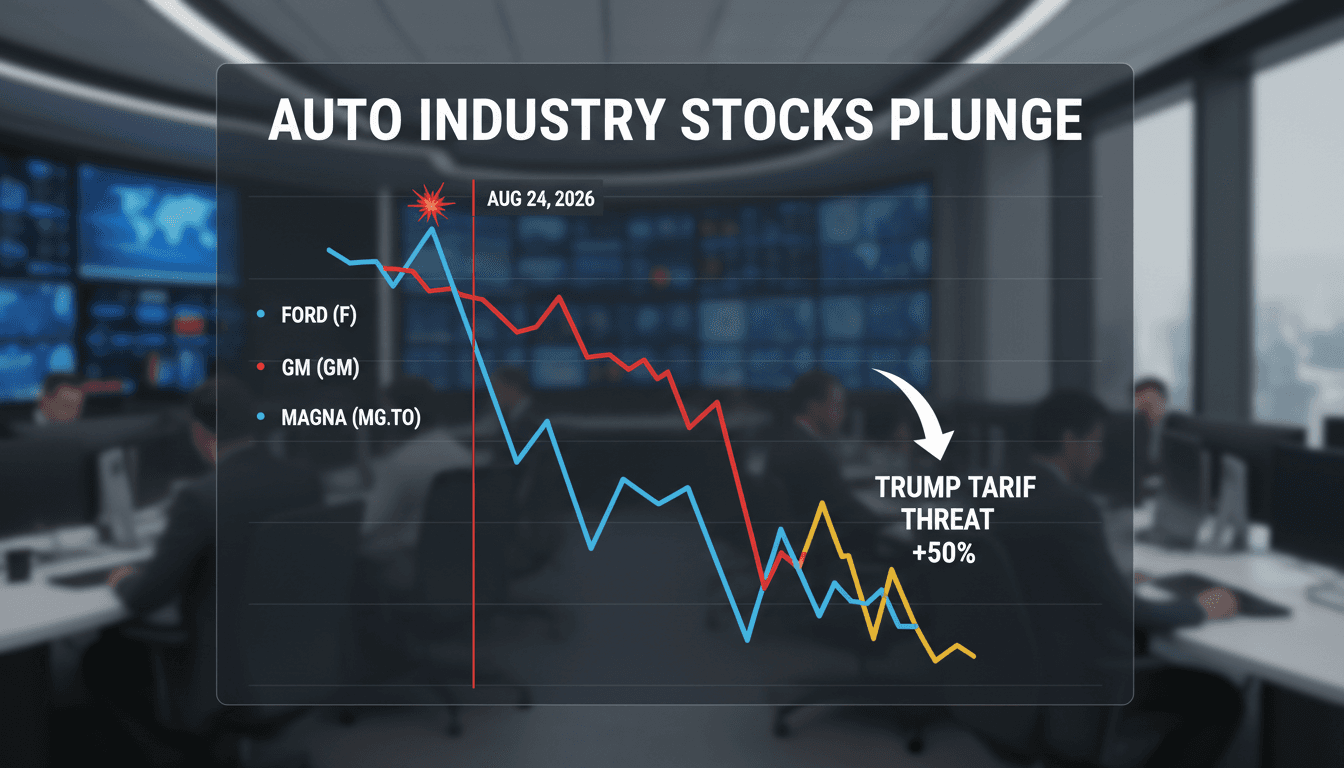
- Auto stocks reacted sharply, with Magna International experiencing a 7.19% drop, the largest decline in the sector.
- Canada plans retaliatory tariffs on U.S. goods starting September 8, 2026, further complicating trade relations.
The context you actually need
- U.S.-Canada trade relations have deteriorated since 2025, with existing tariffs on steel and aluminum contributing to tensions.
- Negotiations to reduce vehicle tariffs collapsed just days before the announcement, indicating a breakdown in diplomatic efforts.
- The North American auto supply chain is highly integrated, meaning tariffs could disrupt production and increase costs for consumers.
What's really happening
On August 24, 2026, President Trump took to Truth Social to announce a significant escalation in trade tensions with Canada, specifically targeting the automotive sector. This announcement came on the heels of failed negotiations aimed at reducing existing tariffs on vehicles from 25% to 15%. The collapse of these talks on August 22, 2026, set the stage for the drastic measure of imposing a 50% tariff on approximately $20 billion worth of Canadian automotive exports.
The immediate market reaction was pronounced. Stocks of companies with substantial Canadian manufacturing exposure, such as Magna International, Ford, Stellantis, and General Motors, saw declines. Magna International's shares plummeted by 7.19%, reflecting investor concerns over the company's supply chain vulnerabilities and balance sheet health. Ford, which has been identified as particularly at risk due to its negative margins and high leverage, saw a 3.33% drop, while Stellantis and GM also experienced declines, albeit to a lesser extent.
The implications of these tariffs extend beyond immediate stock market reactions. The auto industry is characterized by a complex web of supply chains that span both the U.S. and Canada. Many manufacturers rely on parts produced in Canada, and the imposition of tariffs could lead to production halts and increased costs that would ultimately be passed on to consumers. This could result in higher prices for vehicles and automotive parts, affecting consumer purchasing decisions and potentially slowing down sales.
Moreover, Canadian officials have indicated plans for retaliatory tariffs on U.S. goods, which could escalate the trade conflict further. This tit-for-tat approach could lead to a broader trade war, impacting not just the auto sector but also other industries reliant on cross-border trade. Steel producers, however, may benefit from the tariffs as domestic production is favored over imports.
The broader market commentary has highlighted the risks associated with the integrated supply chain, emphasizing that without a policy reversal, the auto industry could face significant disruptions. Investors are now left to navigate a landscape fraught with uncertainty, as the potential for retaliatory measures and further escalations loom large.
Who feels it first (and how)
- Auto manufacturers: Companies like Ford and GM may face production delays and increased costs.
- Investors: Shareholders in affected companies could see declines in stock value.
- Consumers: Higher prices for vehicles and parts may lead to reduced purchasing power.
- Canadian exporters: Businesses relying on U.S. markets may experience revenue losses due to tariffs.
- Steel producers: Domestic steel manufacturers may benefit from reduced competition from Canadian imports.
What to watch next
- Retaliatory tariffs from Canada: These could further escalate trade tensions and impact U.S. exports.
- Stock performance of affected manufacturers: Continued declines or recoveries in auto stocks will signal market sentiment.
- Negotiation developments: Any new talks or agreements could alter the current trajectory of tariffs and trade relations.
The 50% tariff on Canadian automotive imports is set to take effect on January 1, 2027.
Retaliatory tariffs from Canada will be implemented, affecting U.S. goods.
The long-term impact on the auto industry and consumer prices remains uncertain.
Frequently Asked Questions
- Why it matters?
- The escalation of tariffs threatens the integrated North American auto supply chain, potentially leading to higher consumer prices and reduced production.
- What happened (in 30 seconds)?
- On August 24, 2026, President Trump announced a 50% tariff on Canadian automotive imports effective January 1, 2027. Auto stocks reacted sharply, with Magna International experiencing a 7.19% drop, the largest decline in the sector. Canada plans retaliatory tariffs on U.S. goods starting September 8, 2026, further complicating trade relations.
- What's really happening?
- On August 24, 2026, President Trump took to Truth Social to announce a significant escalation in trade tensions with Canada, specifically targeting the automotive sector. This announcement came on the heels of failed negotiations aimed at reducing existing tariffs on vehicles from 25% to 15%. The collapse of these talks on August 22, 2026, set the stage for the drastic measure of imposing a 50% tariff on approximately $20 billion worth of Canadian automotive exports. The immediate market reacti
- Who feels it first (and how)?
- Auto manufacturers: Companies like Ford and GM may face production delays and increased costs. Investors: Shareholders in affected companies could see declines in stock value. Consumers: Higher prices for vehicles and parts may lead to reduced purchasing power. Canadian exporters: Businesses relying on U.S. markets may experience revenue losses due to tariffs. Steel producers: Domestic steel manufacturers may benefit from reduced competition from Canadian imports.
- What to watch next?
- Retaliatory tariffs from Canada: These could further escalate trade tensions and impact U.S. exports. Stock performance of affected manufacturers: Continued declines or recoveries in auto stocks will signal market sentiment. Negotiation developments: Any new talks or agreements could alter the current trajectory of tariffs and trade relations.
Market-moving headlines impacting equities, bonds, and related risk assets.
"Real-time catalysts and volatility drivers across indices and sectors."
— A47 Editor
Avoid these 3 auto stocks as Trump threatens 50% Canada tariffs
President Trump has threatened to impose a 50% tariff on all cars and trucks imported from Canada, escalating trade tensions amid failed negotiations for a trade agreement. This announcement follows a broader context of tariffs affecting various good...
Pan-Arab political news and analysis.
"Al-Quds Al-Arabi is a London-based Arabic newspaper known for political coverage."
— A47 Editor
ترامب يهدد برفع الرسوم على السيارات والشاحنات إلى 50% وسط خلاف مع كندا
U.S. President Donald Trump announced on Monday that tariffs on all cars, trucks, auto parts, and steel will increase to 50% starting January 1, 2027, following the collapse of trade talks with Canada over the weekend. Trump emphasized on social medi...
Global news coverage with extensive reporting on Middle Eastern conflicts and geopolitics.
"Al Jazeera is a Qatar-based broadcaster known for wide regional coverage and alternative perspectives."
— A47 Editor
Trump slams Canada with new 50 percent auto tariffs for 2027
U.S. President Donald Trump has announced that tariffs on Canadian auto and steel products will increase to 50% starting January 1, 2027, following the breakdown of trade negotiations between the two nations. This decision affects approximately $20 b...
Comprehensive coverage of Middle Eastern and global issues.
"Al Jazeera is a prominent voice from the Global South, especially the Middle East, with an emphasis on underreported stories."
— A47 Editor
Trump slams Canada with new 50 percent auto tariffs for 2027
U.S. President Donald Trump has announced that tariffs on Canadian auto and steel products will increase to 50% starting January 1, 2027, following the breakdown of trade negotiations between the two nations. This decision affects approximately $20 b...
Market-moving headlines impacting equities, bonds, and related risk assets.
"Real-time catalysts and volatility drivers across indices and sectors."
— A47 Editor
Trump threatens 50% tariffs on all cars and trucks from Canada amid trade fight
President Trump has threatened to impose a 50% tariff on all cars and trucks imported from Canada, escalating trade tensions between the two nations. This announcement follows the failure to reach a trade agreement and comes amid ongoing negotiations...
Jordanian news and regional updates.
"Roya News is a Jordanian outlet focused on breaking news and local affairs."
— A47 Editor
ترمب يعلن رفع الرسوم الجمركية على صناعة السيارات والصلب الكندية إلى 50% بداية 2027
Former President Donald Trump announced plans to increase tariffs on Canadian automotive and steel industries to 50%, effective from 2027. This decision is part of a broader strategy to impose higher tariffs on a wide range of Canadian products, refl...