
Trump Declares Iran is Collapsing Ahead of Major Sanctions Announcement
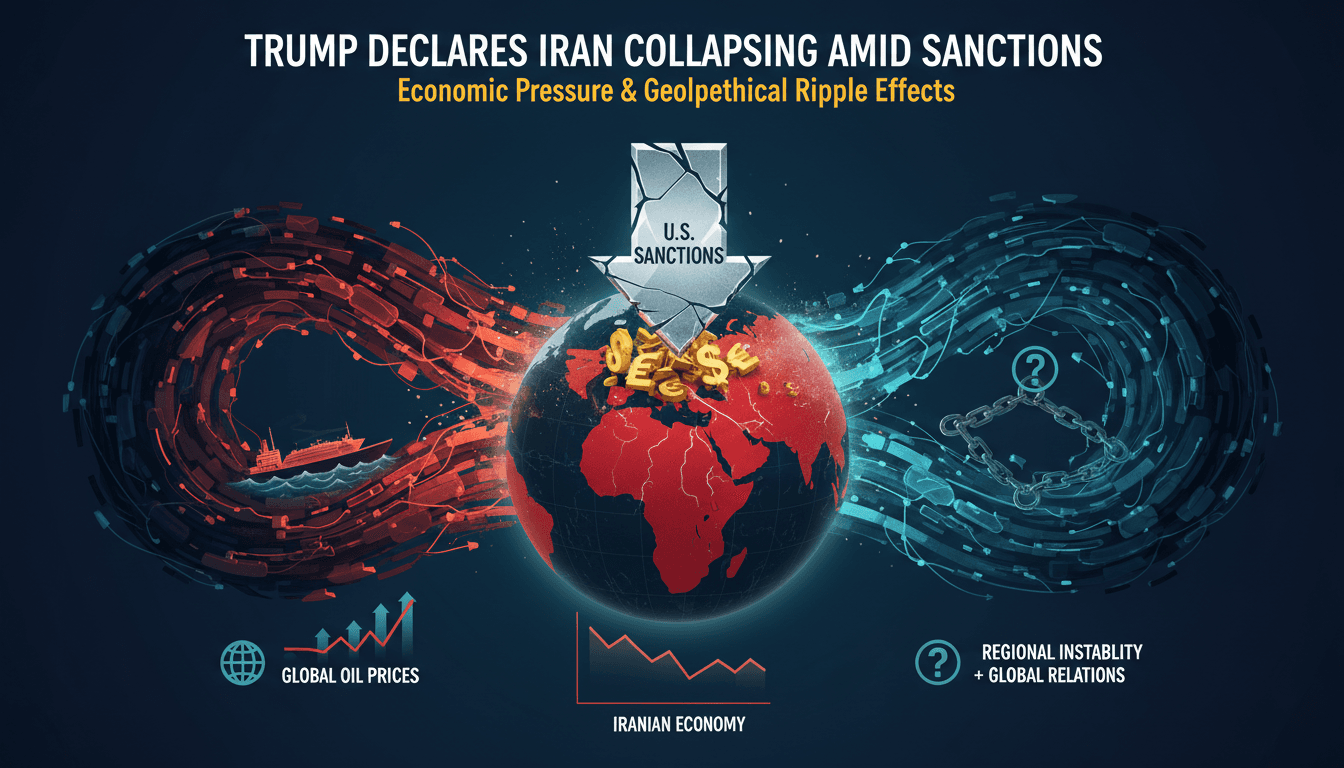
Why it matters
The U.S. sanctions are set to significantly disrupt regional trade and oil markets, affecting global supply chains.
What happened (in 30 seconds)
- Trump declared Iran is 'collapsing completely' in a Truth Social post, signaling a shift to economic warfare.
- Treasury Secretary Scott Bessent announced unprecedented sanctions aimed at isolating Iran and its trading partners.
- The Iranian rial sharply depreciated, reflecting immediate market reactions to the intensified economic pressure.
The context you actually need
- The 2026 Iran conflict escalated after U.S. and Israeli strikes killed Supreme Leader Ali Khamenei, leading to military engagements and failed ceasefires.
- The U.S. pivoted to economic measures in mid-August, building on decades of sanctions to further isolate Iran economically.
- Regional implications are significant, particularly for Gulf stability and trade routes through the Strait of Hormuz, crucial for oil transport.
What's really happening
On August 24, 2026, President Donald Trump’s assertion that Iran is “collapsing completely” came just hours before the U.S. Treasury Department unveiled what has been termed the “largest financial attack ever” against the Iranian economy. This announcement marks a pivotal moment in the ongoing 2026 Iran conflict, which has transitioned from military operations to a strategy of maximum economic pressure. The U.S. aims to compel Iran to make concessions regarding its nuclear program and regional behavior, leveraging economic sanctions as a primary tool.
The sanctions target not only Iran but also its trading partners, creating a ripple effect across global markets. Treasury Secretary Scott Bessent's description of the sanctions as an “economic D-Day” underscores the seriousness of the U.S. approach. The immediate impact has been a sharp depreciation of the Iranian rial, indicating that the Iranian economy is already feeling the strain of these measures.
This shift to economic warfare is rooted in a long history of U.S.-Iran relations, characterized by mutual distrust and escalating tensions. The U.S. has employed sanctions as a means of exerting pressure on Iran for decades, but the current measures are unprecedented in scale and scope. The goal is to isolate the Iranian regime economically, thereby limiting its ability to fund military operations and influence in the region.
As the sanctions take effect, the U.S. is urging its allies to join in the isolation effort, which could lead to a broader coalition against Iran. However, the response from Gulf states has been muted so far, with no immediate major governmental reactions reported. This could indicate a cautious approach as these nations assess the potential economic fallout from the sanctions.
The implications for global oil markets are significant, as Iran is a key player in the region. Disruptions to Iranian oil exports could lead to increased prices and volatility in global markets, affecting consumers and businesses worldwide. Additionally, the sanctions may create opportunities for other oil-producing nations to fill the gap left by Iranian exports, further reshaping the energy landscape.
Who feels it first (and how)
- Traders and businesses involved in oil and commodities will face immediate market volatility.
- Financial institutions with exposure to Iranian assets or trading partners will need to reassess risk.
- Consumers may experience rising prices for oil and gas as supply chains adjust to the sanctions.
- Residents of Dubai and the UAE could see economic ripple effects due to their ties to regional commerce and oil markets.
What to watch next
- Iran's economic indicators: Monitoring the rial's value and inflation rates will provide insight into the sanctions' effectiveness.
- Global oil prices: Fluctuations in oil prices will signal how the market is responding to reduced Iranian exports.
- Responses from U.S. allies: Any shifts in support or participation in the sanctions from Gulf states could alter the landscape of the conflict.
The U.S. has implemented new sanctions targeting Iran and its trading partners.
The Iranian economy will continue to face significant pressure, leading to potential instability.
The long-term effectiveness of these sanctions in achieving U.S. objectives regarding Iran's nuclear program.
Frequently Asked Questions
- Why it matters?
- The U.S. sanctions are set to significantly disrupt regional trade and oil markets, affecting global supply chains.
- What happened (in 30 seconds)?
- Trump declared Iran is 'collapsing completely' in a Truth Social post, signaling a shift to economic warfare. Treasury Secretary Scott Bessent announced unprecedented sanctions aimed at isolating Iran and its trading partners. The Iranian rial sharply depreciated, reflecting immediate market reactions to the intensified economic pressure.
- What's really happening?
- On August 24, 2026, President Donald Trump’s assertion that Iran is “collapsing completely” came just hours before the U.S. Treasury Department unveiled what has been termed the “largest financial attack ever” against the Iranian economy. This announcement marks a pivotal moment in the ongoing 2026 Iran conflict, which has transitioned from military operations to a strategy of maximum economic pressure. The U.S. aims to compel Iran to make concessions regarding its nuclear program and regional b
- Who feels it first (and how)?
- Traders and businesses involved in oil and commodities will face immediate market volatility. Financial institutions with exposure to Iranian assets or trading partners will need to reassess risk. Consumers may experience rising prices for oil and gas as supply chains adjust to the sanctions. Residents of Dubai and the UAE could see economic ripple effects due to their ties to regional commerce and oil markets.
- What to watch next?
- Iran's economic indicators: Monitoring the rial's value and inflation rates will provide insight into the sanctions' effectiveness. Global oil prices: Fluctuations in oil prices will signal how the market is responding to reduced Iranian exports. Responses from U.S. allies: Any shifts in support or participation in the sanctions from Gulf states could alter the landscape of the conflict.
Arabic-language political and world news coverage for UAE readers.
"Emarat Al Youm world coverage usually presents international developments through a UAE and Arab audience lens."
— A47 Editor
ترامب: إيران "تنهار" بشكل كامل ترامب: إيران "تنهار" بشكل كامل
On August 24, 2026, U.S. President Donald Trump stated that Iran is experiencing complete collapse, coinciding with the announcement of new economic sanctions by his administration. This remark reflects the ongoing tensions between the United States ...
Corporate leadership, finance, technology, and market trends.
"Fortune covers financial trends, leadership, and innovation with a pragmatic editorial approach."
— A47 Editor
‘We will not endure’ — Top Iranian leaders signal they are running out of time as economy crumbles ahead of Trump’s next sanctions onslaught
Iranian leaders have expressed growing urgency as the nation's economy deteriorates, signaling a potential response to impending sanctions from former President Trump. The leadership's statement reflects a deepening concern over the economic pressure...
English-language reporting on Saudi politics, policy, and society.
"Saudi Gazette reflects mainstream Saudi institutional perspectives."
— A47 Editor
Trump says Iran still not ready for ‘right deal’ as US tightens economic pressure
US President Donald Trump stated that Iran is not yet ready to accept a favorable deal with the United States, despite indications that Tehran desires an agreement. This assertion comes as the US intensifies economic pressure on Iran, which has been ...