
Trump Administration Proposes Permanent $103,265 Fee for H-1B Visas to Address Program Abuse
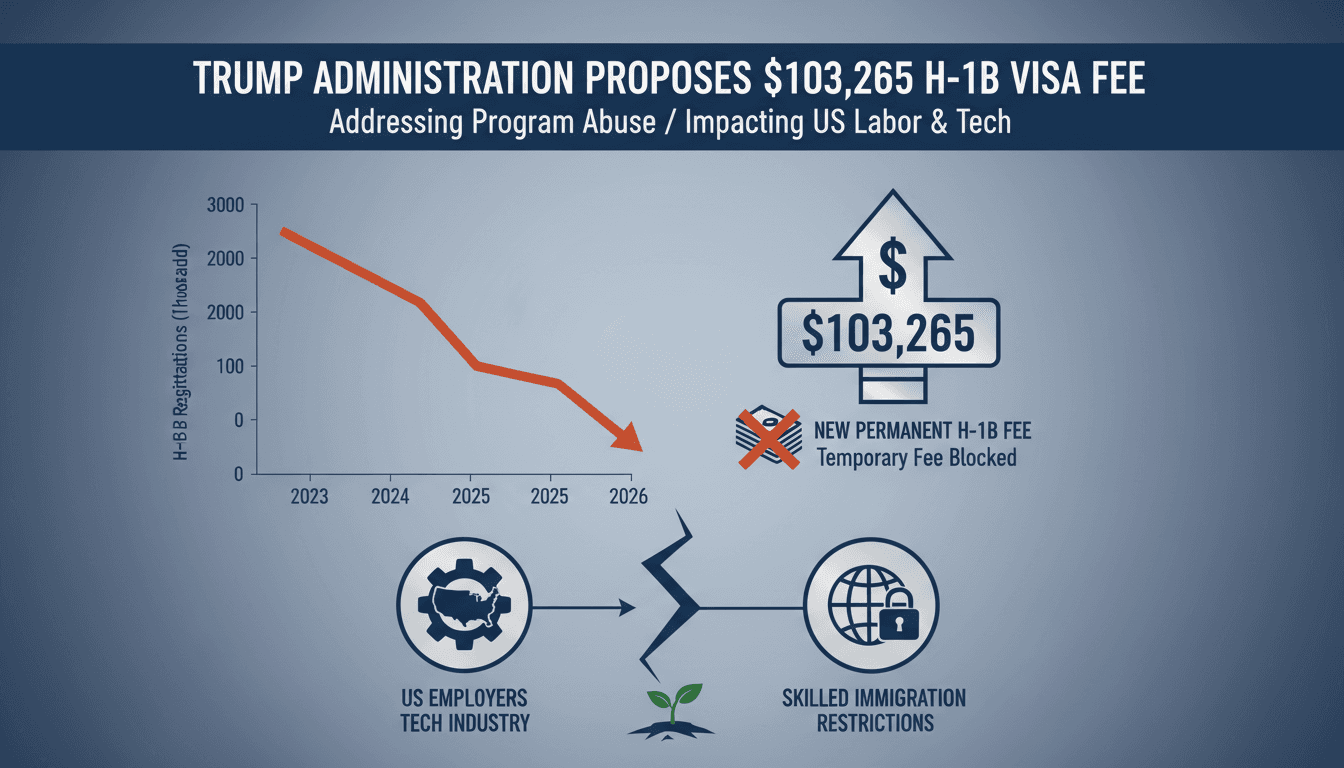
Here's what it means for you.
If you're a skilled professional eyeing opportunities in the U.S., this fee could significantly impact your job prospects and employer choices.
Why it matters
This proposal could reshape the landscape of skilled labor in the U.S., affecting both employers and foreign workers.
What happened (in 30 seconds)
- On August 24, 2026, the U.S. Department of Homeland Security proposed a permanent fee of $103,265 for new H-1B visa petitions.
- This follows a temporary fee of $100,000 that was blocked by a federal judge in June 2026 amid ongoing lawsuits.
- The proposal aims to curb perceived abuse of the H-1B program, which has faced criticism for displacing American workers with lower-cost foreign labor.
The context you actually need
- The H-1B visa program was established in 1990 to allow U.S. employers to hire foreign professionals in specialty occupations, primarily in STEM fields.
- Annual caps for H-1B visas stand at 65,000 regular visas plus 20,000 for U.S. advanced degree holders, but registrations have sharply declined.
- Trump's administration has pursued broader immigration restrictions since 2025, focusing on perceived exploitation of the H-1B program by employers.
What's really happening
The proposed $103,265 fee for H-1B visa petitions represents a significant shift in U.S. immigration policy, particularly under the Trump administration's second term. This fee is designed to offset costs associated with the immigration system across multiple agencies, but it also serves a dual purpose: to deter employers from relying on foreign labor and to address concerns about the displacement of American workers.
The H-1B program has long been a focal point of contention, with critics arguing that it allows companies to hire cheaper foreign labor at the expense of U.S. workers. The temporary fee of $100,000 imposed in September 2025 was an initial attempt to curb this practice, but it faced legal challenges that ultimately led to its blockage. The new proposal seeks to establish a permanent fee, which could further discourage employers from applying for H-1B visas.
In 2025, H-1B registrations fell to approximately 344,000, marking a decline of over 25% from the previous year and less than half of the levels seen in 2023. This drop indicates a growing hesitance among employers to navigate the increasingly complex and costly landscape of hiring foreign talent. Enhanced vetting processes, including scrutiny of LinkedIn profiles and resumes, have prompted some companies, like Google, to shift their hiring strategies and expand operations in countries like India.
The proposed fee has drawn criticism from various business groups, including the U.S. Chamber of Commerce and Indian IT associations, who argue that it disrupts talent acquisition and exacerbates worker shortages in critical sectors. Companies such as Tesla, Amazon, and OpenAI are under scrutiny for their H-1B usage, especially in light of recent layoffs in the U.S. tech industry. As the administration appeals the judicial block on the previous fee while advancing this new rule, the outcome remains uncertain, with multiple lawsuits pending.
The implications of this fee extend beyond just financial burdens; they signal a broader shift in U.S. immigration policy that prioritizes domestic labor over foreign skilled workers. This could lead to a talent drain, as companies may opt to hire overseas rather than navigate the complexities of the U.S. immigration system.
Who feels it first (and how)
- Skilled foreign professionals: Increased costs may deter them from pursuing opportunities in the U.S.
- U.S. employers: Companies may face higher operational costs and challenges in hiring skilled labor.
- Tech industry: Firms reliant on H-1B workers may need to adjust their hiring strategies or expand overseas.
What to watch next
- Public comments on the proposed rule: The feedback from stakeholders could influence the finalization of the fee.
- Litigation outcomes: Ongoing lawsuits may impact the implementation of the proposed fee and the future of the H-1B program.
- Shifts in hiring practices: Monitor how companies adapt their talent acquisition strategies in response to the fee.
The proposed fee is open for public comment and subject to finalization.
Employers may increasingly look to hire overseas or adjust their workforce strategies.
The long-term impact on the U.S. labor market and immigration policy remains uncertain.
Frequently Asked Questions
- Why it matters?
- This proposal could reshape the landscape of skilled labor in the U.S., affecting both employers and foreign workers.
- What happened (in 30 seconds)?
- On August 24, 2026, the U.S. Department of Homeland Security proposed a permanent fee of $103,265 for new H-1B visa petitions. This follows a temporary fee of $100,000 that was blocked by a federal judge in June 2026 amid ongoing lawsuits. The proposal aims to curb perceived abuse of the H-1B program, which has faced criticism for displacing American workers with lower-cost foreign labor.
- What's really happening?
- The proposed $103,265 fee for H-1B visa petitions represents a significant shift in U.S. immigration policy, particularly under the Trump administration's second term. This fee is designed to offset costs associated with the immigration system across multiple agencies, but it also serves a dual purpose: to deter employers from relying on foreign labor and to address concerns about the displacement of American workers. The H-1B program has long been a focal point of contention, with critics argu
- Who feels it first (and how)?
- Skilled foreign professionals: Increased costs may deter them from pursuing opportunities in the U.S. U.S. employers: Companies may face higher operational costs and challenges in hiring skilled labor. Tech industry: Firms reliant on H-1B workers may need to adjust their hiring strategies or expand overseas.
- What to watch next?
- Public comments on the proposed rule: The feedback from stakeholders could influence the finalization of the fee. Litigation outcomes: Ongoing lawsuits may impact the implementation of the proposed fee and the future of the H-1B program. Shifts in hiring practices: Monitor how companies adapt their talent acquisition strategies in response to the fee.
International news coverage curated for readers in the UAE and Gulf region.
"Emirates 24|7 world coverage presents global developments through a UAE-facing and Gulf-relevant editorial lens."
— A47 Editor
H-1B visas explained: Skilled worker program and Trump fee hike changes loom
The H-1B visa program, which allows U.S. employers to hire skilled foreign workers, faces potential changes as President Donald Trump proposes to significantly increase application fees from $2,000-$5,000 to over $100,000. This program is crucial for...
Consumer tech and culture with frequent AI coverage.
"Influential tech outlet covering AI products and policy."
— A47 Editor
Trump is upping the price of Big Tech’s favorite visa
The Department of Homeland Security announced a new fee exceeding $103,000 for H-1B visas, a significant increase that impacts many tech companies reliant on foreign talent. This announcement coincides with news from the State Department regarding th...
Tech news, reviews, and analysis of consumer electronics, science, art, and culture.
"The Verge is a technology-focused media outlet known for in-depth reporting, product reviews, and coverage of the intersection between technology and culture."
— A47 Editor
Trump is upping the price of Big Tech’s favorite visa
The Department of Homeland Security announced a new fee exceeding $103,000 for H-1B visas, a significant increase that impacts many tech companies reliant on foreign talent. This announcement coincides with news from the State Department regarding th...
Corporate leadership, finance, technology, and market trends.
"Fortune covers financial trends, leadership, and innovation with a pragmatic editorial approach."
— A47 Editor
The Trump administration proposes $103,000 fee for H-1B visas that DHS itself estimates would paralyze 76% of small businesses
The Trump administration has proposed a fee exceeding $103,000 for H-1B visas, a move that the Department of Homeland Security (DHS) estimates could paralyze 76% of small businesses in the U.S. This initiative aims to encourage companies to prioritiz...
International news coverage curated for readers in the UAE and Gulf region.
"Emirates 24|7 world coverage presents global developments through a UAE-facing and Gulf-relevant editorial lens."
— A47 Editor
Trump administration moves to make US$100,000 H-1B visa fee permanent
The Trump administration has proposed making a controversial fee of $103,265 for new H-1B visas permanent, significantly raising the costs for U.S. employers seeking to hire highly skilled foreign workers. This proposal follows a temporary executive ...
Business and tech news excluding paywalled content.
"High-volume business/tech outlet with frequent AI coverage."
— A47 Editor
JD Vance backs proposed new H-1B fee: Companies should ‘hire and train Americans’
The Department of Homeland Security (DHS) has proposed a new fee of $103,265 for all new H-1B visa applications, a revision from an earlier plan that suggested a $100,000 fee, which was rejected. This change comes as part of ongoing discussions about...
U.S. political news and right-leaning commentary.
"Fox News is a highly influential conservative news outlet known for right-leaning political commentary and coverage."
— A47 Editor
Trump administration proposes six-figure price tag for new H-1B visas
The Trump administration's Department of Homeland Security has proposed a permanent fee of $103,265 for H-1B visa applications, following a federal judge's decision to block a temporary charge. This fee is crucial for foreign workers seeking employme...