
Trump Administration Proposes Permanent $103,265 H-1B Visa Fee
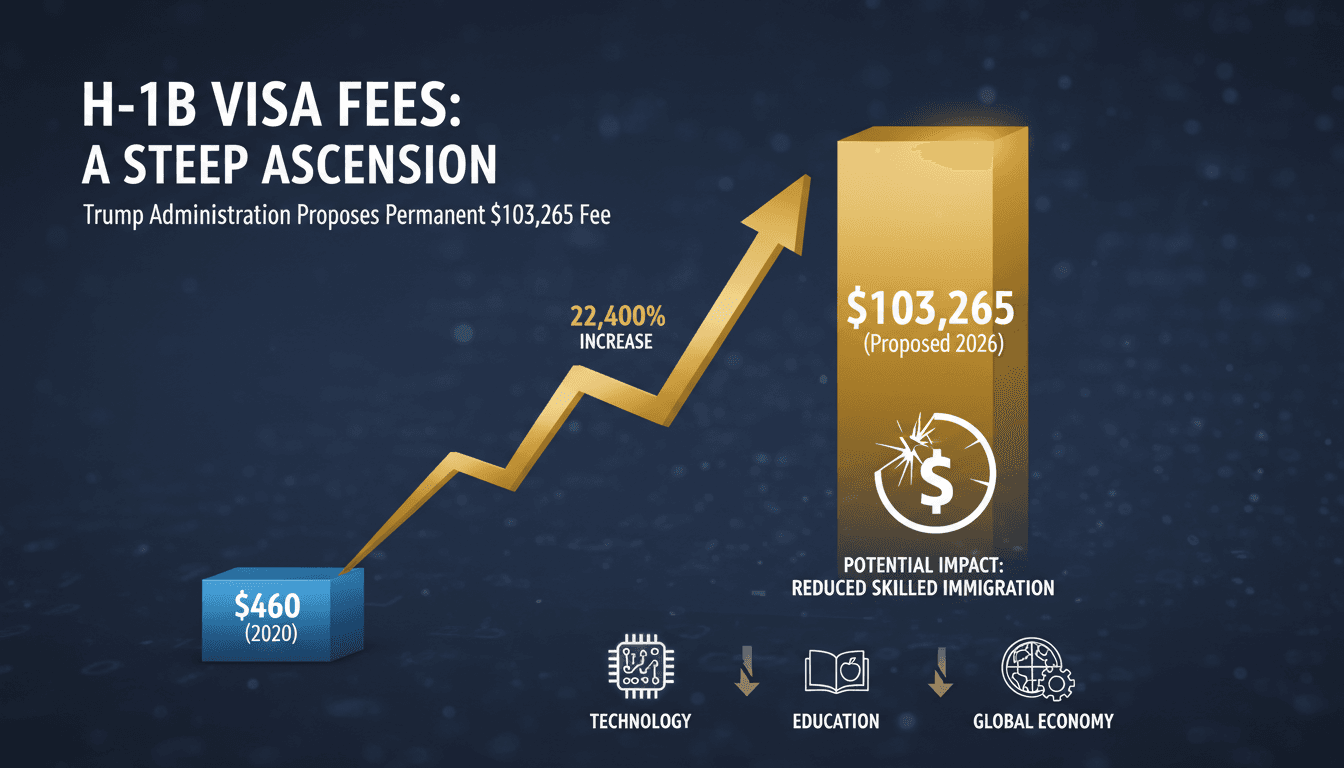
Here's what it means for you.
If you're in the tech or education sectors, this proposed fee could significantly impact your hiring strategies and talent acquisition.
Why it matters
This proposal represents a critical shift in U.S. immigration policy that could reshape the labor market for skilled foreign workers.
What happened (in 30 seconds)
- On August 24, 2026, the Trump administration proposed a permanent fee of $103,265 for H-1B visa applications.
- This fee targets employers sponsoring foreign workers in specialty occupations, particularly in tech and education.
- The proposal follows legal challenges to a previous temporary fee and aims to deter misuse of the H-1B program while generating revenue for immigration enforcement.
The context you actually need
- The H-1B visa program allows U.S. employers to hire foreign workers in specialty occupations, with an annual cap of 85,000 visas.
- Previous fees ranged from $2,000 to $5,000, making the proposed fee a dramatic increase aimed at restricting immigration.
- Legal challenges have emerged from business groups and unions, arguing that the fee requires congressional approval and undermines existing immigration laws.
What's really happening
The proposed rule to establish a permanent fee of $103,265 for H-1B visa applications is a significant escalation in the ongoing debate over immigration policy in the United States. This fee, which is more than 20 times the previous costs, is designed to serve multiple purposes: generating revenue for immigration enforcement agencies, deterring perceived misuse of the H-1B program, and prioritizing American workers in the labor market.
The H-1B visa program has long been criticized for allowing companies to replace domestic workers with lower-paid foreign labor. In response, the Trump administration has sought to impose stricter regulations and fees to limit the influx of foreign workers. The initial temporary fee of $100,000 was introduced in September 2025 but faced legal challenges that deemed it an unlawful tax requiring congressional approval. The recent proposal aims to formalize this fee, extending its reach and solidifying the administration's stance on immigration.
The implications of this fee are profound. Employers in sectors like technology, education, and research, which heavily rely on skilled foreign workers, may face increased operational costs. This could lead to a reduction in H-1B registrations, as evidenced by a reported decline of over 25% from 2024 levels following the initial fee imposition. The administration argues that the fee falls under its presidential powers to restrict entry, while opponents contend it overrides statutory provisions without legislative backing.
As the public comment period unfolds, the administration is likely to face continued legal challenges from business advocacy groups, unions, and Democratic-led states. These groups argue that the fee exacerbates talent shortages and could hinder economic growth. The outcome of these legal battles will be crucial in determining the future of the H-1B program and its impact on the U.S. labor market.
Who feels it first (and how)
- Tech companies: Increased costs may lead to reduced hiring of foreign talent.
- Educational institutions: Universities relying on international faculty may face budget constraints.
- Small businesses: Smaller entities may struggle to absorb the high costs associated with H-1B sponsorship.
- Foreign workers: Potentially fewer opportunities to work in the U.S., leading to shifts in career plans.
- Legal and immigration consultants: Increased demand for services to navigate the new fee structure and legal challenges.
What to watch next
- Public comments: Monitor the feedback during the 30-day comment period, as it could influence final rule adjustments.
- Legal outcomes: Watch for developments in ongoing lawsuits, which could delay or alter the implementation of the fee.
- H-1B registration trends: Keep an eye on application numbers to gauge the fee's impact on employer behavior and labor market dynamics.
The proposed fee is $103,265 for H-1B visa applications.
Legal challenges will continue, potentially leading to amendments or delays in the proposal.
The long-term effects on the U.S. labor market and employer hiring strategies remain uncertain.
Frequently Asked Questions
- Why it matters?
- This proposal represents a critical shift in U.S. immigration policy that could reshape the labor market for skilled foreign workers.
- What happened (in 30 seconds)?
- On August 24, 2026, the Trump administration proposed a permanent fee of $103,265 for H-1B visa applications. This fee targets employers sponsoring foreign workers in specialty occupations, particularly in tech and education. The proposal follows legal challenges to a previous temporary fee and aims to deter misuse of the H-1B program while generating revenue for immigration enforcement.
- What's really happening?
- The proposed rule to establish a permanent fee of $103,265 for H-1B visa applications is a significant escalation in the ongoing debate over immigration policy in the United States. This fee, which is more than 20 times the previous costs, is designed to serve multiple purposes: generating revenue for immigration enforcement agencies, deterring perceived misuse of the H-1B program, and prioritizing American workers in the labor market. The H-1B visa program has long been criticized for allowing
- Who feels it first (and how)?
- Tech companies: Increased costs may lead to reduced hiring of foreign talent. Educational institutions: Universities relying on international faculty may face budget constraints. Small businesses: Smaller entities may struggle to absorb the high costs associated with H-1B sponsorship. Foreign workers: Potentially fewer opportunities to work in the U.S., leading to shifts in career plans. Legal and immigration consultants: Increased demand for services to navigate the new fee structure an
- What to watch next?
- Public comments: Monitor the feedback during the 30-day comment period, as it could influence final rule adjustments. Legal outcomes: Watch for developments in ongoing lawsuits, which could delay or alter the implementation of the fee. H-1B registration trends: Keep an eye on application numbers to gauge the fee's impact on employer behavior and labor market dynamics.
Global news coverage with extensive reporting on Middle Eastern conflicts and geopolitics.
"Al Jazeera is a Qatar-based broadcaster known for wide regional coverage and alternative perspectives."
— A47 Editor
Trump administration seeks to formalise H-1B fee of more than $100,000
The Trump administration has proposed a new rule that would formalize a fee of $103,265 for H-1B visas, which are used by foreign workers in specialty occupations. This proposal aims to make permanent a temporary rule that has faced legal challenges ...
Comprehensive coverage of Middle Eastern and global issues.
"Al Jazeera is a prominent voice from the Global South, especially the Middle East, with an emphasis on underreported stories."
— A47 Editor
Trump administration seeks to formalise H-1B fee of more than $100,000
The Trump administration has proposed a new rule that would formalize a fee of $103,265 for H-1B visas, which are used by foreign workers in specialty occupations. This proposal aims to make permanent a temporary rule that has faced legal challenges ...
UAE-based newspaper covering Gulf politics, society, and international developments.
"Gulf News is one of the UAE’s most prominent English-language publications."
— A47 Editor
Trump govt proposes $103k fee for skilled worker visa
The Trump administration has proposed a significant fee of $103,000 for skilled worker visas, a move that is expected to create substantial barriers for potential immigrants seeking employment in the United States. This proposal is part of a broader ...
A curated Gulf News feed featuring major stories across news, business, opinion, and lifestyle.
"Gulf News is a major UAE newspaper whose featured stories feed reflects a broad editorial mix shaped for a Gulf audience."
— A47 Editor
Trump govt proposes $103k fee for skilled worker visa
The Trump administration has proposed a significant fee of $103,000 for skilled worker visas, a move that is expected to create substantial barriers for potential immigrants seeking employment in the United States. This proposal is part of a broader ...
Curated tech headlines including AI stories.
"Influential aggregator surfacing the day’s top tech/AI links."
— A47 Editor
The Trump administration proposes a $103,265 fee on H-1B applicants hired within the US after a court blocked a more limited fee on workers from outside the US (Andrew Kreighbaum/Bloomberg)
The Trump administration has proposed a substantial fee of $103,265 for H-1B visa applicants who are already employed within the United States. This proposal follows a court ruling that blocked a previous, more limited fee targeting workers from outs...
Arabic-language economic and business reporting with strong UAE market relevance.
"Emarat Al Youm business coverage often centers UAE property, banking, consumer issues, and economic policy."
— A47 Editor
إدارة ترامب تتحرك لفرض رسوم تتجاوز 100 ألف دولار على تأشيرات "H-1B" إدارة ترامب تتحرك لفرض رسوم تتجاوز 100 ألف دولار على تأشيرات "H-1B"
The Trump administration has proposed a regulatory framework to impose unprecedented fees exceeding $100,000 on H-1B visas, a move that could significantly impact foreign workers and U.S. companies reliant on skilled labor. This proposal was publishe...