
Former Grand Mufti of Syria Sentenced to Life Imprisonment for War Crimes
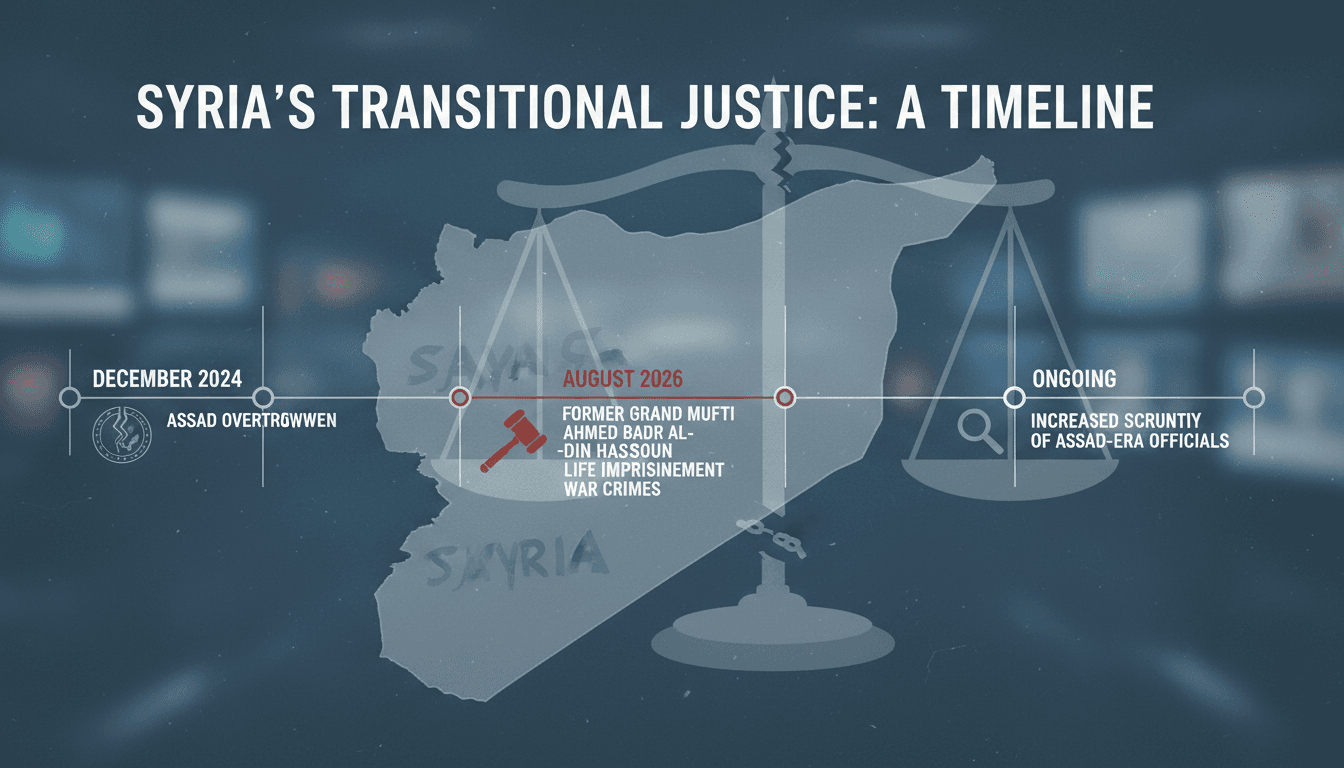
Here's what it means for you.
The sentencing of a high-profile religious figure in Syria signals a shift towards accountability that could influence regional stability and diaspora relations.
Why it matters
This verdict represents a significant step in transitional justice efforts, potentially impacting international perceptions of Syria's post-conflict landscape.
What happened (in 30 seconds)
- On August 24, 2026, former Grand Mufti Ahmed Badr al-Din Hassoun was sentenced to life imprisonment by the Fourth Criminal Court in Damascus.
- Hassoun was convicted of inciting civil war, sectarian strife, and complicity in war crimes during the Assad regime.
- This ruling marks the first conviction of a religious figure in Syria's transitional justice process, following the overthrow of Assad in 2024.
The context you actually need
- Hassoun served as Grand Mufti from 2005 to 2021 and was closely aligned with the Assad regime, using his position to justify military actions against civilians.
- The transitional authorities in Syria have initiated public trials to address crimes committed during the civil war, with Hassoun being the tenth Assad-era figure convicted.
- The ruling reflects a broader commitment to accountability and justice, which may influence future governance and societal healing in Syria.
What's really happening
The sentencing of Ahmed Hassoun is a pivotal moment in Syria's ongoing transition from a regime characterized by repression and violence to one that seeks to establish accountability for past atrocities. Following the overthrow of President Bashar al-Assad in December 2024, the new authorities have embarked on a path of transitional justice, aiming to address the widespread human rights violations that occurred during the civil war that began in 2011.
Hassoun's trial, which commenced in June 2026, was marked by a series of sessions that included evidence presentation and witness testimonies. The court's verdict on August 24 not only imposed a life sentence for inciting civil war and sectarian strife but also included additional sentences for related charges, reflecting the severity of his actions during the conflict. The court's decision to confiscate his assets and deny him amnesty rights underscores the seriousness with which the new authorities are treating accountability.
This ruling is significant as it highlights the role of religious figures in legitimizing state violence, with Hassoun's actions providing moral cover for the Assad regime's military operations, including the use of barrel bombs against civilian populations. By convicting a prominent religious leader, the court sends a clear message that complicity in war crimes will not be tolerated, regardless of one's status or position.
The implications of this verdict extend beyond Syria's borders, as it may influence the behavior of other regime figures and encourage further prosecutions. It also serves as a signal to the international community regarding Syria's commitment to addressing past injustices, which could affect diplomatic relations and aid considerations.
Moreover, the trial and conviction of Hassoun may resonate with the Syrian diaspora, particularly in regions like the UAE, where many have fled the violence of the civil war. As transitional justice processes unfold, the diaspora may find renewed hope for accountability and justice, potentially impacting their engagement with Syria's future.
Who feels it first (and how)
- Syrian diaspora communities: Increased hope for accountability may influence their engagement with Syria.
- Human rights organizations: Enhanced focus on transitional justice efforts could lead to increased advocacy and support for similar cases.
- Regional governments: Changes in international perceptions of Syria may affect diplomatic relations and aid policies.
What to watch next
- Further convictions: Watch for additional trials and convictions of Assad-era figures, which could signal a broader commitment to justice.
- International reactions: Monitor how foreign governments and organizations respond to this verdict, as it may influence diplomatic relations.
- Impact on Syrian society: Observe changes in public sentiment regarding accountability and governance in Syria, particularly among the diaspora.
Hassoun is the tenth Assad-era figure convicted under transitional authorities.
Additional trials and convictions will follow as part of ongoing transitional justice efforts.
The long-term impact of these convictions on Syria's political landscape and societal healing remains uncertain.
Frequently Asked Questions
- Why it matters?
- This verdict represents a significant step in transitional justice efforts, potentially impacting international perceptions of Syria's post-conflict landscape.
- What happened (in 30 seconds)?
- On August 24, 2026, former Grand Mufti Ahmed Badr al-Din Hassoun was sentenced to life imprisonment by the Fourth Criminal Court in Damascus. Hassoun was convicted of inciting civil war, sectarian strife, and complicity in war crimes during the Assad regime. This ruling marks the first conviction of a religious figure in Syria's transitional justice process, following the overthrow of Assad in 2024.
- What's really happening?
- The sentencing of Ahmed Hassoun is a pivotal moment in Syria's ongoing transition from a regime characterized by repression and violence to one that seeks to establish accountability for past atrocities. Following the overthrow of President Bashar al-Assad in December 2024, the new authorities have embarked on a path of transitional justice, aiming to address the widespread human rights violations that occurred during the civil war that began in 2011. Hassoun's trial, which commenced in June 2
- Who feels it first (and how)?
- Syrian diaspora communities: Increased hope for accountability may influence their engagement with Syria. Human rights organizations: Enhanced focus on transitional justice efforts could lead to increased advocacy and support for similar cases. Regional governments: Changes in international perceptions of Syria may affect diplomatic relations and aid policies.
- What to watch next?
- Further convictions: Watch for additional trials and convictions of Assad-era figures, which could signal a broader commitment to justice. International reactions: Monitor how foreign governments and organizations respond to this verdict, as it may influence diplomatic relations. Impact on Syrian society: Observe changes in public sentiment regarding accountability and governance in Syria, particularly among the diaspora.
Arabic-language political and world news coverage for UAE readers.
"Emarat Al Youm world coverage usually presents international developments through a UAE and Arab audience lens."
— A47 Editor
القضاء السوري يحكم حضوريا بالسجن المؤبد على المفتي السابق أحمد حسون القضاء السوري يحكم حضوريا بالسجن المؤبد على المفتي السابق أحمد حسون
The Syrian judiciary has sentenced former Grand Mufti Ahmad Badreddin Hassoun to life imprisonment after convicting him of various crimes. This ruling was issued in a public court session on August 24, 2026, marking a significant legal decision in th...
English-language reporting on Saudi politics, policy, and society.
"Saudi Gazette reflects mainstream Saudi institutional perspectives."
— A47 Editor
Syrian court sentences Assad-era grand mufti to life in prison
A Syrian court has sentenced Ahmed Hassoun, the grand mufti during Bashar Assad's regime, to life imprisonment for crimes including inciting sectarian strife and abusing his position. This ruling marks Hassoun as the 10th figure from the Assad era to...
Pan-Arab news coverage spanning politics, business, sports, and regional affairs.
"Asharq Al-Awsat reflects a broad Arab editorial perspective with strong attention to regional geopolitics."
— A47 Editor
الحكم بالمؤبد على «مفتي البراميل» في سوريا
A Syrian court has sentenced former Grand Mufti Ahmad Badreddin Hassoun to life imprisonment after convicting him of multiple crimes, including inciting sectarian tensions. This ruling marks a significant legal action against a prominent religious fi...
Arabic-language coverage of political affairs and current events.
"Okaz political coverage typically follows mainstream Saudi framing on national and regional affairs."
— A47 Editor
القضاء السوري : السجن المؤبد مدى الحياة لمفتي نظام بشار الأسد
A Syrian court has sentenced former Mufti Ahmad Hassoun to life imprisonment for inciting violence, justifying killings, and abusing his position, as part of ongoing transitional justice efforts in Syria. The ruling highlights the role of the officia...
Global news coverage with extensive reporting on Middle Eastern conflicts and geopolitics.
"Al Jazeera is a Qatar-based broadcaster known for wide regional coverage and alternative perspectives."
— A47 Editor
‘Barrel bomb mufti’ Ahmad Hassoun handed life sentence in Syria trial
Ahmad Hassoun, known as the 'barrel bomb mufti' for his close ties to the Assad regime, has been sentenced to life in prison by Judge Fakhr al-Din al-Aryan for inciting violence and other crimes in Syria. This ruling highlights the ongoing legal cons...
Comprehensive coverage of Middle Eastern and global issues.
"Al Jazeera is a prominent voice from the Global South, especially the Middle East, with an emphasis on underreported stories."
— A47 Editor
‘Barrel bomb mufti’ Ahmad Hassoun handed life sentence in Syria trial
Ahmad Hassoun, known as the 'barrel bomb mufti' for his close ties to the Assad regime, has been sentenced to life in prison by Judge Fakhr al-Din al-Aryan for inciting violence and other crimes in Syria. This ruling highlights the ongoing legal cons...