
Houthi Group Claims Missile Strike on Saudi Oil Tanker Amzan in Red Sea
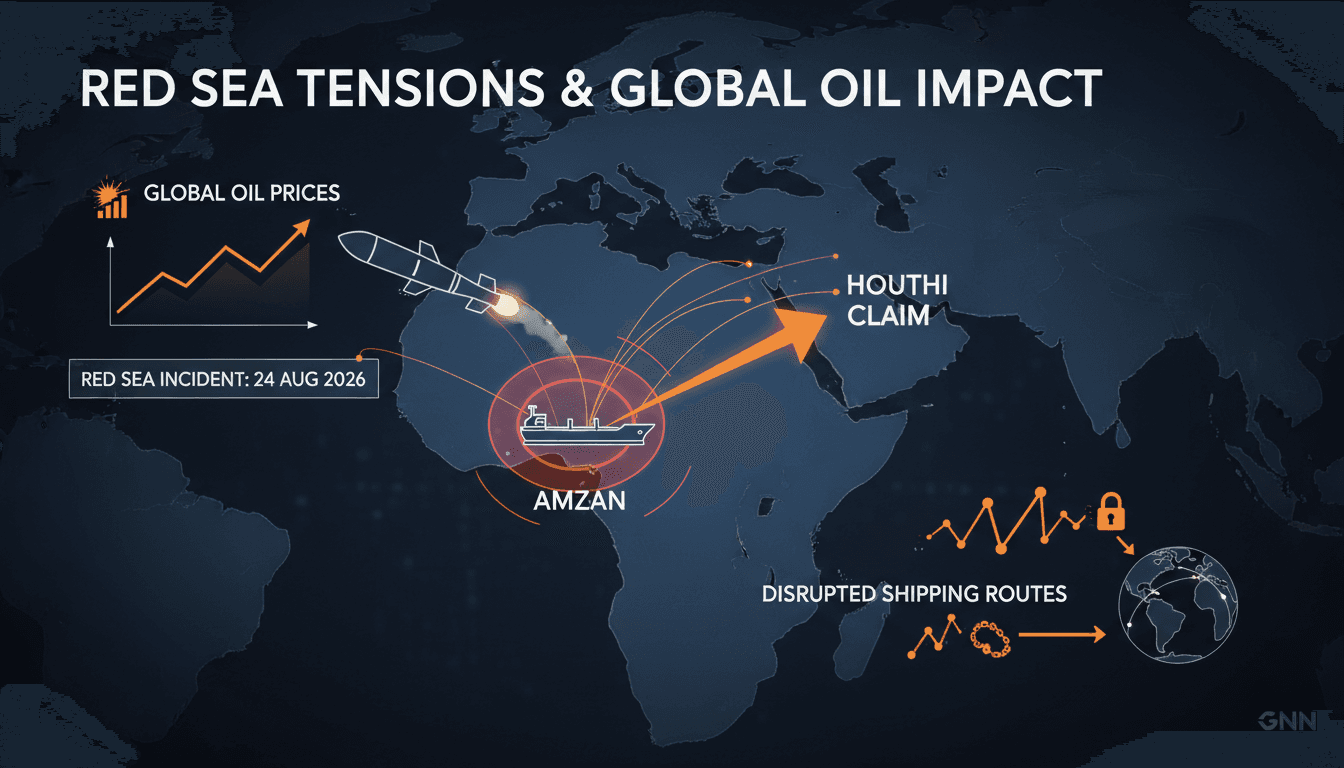
Here's what it means for you.
Rising tensions in the Red Sea could lead to increased fuel prices and shipping disruptions affecting global trade.
Why it matters
This incident underscores the fragility of maritime security in a key oil transit route, impacting global energy markets.
What happened (in 30 seconds)
- On August 24, 2026, the Saudi National Shipping Company confirmed a security incident involving its oil tanker Amzan in the Red Sea.
- The Houthi group claimed responsibility for a ballistic missile strike that ignited a fire on the vessel, although all crew members were reported safe.
- UK Maritime Trade Operations (UKMTO) issued an advisory about the incident, highlighting ongoing maritime threats in the region.
The context you actually need
- Houthi maritime operations have escalated, with prior claims of attacks on Saudi vessels and a declared naval blockade on Saudi shipping.
- Saudi Arabia has rerouted oil exports through Red Sea ports like Yanbu due to disruptions in other areas, making this incident particularly concerning.
- The Yemen conflict and Houthi-Iran alignment contribute to broader regional tensions, affecting commercial shipping and energy security.
What's really happening
The August 24 incident involving the Amzan is part of a broader pattern of Houthi aggression in the Red Sea, which has seen increased maritime operations targeting Saudi shipping. The Houthi group, aligned with Iran, has been vocal about its intentions to disrupt Saudi maritime activities, claiming a naval blockade on Saudi vessels. This latest missile strike reflects their ongoing strategy to exert pressure on Saudi Arabia amid the protracted Yemen conflict.
The strike occurred approximately 63 nautical miles west of Yanbu, a critical oil export hub for Saudi Arabia. The UKMTO's advisory confirmed that an unidentified projectile struck the tanker, igniting a fire on the main deck. Fortunately, Bahri, the shipping company, reported that all crew members were safe, with no injuries or environmental damage noted. This incident highlights the precarious nature of maritime security in the region, where commercial vessels are increasingly at risk from military actions.
Bahri's response emphasized operational continuity and safety protocols, indicating that the company is prioritizing crew safety and environmental protection. However, the lack of an immediate statement from the Saudi government suggests a cautious approach to public communication regarding the incident. The broader implications of this strike could lead to temporary adjustments in tanker routing and increased insurance premiums for vessels transiting the Red Sea, as shipping companies reassess risks in light of Houthi threats.
The incident also raises questions about the effectiveness of international maritime security measures in the region. Saudi Arabia has previously called for international enforcement of UN Security Council resolutions aimed at ensuring safe navigation in the Red Sea. However, the ongoing conflict in Yemen complicates these efforts, as the Houthi group continues to demonstrate its capability and willingness to target maritime assets.
As tensions escalate, the potential for further incidents remains high, which could disrupt global oil supply chains and impact fuel prices worldwide. The interconnectedness of global trade means that events in the Red Sea can have ripple effects far beyond the immediate region, affecting logistics, fuel costs, and economic stability in various markets.
Who feels it first (and how)
- Shipping companies: Increased insurance costs and potential rerouting of vessels.
- Oil traders: Volatility in oil prices due to perceived risks in the Red Sea.
- Consumers: Possible rise in fuel prices as shipping costs increase.
- Regional economies: Economic instability in areas reliant on oil exports and shipping logistics.
What to watch next
- Global oil prices: Monitor fluctuations as markets react to security incidents in the Red Sea.
- Shipping insurance premiums: Watch for increases as insurers reassess risks associated with maritime operations in the region.
- Houthi military activities: Keep an eye on further announcements or actions from the Houthi group that could escalate tensions.
The crew of the Amzan is safe, and no environmental damage has been reported.
Increased shipping costs and insurance premiums for vessels operating in the Red Sea.
The potential for further Houthi attacks and the international community's response to escalating maritime threats.
Frequently Asked Questions
- Why it matters?
- This incident underscores the fragility of maritime security in a key oil transit route, impacting global energy markets.
- What happened (in 30 seconds)?
- On August 24, 2026, the Saudi National Shipping Company confirmed a security incident involving its oil tanker Amzan in the Red Sea. The Houthi group claimed responsibility for a ballistic missile strike that ignited a fire on the vessel, although all crew members were reported safe. UK Maritime Trade Operations (UKMTO) issued an advisory about the incident, highlighting ongoing maritime threats in the region.
- What's really happening?
- The August 24 incident involving the Amzan is part of a broader pattern of Houthi aggression in the Red Sea, which has seen increased maritime operations targeting Saudi shipping. The Houthi group, aligned with Iran, has been vocal about its intentions to disrupt Saudi maritime activities, claiming a naval blockade on Saudi vessels. This latest missile strike reflects their ongoing strategy to exert pressure on Saudi Arabia amid the protracted Yemen conflict. The strike occurred approximately 6
- Who feels it first (and how)?
- Shipping companies: Increased insurance costs and potential rerouting of vessels. Oil traders: Volatility in oil prices due to perceived risks in the Red Sea. Consumers: Possible rise in fuel prices as shipping costs increase. Regional economies: Economic instability in areas reliant on oil exports and shipping logistics.
- What to watch next?
- Global oil prices: Monitor fluctuations as markets react to security incidents in the Red Sea. Shipping insurance premiums: Watch for increases as insurers reassess risks associated with maritime operations in the region. Houthi military activities: Keep an eye on further announcements or actions from the Houthi group that could escalate tensions.
Arabic-language coverage of international news and geopolitics.
"RT Arabic is a Russian state-funded outlet often criticized for promoting Kremlin-aligned narratives."
— A47 Editor
بيان سعودي بعد الاستهداف الحوثي لناقلة النفط "أمزان" في البحر الأحمر
The Saudi National Shipping Company reported that one of its oil tankers, named 'Amazan', was targeted in a security incident in the Red Sea, with no injuries reported among the crew.
Arabic-language coverage of Saudi, regional, and international affairs.
"Al Bilad offers mainstream Saudi newspaper coverage across domestic and broader Arab topics."
— A47 Editor
“البحري”: الناقلة “أمزان” تعرضت لحادث أمني في البحر الأحمر
The Saudi National Shipping Company, Bahri, announced that its tanker, Amzan, experienced a security incident in the Red Sea on August 24, 2026. The company confirmed the safety of all crew members and reported no injuries, while maintaining communic...
Arabic-language coverage of political affairs and current events.
"Okaz political coverage typically follows mainstream Saudi framing on national and regional affairs."
— A47 Editor
«البحري»: الناقلة أمزان تعرضت لحادثة أمنية في البحر الأحمر.. وطاقمها بخير
The Saudi National Shipping Company, Bahri, announced that its tanker, Amzan, experienced a security incident in the Red Sea. The company confirmed that all crew members are safe and unharmed, maintaining continuous communication with the vessel and ...