
Uganda and Burundi Explore Troop Contributions to Gaza Stabilization Force
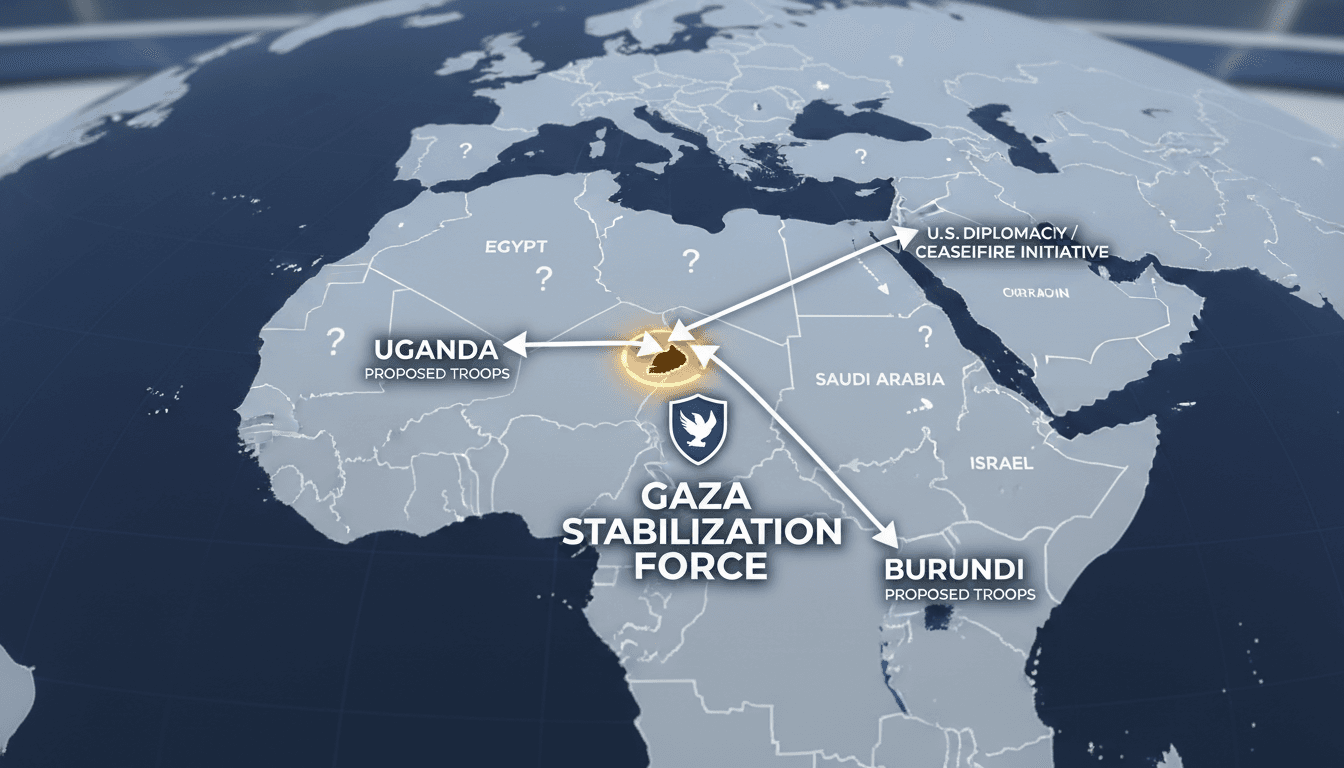
Here's what it means for you.
Global stability efforts in conflict zones can impact international relations and security dynamics, affecting businesses and investments.
Why it matters
The potential deployment of troops from Uganda and Burundi to Gaza could reshape regional security and influence international diplomatic relations.
What happened (in 30 seconds)
- Military delegations from Uganda and Burundi visited Israel to discuss troop contributions to a proposed Gaza stabilization force.
- Uganda's parliament approved the deployment of approximately 1,200 troops, while Burundi is still in preliminary discussions.
- The proposed force aims for 20,000 troops but remains significantly under-committed amid stalled ceasefire negotiations.
The context you actually need
- Fragile ceasefire: The October 2025 ceasefire in Gaza has faced challenges, particularly regarding Israeli withdrawal and Hamas disarmament.
- U.S. involvement: The U.S. Board of Peace is facilitating discussions and has engaged directly with Uganda's leadership to secure troop commitments.
- International commitments: Other countries, including Morocco and Indonesia, have made varying troop pledges, but overall participation remains low.
What's really happening
In mid-August 2026, military officials from Uganda and Burundi visited Israel as part of a broader initiative to establish an International Stabilization Force in Gaza. This force is intended to monitor a ceasefire, support humanitarian aid delivery, and train local police. The backdrop of this initiative is a fragile ceasefire established in October 2025, which has been marred by disputes over the terms of Israeli withdrawal and the disarmament of Hamas.
Uganda's parliamentary approval for 1,200 troops marks a significant step, reflecting a commitment to international peacekeeping efforts. The Ugandan government, led by President Museveni, has been responsive to U.S. outreach, indicating a strategic alignment with U.S. interests in the region. Meanwhile, Burundi's military delegation expressed interest but has not yet formalized its participation, highlighting a cautious approach amid ongoing discussions.
The proposed stabilization force aims for a total of 20,000 troops, but current commitments are far below this target. Countries like Morocco, Kosovo, Kazakhstan, and Albania have pledged smaller troop numbers, while Indonesia's earlier commitment of 8,000 troops has been suspended. The lack of concrete commitments from Israel regarding troop withdrawal complicates the situation further, as ongoing disputes between Israel and Hamas hinder the implementation of the broader ceasefire plan.
The U.S. has been actively involved in these discussions, with figures like Jared Kushner playing a role in diplomatic efforts. The Board of Peace's initiative reflects a strategic attempt to stabilize Gaza and facilitate humanitarian efforts, but the success of this mission hinges on the resolution of key issues, including disarmament and the conditions for Israeli withdrawal.
Who feels it first (and how)
- Military personnel: Troops from Uganda and Burundi preparing for deployment will undergo training and logistical preparations.
- Local populations in Gaza: The stabilization force's success or failure will directly impact the security and humanitarian conditions in Gaza.
- International businesses: Companies operating in or near conflict zones may face increased risks or opportunities depending on the stability achieved by the force.
What to watch next
- Troop deployment announcements: Monitor for any formal announcements regarding troop deployments from Uganda and Burundi, as these will indicate the progress of the stabilization force.
- Ceasefire negotiations: Watch for developments in ceasefire discussions between Israel and Hamas, as these will influence the operational environment for the stabilization force.
- International responses: Observe how other nations react to Uganda and Burundi's commitments, as this could affect regional alliances and security dynamics.
Uganda has committed to deploying 1,200 troops to the proposed stabilization force.
Burundi will continue discussions regarding troop contributions, but formal commitments are not yet established.
The overall effectiveness of the stabilization force remains uncertain, particularly in light of ongoing disputes between Israel and Hamas.
Frequently Asked Questions
- Why it matters?
- The potential deployment of troops from Uganda and Burundi to Gaza could reshape regional security and influence international diplomatic relations.
- What happened (in 30 seconds)?
- Military delegations from Uganda and Burundi visited Israel to discuss troop contributions to a proposed Gaza stabilization force. Uganda's parliament approved the deployment of approximately 1,200 troops, while Burundi is still in preliminary discussions. The proposed force aims for 20,000 troops but remains significantly under-committed amid stalled ceasefire negotiations.
- What's really happening?
- In mid-August 2026, military officials from Uganda and Burundi visited Israel as part of a broader initiative to establish an International Stabilization Force in Gaza. This force is intended to monitor a ceasefire, support humanitarian aid delivery, and train local police. The backdrop of this initiative is a fragile ceasefire established in October 2025, which has been marred by disputes over the terms of Israeli withdrawal and the disarmament of Hamas. Uganda's parliamentary approval for 1,
- Who feels it first (and how)?
- Military personnel: Troops from Uganda and Burundi preparing for deployment will undergo training and logistical preparations. Local populations in Gaza: The stabilization force's success or failure will directly impact the security and humanitarian conditions in Gaza. International businesses: Companies operating in or near conflict zones may face increased risks or opportunities depending on the stability achieved by the force.
- What to watch next?
- Troop deployment announcements: Monitor for any formal announcements regarding troop deployments from Uganda and Burundi, as these will indicate the progress of the stabilization force. Ceasefire negotiations: Watch for developments in ceasefire discussions between Israel and Hamas, as these will influence the operational environment for the stabilization force. International responses: Observe how other nations react to Uganda and Burundi's commitments, as this could affect regional allianc
Arabic-language coverage of political affairs and current events.
"Okaz political coverage typically follows mainstream Saudi framing on national and regional affairs."
— A47 Editor
عسكريون زاروا إسرائيل.. هل تشارك أوغندا وبوروندي بقوة الاستقرار في غزة؟
Military officials from Uganda and Burundi visited Israel last week to discuss the potential deployment of troops to Gaza as part of an international stabilization force proposed by the Peace Council. The visit included Ugandan officials joining a Bu...
Regional and international reporting focused on Middle Eastern politics, diplomacy, and economics.
"Asharq Al-Awsat is a Saudi-owned international newspaper reflecting mainstream Gulf political perspectives."
— A47 Editor
Uganda and Burundi Military Officials Visit Israel to Discuss Gaza Troop Deployment
Military officials from Uganda and Burundi recently visited Israel to engage in discussions regarding the potential deployment of troops to Gaza. This visit highlights the growing interest of African nations in Middle Eastern security dynamics amidst...
Pan-Arab news coverage spanning politics, business, sports, and regional affairs.
"Asharq Al-Awsat reflects a broad Arab editorial perspective with strong attention to regional geopolitics."
— A47 Editor
مسؤولون من أوغندا وبوروندي بحثوا في إسرائيل نشر قوات بغزة
Military officials from Uganda and Burundi visited Israel last week to discuss the deployment of forces in Gaza, as part of an international security force envisioned by the Peace Council.
Arabic-language coverage of international news and geopolitics.
"RT Arabic is a Russian state-funded outlet often criticized for promoting Kremlin-aligned narratives."
— A47 Editor
وفدان من إفريقيا يصلان إسرائيل لبحث الانضمام لقوات "السلام" في غزة
Military officials from Uganda and Burundi visited Israel last week to discuss the potential deployment of forces in Gaza as part of an international security initiative proposed by the Peace Council.