
Execution of Ten Civilians in Eastern Libya Raises Human Rights Concerns Over Military Court Jurisdiction
Here's what it means for you.
The recent executions in Libya could influence regional security perceptions and impact international business decisions.
Why it matters
The legitimacy of military courts over civilians raises critical questions about human rights and governance in conflict zones.
What happened (in 30 seconds)
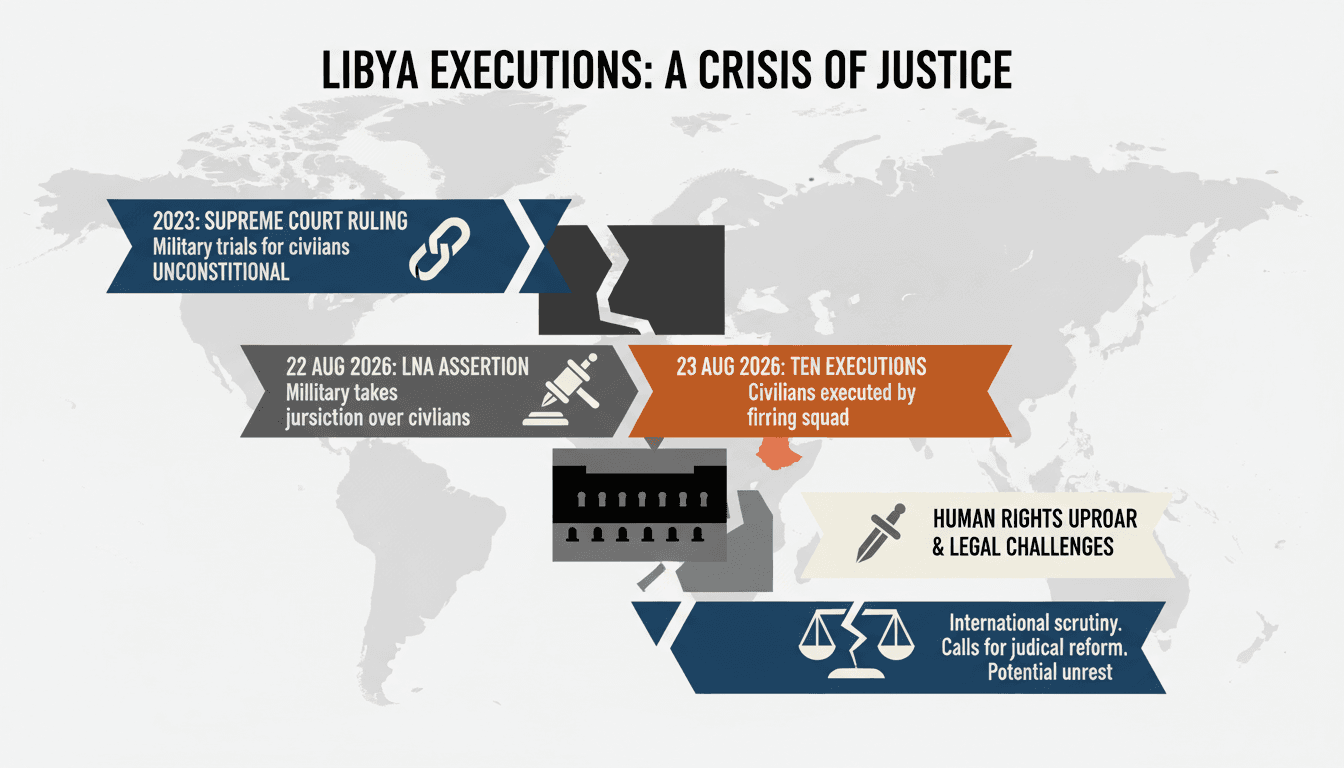
- On August 23, 2026, authorities executed ten civilians by firing squad in eastern Libya, following military court convictions.
- The military prosecutor's office announced these executions, citing terrorism and assassination charges against the individuals.
- Human rights organizations condemned the actions, highlighting the Supreme Court's ruling against military trials for civilians and warning of further executions.
The context you actually need
- Libya's ongoing division: Since 2014, Libya has been split between rival administrations, with the Libyan National Army (LNA) controlling the east and south.
- Military court jurisdiction: Despite a Supreme Court ruling deeming military trials of civilians unconstitutional, military courts continue to operate, often handling cases involving alleged terrorism.
- Historical backdrop: The region has a history of conflict-related detentions, including operations against ISIS, leading to allegations of arbitrary arrests and extrajudicial actions.
What's really happening
The execution of ten civilians in eastern Libya has ignited a legal and human rights crisis, primarily due to the jurisdiction of military courts over civilian cases. The military prosecutor's office, operating under the LNA led by Khalifa Haftar, announced these executions as a culmination of multi-year trials for alleged terrorism and assassination. However, rights groups have identified that many of those executed were civilians, including Quran teachers and anti-ISIS fighters, raising serious concerns about the fairness of their trials.
The backdrop of this crisis is Libya's fragmented political landscape, where the LNA has maintained control over eastern regions since the civil conflict began. The Supreme Court's prior ruling, which deemed military trials of civilians unconstitutional, has been largely ignored, allowing military courts to continue operating without oversight. This situation has led to widespread condemnation from both local and international human rights organizations, which argue that the lack of fair trial guarantees undermines the rule of law.
The High State Council, representing the rival government in Tripoli, has expressed deep concern over the executions, demanding transparency regarding the names and details of the cases involved. They have called for civilian judicial oversight and international monitoring, particularly from the UN Support Mission in Libya. This response highlights the ongoing struggle for legal legitimacy in a country where military power often supersedes civilian authority.
As the situation unfolds, there are fears that up to 90 additional civilians may be at risk of similar fates, prompting legal challenges referencing the Supreme Court's precedent. The potential for further executions could escalate tensions within Libya and provoke international backlash, complicating the already fragile political landscape.
The implications of these events extend beyond Libya's borders, as regional stability is crucial for neighboring countries and international investors. The perception of security in North Africa may influence investment decisions and migration risk assessments in the Gulf region, including Dubai.
Who feels it first (and how)
- Human rights organizations: Increased pressure to advocate for fair trials and legal reforms.
- Local civilians: Heightened fear of arbitrary arrests and executions under military jurisdiction.
- International investors: Potential reassessment of investment risks in Libya and surrounding regions.
What to watch next
- International response: Monitor how global human rights organizations and foreign governments react to the executions and call for investigations.
- Legal challenges: Watch for developments in legal actions against military court jurisdiction and potential reforms in Libya's judicial system.
- Regional stability: Observe shifts in security dynamics in North Africa and their impact on migration and investment in the Gulf region.
Ten civilians were executed by firing squad in eastern Libya.
Increased scrutiny and calls for legal reform regarding military court jurisdiction over civilians.
The long-term impact on Libya's political stability and international relations.
Frequently Asked Questions
- Why it matters?
- The legitimacy of military courts over civilians raises critical questions about human rights and governance in conflict zones.
- What happened (in 30 seconds)?
- On August 23, 2026, authorities executed ten civilians by firing squad in eastern Libya, following military court convictions. The military prosecutor's office announced these executions, citing terrorism and assassination charges against the individuals. Human rights organizations condemned the actions, highlighting the Supreme Court's ruling against military trials for civilians and warning of further executions.
- What's really happening?
- The execution of ten civilians in eastern Libya has ignited a legal and human rights crisis, primarily due to the jurisdiction of military courts over civilian cases. The military prosecutor's office, operating under the LNA led by Khalifa Haftar, announced these executions as a culmination of multi-year trials for alleged terrorism and assassination. However, rights groups have identified that many of those executed were civilians, including Quran teachers and anti-ISIS fighters, raising seriou
- Who feels it first (and how)?
- Human rights organizations: Increased pressure to advocate for fair trials and legal reforms. Local civilians: Heightened fear of arbitrary arrests and executions under military jurisdiction. International investors: Potential reassessment of investment risks in Libya and surrounding regions.
- What to watch next?
- International response: Monitor how global human rights organizations and foreign governments react to the executions and call for investigations. Legal challenges: Watch for developments in legal actions against military court jurisdiction and potential reforms in Libya's judicial system. Regional stability: Observe shifts in security dynamics in North Africa and their impact on migration and investment in the Gulf region.
Pan-Arab political news and analysis.
"Al-Quds Al-Arabi is a London-based Arabic newspaper known for political coverage."
— A47 Editor
إعدام عشرة مدنيين في شرق ليبيا يفجرأزمة قانونية وحقوقية ومخاوف من أحكام جديدة
The execution of ten civilians by firing squad in eastern Libya has sparked widespread political and human rights condemnation, raising serious questions about the legality of military trials for civilians. There are calls for transparency regarding ...
Arabic-language coverage of international news and geopolitics.
"RT Arabic is a Russian state-funded outlet often criticized for promoting Kremlin-aligned narratives."
— A47 Editor
ليبيا.. تنفيذ أحكام بالإعدام بحق 10 مدانين في قضايا إرهاب واغتيالات
The Libyan military prosecutor's office announced the execution of death sentences by firing squad for 10 individuals convicted of terrorism and assassination charges. This action reflects ongoing efforts by the Libyan authorities to address security...
Pan-Arab news coverage spanning politics, business, sports, and regional affairs.
"Asharq Al-Awsat reflects a broad Arab editorial perspective with strong attention to regional geopolitics."
— A47 Editor
إعدام 10 مدانين بـ«جرائم إرهابية» في شرق ليبيا
The Libyan Military Prosecutor's Office announced the execution of 10 individuals accused of committing assassination crimes against military personnel and civilians. This decision reflects ongoing security challenges in eastern Libya, where violence...