
U.S. House Rejects Resolution to Limit Trump's Military Powers in Lebanon and Iran
Here's what it means for you.
The U.S. House of Representatives' rejection of a resolution to limit President Trump's military powers signals a significant moment in the ongoing debate over military authority and foreign policy. This decision underscores the complexities of U.S. engagement in the Middle East, particularly as tensions with Iran escalate. For policymakers and stakeholders, this outcome may influence future legislative actions regarding military engagement and the balance of power between Congress and the Executive. The implications of this vote extend beyond immediate military actions, potentially shaping the landscape of U.S. foreign relations and domestic political dynamics. As negotiations with Iran continue, the relationship between Congress and the President will be pivotal in determining the direction of U.S. military involvement.
What happened
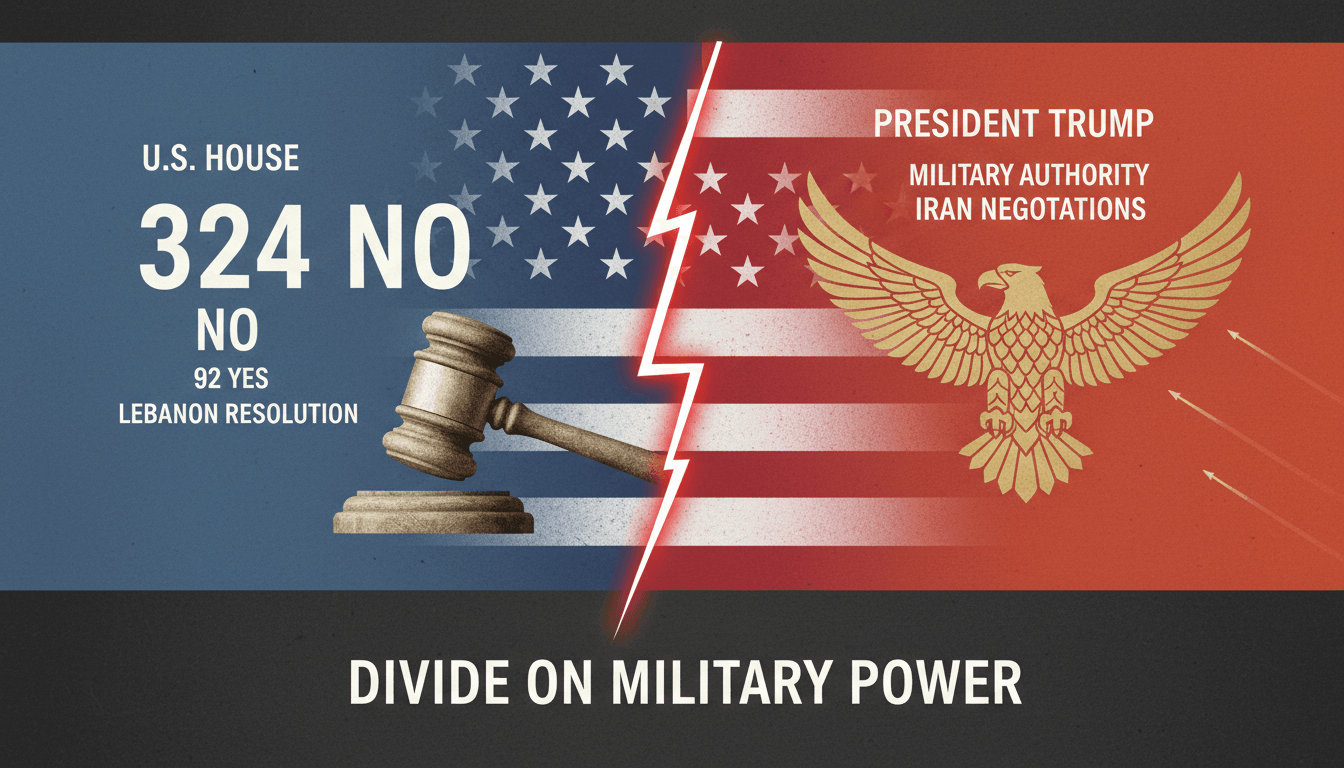
The U.S. House of Representatives voted 324 to 92 against a resolution aimed at restricting President Trump's military actions in Lebanon. This decision reflects a strong congressional stance in support of the President's military engagement. The resolution's defeat comes amid ongoing negotiations between Trump and Iran, highlighting the complexities of U.S. foreign policy.
President Trump criticized the vote, suggesting that it undermines his diplomatic efforts and characterizing it as an "empty vote." The rejection of the resolution indicates a significant divide between Congress and the President regarding military authority and engagement in the region.
The Context
The resolution was grounded in the War Powers Act, which seeks to limit presidential military authority without congressional approval. The overwhelming majority against the resolution illustrates strong congressional support for Trump's current military strategy. As tensions with Iran escalate, this vote reflects broader concerns about U.S. military involvement in the Middle East.
The ongoing negotiations with Iran add another layer of complexity to this situation. The relationship between Congress and the President is crucial, as differing views on military authority could impact future U.S. foreign policy decisions.
Takeaway
The rejection of the resolution may lead to continued tensions in U.S. foreign policy and military engagement in the Middle East. Observers should watch for potential future votes on military engagement, as well as developments in U.S.-Iran negotiations. The ongoing conflict between the executive and legislative branches will likely shape the future of U.S. military policy and foreign relations.
As the situation evolves, the dynamics between Congress and the President will be critical in determining the direction of U.S. military involvement in the region.
Egyptian politics, economy, and society coverage.
"Al Masry Al Youm is a major Egyptian newspaper with broad national coverage."
— A47 Editor
حائط صد فى الكونجرس يمنع «ترامب» من استكمال الحرب
The U.S. House of Representatives voted recently to pass a resolution that restricts President Trump from escalating military actions against Iran, amidst ongoing efforts to maintain diplomatic negotiations and prevent regional escalation despite mut...
Pan-Arab political news and analysis.
"Al-Quds Al-Arabi is a London-based Arabic newspaper known for political coverage."
— A47 Editor
مجلس النواب الأمريكي يرفض مشروع قرار لتقييد مشاركة القوات الأمريكية في لبنان
The U.S. House of Representatives has rejected a resolution aimed at restricting American military involvement in Lebanon, signaling a continuation of current policies regarding U.S. forces in the region. This decision reflects ongoing debates within...
Arabic-language coverage of international news and geopolitics.
"RT Arabic is a Russian state-funded outlet often criticized for promoting Kremlin-aligned narratives."
— A47 Editor
ترامب: الديمقراطيون يفضلون فشل أمريكا على منحي نصرا جديدا في مفاوضات إيران
U.S. President Donald Trump criticized the House of Representatives for conducting a 'meaningless vote' that restricted his war powers amid ongoing negotiations to resolve the crisis with Iran. This statement reflects his frustration with the politic...