
U.S. Implements Economic Sanctions on Iran While Avoiding Military Action
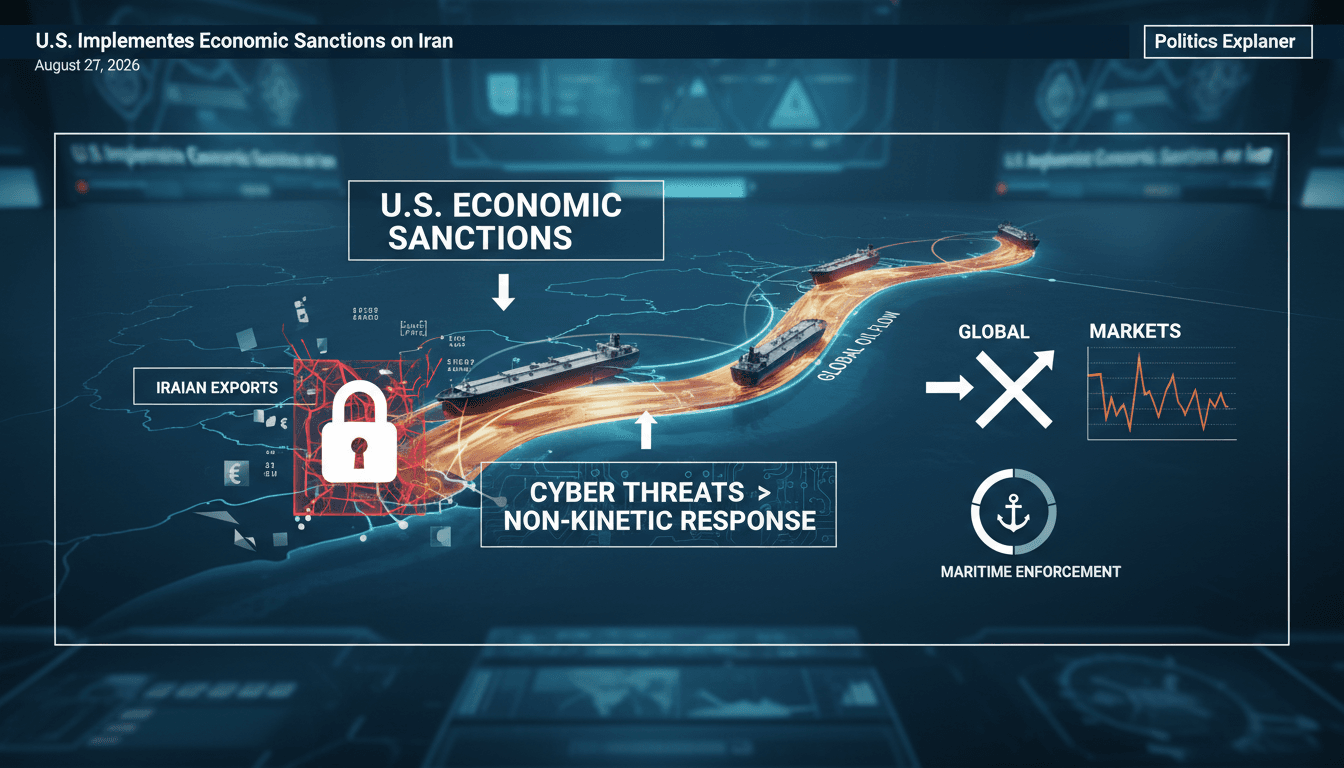
Here's what it means for you.
As the U.S. shifts its strategy towards Iran, global markets and regional stability may face new challenges.
Why it matters
This pivot to economic sanctions over military action could reshape energy markets and geopolitical alliances.
What happened (in 30 seconds)
- On August 27, 2026, U.S. officials announced a shift from military strikes to economic sanctions against Iran.
- Secretary of State Marco Rubio confirmed that large-scale military action is not anticipated, focusing instead on sanctions and cyber investigations.
- The U.S. Treasury sanctioned 60 Iranian-linked individuals and entities, reflecting a broader strategy to contain Iranian influence without direct military engagement.
The context you actually need
- Tensions escalated following U.S. military strikes on Iranian targets in July 2026, leading to a fragile ceasefire.
- Cyber threats from Iranian-linked groups have targeted U.S. infrastructure, prompting heightened security alerts.
- The Strait of Hormuz, a critical shipping route for global oil, remains a focal point for U.S. naval enforcement and sanctions.
What's really happening
In late August 2026, the U.S. government signaled a significant policy shift regarding its approach to Iran. This change comes in the wake of military engagements earlier in the year, where U.S. forces targeted Iranian assets in response to provocations. The decision to pivot towards economic sanctions and cyber measures reflects a strategic recalibration aimed at reducing direct military involvement while still addressing perceived threats from Iran.
The U.S. Treasury's recent sanctions on 60 Iranian-linked individuals and entities underscore this new approach. By targeting specific actors within Iran's economy, the U.S. aims to exert pressure without escalating military tensions. This strategy is particularly relevant given the ongoing concerns about Iranian cyber operations, which have increasingly targeted U.S. critical infrastructure, including water systems. The July 31 cyber intrusion at Micro-Com in Kansas, attributed to the group 'Barracuda,' exemplifies the risks posed by Iranian cyber capabilities.
The U.S. administration, under Secretary Rubio, has communicated to allies that while military options remain on the table, the current focus will be on economic tools and maritime enforcement in the Strait of Hormuz. This shift is designed to limit Iran's ability to leverage its position in the region while maintaining a robust naval presence to deter any aggressive actions.
The implications of this policy shift are multifaceted. For one, it signals a broader de-escalation in U.S. military operations, which could lead to a more stable regional environment in the short term. However, the reliance on economic sanctions may also provoke retaliatory measures from Iran, potentially escalating tensions in other areas, including cyber warfare. The U.S. is likely to maintain its naval presence in the region to enforce sanctions and ensure the free flow of maritime traffic, particularly in the Strait of Hormuz, which is vital for global oil supplies.
As this situation evolves, the U.S. will need to balance its economic strategies with the potential for Iranian retaliation, both in conventional military terms and through cyber operations. The focus on non-kinetic measures may provide a temporary reprieve from direct conflict, but it also raises questions about the long-term effectiveness of sanctions in achieving U.S. objectives in the region.
Who feels it first (and how)
- Energy Sector: Companies reliant on oil exports may experience volatility in prices due to sanctions and geopolitical tensions.
- Cybersecurity Firms: Increased demand for cybersecurity solutions as businesses and infrastructure prepare for potential Iranian cyber threats.
- Shipping and Logistics: Companies operating in the Strait of Hormuz may face disruptions or increased costs due to heightened naval enforcement and sanctions.
What to watch next
- Oil Prices: Monitor fluctuations in global oil prices as sanctions impact Iranian exports and regional stability.
- Cyber Incidents: Watch for any significant cyber attacks attributed to Iranian groups targeting U.S. infrastructure or businesses.
- Diplomatic Engagements: Keep an eye on U.S. diplomatic efforts with allies regarding Iran, particularly in the context of sanctions and military presence.
The U.S. has imposed sanctions on 60 Iranian-linked individuals and entities.
Iran may respond with increased cyber operations targeting U.S. infrastructure.
The long-term effectiveness of sanctions in curbing Iranian influence and behavior.
Frequently Asked Questions
- Why it matters?
- This pivot to economic sanctions over military action could reshape energy markets and geopolitical alliances.
- What happened (in 30 seconds)?
- On August 27, 2026, U.S. officials announced a shift from military strikes to economic sanctions against Iran. Secretary of State Marco Rubio confirmed that large-scale military action is not anticipated, focusing instead on sanctions and cyber investigations. The U.S. Treasury sanctioned 60 Iranian-linked individuals and entities, reflecting a broader strategy to contain Iranian influence without direct military engagement.
- What's really happening?
- In late August 2026, the U.S. government signaled a significant policy shift regarding its approach to Iran. This change comes in the wake of military engagements earlier in the year, where U.S. forces targeted Iranian assets in response to provocations. The decision to pivot towards economic sanctions and cyber measures reflects a strategic recalibration aimed at reducing direct military involvement while still addressing perceived threats from Iran. The U.S. Treasury's recent sanctions on 60
- Who feels it first (and how)?
- Energy Sector: Companies reliant on oil exports may experience volatility in prices due to sanctions and geopolitical tensions. Cybersecurity Firms: Increased demand for cybersecurity solutions as businesses and infrastructure prepare for potential Iranian cyber threats. Shipping and Logistics: Companies operating in the Strait of Hormuz may face disruptions or increased costs due to heightened naval enforcement and sanctions.
- What to watch next?
- Oil Prices: Monitor fluctuations in global oil prices as sanctions impact Iranian exports and regional stability. Cyber Incidents: Watch for any significant cyber attacks attributed to Iranian groups targeting U.S. infrastructure or businesses. Diplomatic Engagements: Keep an eye on U.S. diplomatic efforts with allies regarding Iran, particularly in the context of sanctions and military presence.
Arabic-language coverage of Saudi, regional, and international affairs.
"Al Bilad offers mainstream Saudi newspaper coverage across domestic and broader Arab topics."
— A47 Editor
وسط تصاعد المخاوف السيبرانية.. واشنطن تستبعد ضربات جديدة على إيران
The United States is currently opting to intensify economic pressures on Iran rather than launching new military strikes, amid rising concerns over cyberattacks targeting critical U.S. infrastructure. This shift indicates an expansion of confrontatio...
Arabic-language coverage of political affairs and current events.
"Okaz political coverage typically follows mainstream Saudi framing on national and regional affairs."
— A47 Editor
تسريبات "أكسيوس": الضغوط الاقتصادية سلاح واشنطن الجديد لإخضاع طهران
Axios reported that U.S. Secretary of State Marco Rubio informed allied foreign ministers that the United States is unlikely to conduct new strikes on Iran at this time, opting instead to focus on economic pressure and sanctions. Rubio indicated that...
Pan-Arab news coverage spanning politics, business, sports, and regional affairs.
"Asharq Al-Awsat reflects a broad Arab editorial perspective with strong attention to regional geopolitics."
— A47 Editor
روبيو يستبعد شن ضربات جديدة على إيران في الوقت الراهن
U.S. Secretary of State Marco Rubio informed several allied counterparts that the United States does not expect to launch new strikes against Iran at this time. This statement comes amid ongoing tensions in the region and reflects a current stance of...
Arabic-language coverage of international news and geopolitics.
"RT Arabic is a Russian state-funded outlet often criticized for promoting Kremlin-aligned narratives."
— A47 Editor
"أكسيوس": روبيو أبلغ حلفاء واشنطن أن الولايات المتحدة لا تُخطط لشن ضربات جديدة على إيران
Axios reported that U.S. Secretary of State Marco Rubio informed Washington's allies that the U.S. government is not currently planning to launch new strikes against Iran. This statement comes amidst ongoing tensions in the region and reflects a stra...
Pan-Arab political news and analysis.
"Al-Quds Al-Arabi is a London-based Arabic newspaper known for political coverage."
— A47 Editor
أكسيوس: روبيو يستبعد شن ضربات جديدة على إيران في الوقت الراهن
U.S. Secretary of State Marco Rubio has informed several allied foreign ministers that the United States does not plan to launch new military strikes against Iran at this time, indicating a shift in the Trump administration's focus towards increasing...