
SDF Completes Integration into Syrian State Institutions
Here's what it means for you.
This historic integration could reshape regional stability and influence global energy markets.
Why it matters
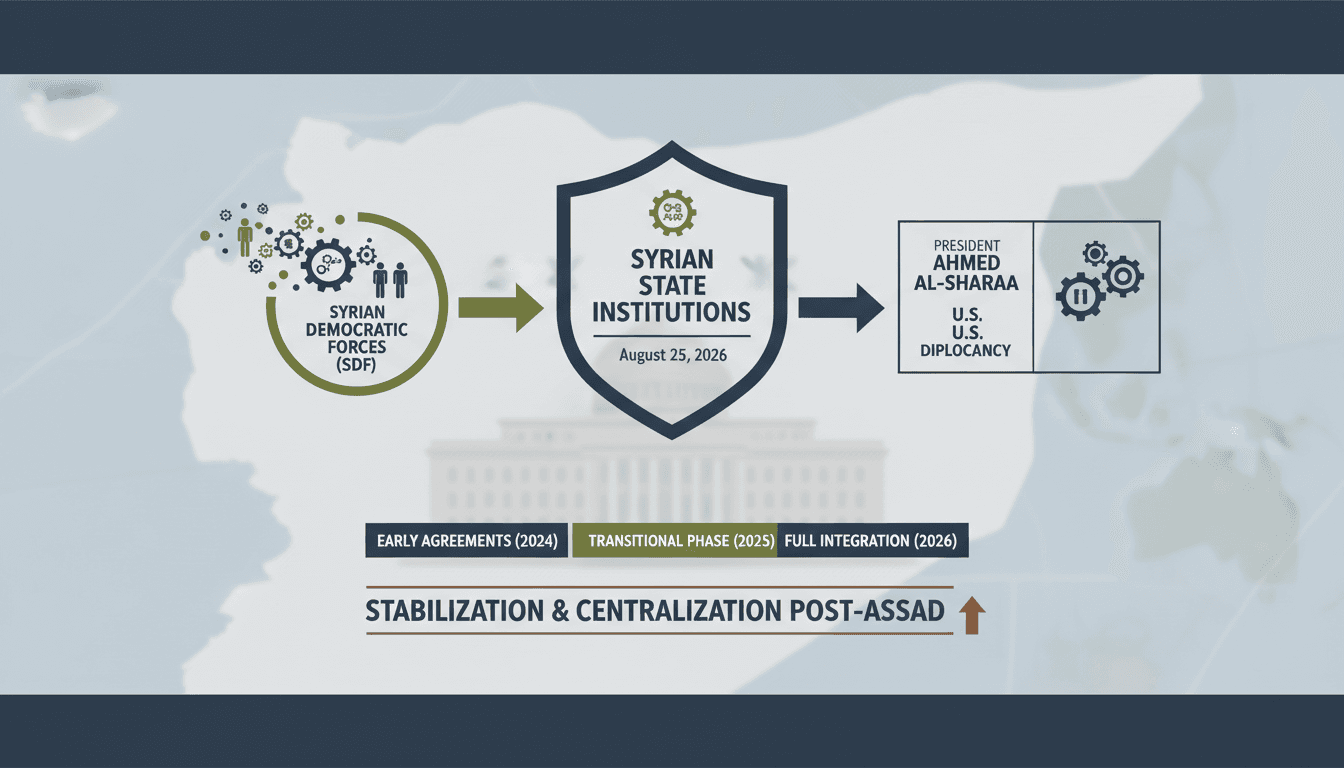
The integration of the Syrian Democratic Forces (SDF) into state institutions signals a potential shift in power dynamics and governance in Syria.
What happened (in 30 seconds)
- Tom Barrack, U.S. Special Envoy, hailed the integration of the SDF into Syrian state institutions as a historic event on August 25, 2026.
- Mazloum Abdi, SDF commander, announced the group's dissolution and full integration into the Syrian government framework.
- President Ahmed al-Sharaa is leading efforts to unify the country post-Assad, with U.S. diplomatic facilitation.
The context you actually need
- Post-Assad Transition: Following the collapse of the Assad regime in late 2024, a transitional government has been pursuing national unification.
- SDF's Role: The SDF, formed in 2015 with U.S. support to combat ISIS, has shifted from autonomous operations to integrating with the Syrian government.
- Phased Integration: An agreement in January 2026 set the stage for the phased integration of military, security, and civilian institutions.
What's really happening
The integration of the Syrian Democratic Forces (SDF) into Syrian state institutions represents a significant shift in the geopolitical landscape of the region. This move is not merely a military or administrative change; it reflects deeper structural transformations within Syria's governance and security frameworks.
Historically, the SDF has been a key player in the fight against ISIS, operating with substantial U.S. support. However, the collapse of the Assad regime in late 2024 created a vacuum that necessitated a re-evaluation of alliances and governance structures. The transitional government, led by President Ahmed al-Sharaa, recognized the need for national unity to stabilize the country and prevent further fragmentation. This recognition paved the way for negotiations with the SDF, culminating in the recent announcement of their full integration.
The integration process, which includes the dissolution of the SDF and the handover of military and administrative responsibilities to the Syrian government, is framed as a partnership rather than a subjugation. Tom Barrack's endorsement of this move emphasizes the U.S. role in facilitating a peaceful transition, highlighting the recognition of Kurdish language in education and the inclusion of Kurdish figures in government roles. This framing is crucial as it seeks to mitigate potential backlash from Kurdish communities who may feel marginalized by the Syrian state.
The implications of this integration extend beyond Syria's borders. As the SDF transitions into state structures, the dynamics of regional power will shift, potentially affecting U.S. interests and alliances in the Middle East. The integration could also influence the management of oil resources, as the SDF has controlled significant oil fields in northeastern Syria. The handover of these assets to the Syrian government raises questions about future energy policies and economic stability in the region.
Moreover, the integration is likely to impact the ongoing efforts to combat ISIS, as the SDF's military capabilities will now be aligned with the Syrian government's strategies. This alignment could either strengthen the fight against ISIS or complicate it, depending on the government's priorities and the level of international support.
In summary, the integration of the SDF into Syrian state institutions is a multifaceted development that reflects both the challenges and opportunities facing Syria in its post-Assad era. It underscores the importance of diplomatic engagement and the need for a cohesive national strategy to address the complex realities on the ground.
Who feels it first (and how)
- Kurdish Communities: They may experience shifts in governance and representation within the new state framework.
- U.S. Diplomats: They will need to navigate the evolving political landscape and manage relations with both the Syrian government and Kurdish leaders.
- Regional Energy Markets: Changes in oil management could impact global energy prices and supply chains.
What to watch next
- Political Stability: Monitor the effectiveness of the integration in fostering national unity and reducing conflict. This will be crucial for long-term stability in Syria.
- Energy Management: Watch for changes in oil production and distribution as the Syrian government assumes control of SDF-held assets. This could affect regional energy markets.
- International Relations: Keep an eye on U.S. diplomatic efforts and their impact on Kurdish autonomy and rights. The balance of power will be critical in shaping future alliances.
The SDF has officially dissolved and integrated into Syrian state institutions.
The integration will lead to shifts in governance and regional power dynamics.
The long-term effects on Kurdish autonomy and the fight against ISIS remain uncertain.
Frequently Asked Questions
- Why it matters?
- The integration of the Syrian Democratic Forces (SDF) into state institutions signals a potential shift in power dynamics and governance in Syria.
- What happened (in 30 seconds)?
- Tom Barrack, U.S. Special Envoy, hailed the integration of the SDF into Syrian state institutions as a historic event on August 25, 2026. Mazloum Abdi, SDF commander, announced the group's dissolution and full integration into the Syrian government framework. President Ahmed al-Sharaa is leading efforts to unify the country post-Assad, with U.S. diplomatic facilitation.
- What's really happening?
- The integration of the Syrian Democratic Forces (SDF) into Syrian state institutions represents a significant shift in the geopolitical landscape of the region. This move is not merely a military or administrative change; it reflects deeper structural transformations within Syria's governance and security frameworks. Historically, the SDF has been a key player in the fight against ISIS, operating with substantial U.S. support. However, the collapse of the Assad regime in late 2024 created a vac
- Who feels it first (and how)?
- Kurdish Communities: They may experience shifts in governance and representation within the new state framework. U.S. Diplomats: They will need to navigate the evolving political landscape and manage relations with both the Syrian government and Kurdish leaders. Regional Energy Markets: Changes in oil management could impact global energy prices and supply chains.
- What to watch next?
- Political Stability: Monitor the effectiveness of the integration in fostering national unity and reducing conflict. This will be crucial for long-term stability in Syria. Energy Management: Watch for changes in oil production and distribution as the Syrian government assumes control of SDF-held assets. This could affect regional energy markets. International Relations: Keep an eye on U.S. diplomatic efforts and their impact on Kurdish autonomy and rights. The balance of power will be critical i
Arabic-language coverage of international news and geopolitics.
"RT Arabic is a Russian state-funded outlet often criticized for promoting Kremlin-aligned narratives."
— A47 Editor
توم باراك: دمج "قسد" في مؤسسات الدولة السورية حدث تاريخي
Tom Barrack, the U.S. Ambassador to Turkey and Special Envoy to Syria and Iraq, described the integration of the Syrian Democratic Forces (SDF) into the Syrian state institutions as a 'historic event by all standards.' This statement highlights a sig...
Pan-Arab news coverage spanning politics, business, sports, and regional affairs.
"Asharq Al-Awsat reflects a broad Arab editorial perspective with strong attention to regional geopolitics."
— A47 Editor
توم باراك يعتبر قرار حل قوات سوريا الديموقراطية «تاريخياً بامتياز»
Tom Barrack, the U.S. special envoy to Syria and ambassador to Turkey, described the decision to dissolve the Syrian Democratic Forces as a 'historically significant' move. This statement was made on Tuesday, highlighting the importance of this devel...
Jordanian news and regional updates.
"Roya News is a Jordanian outlet focused on breaking news and local affairs."
— A47 Editor
توم براك: خطة ترمب للشرق الأوسط تمضي قدما مع اندماج قسد في مؤسسات الدولة السورية
Tom Barak, the U.S. special envoy to Syria, described the integration of the Syrian Democratic Forces (SDF) into the institutions of the Syrian state as a significant step forward in implementing Trump's Middle East plan. This development indicates a...