
SDF Dissolves and Integrates into Syrian State Institutions
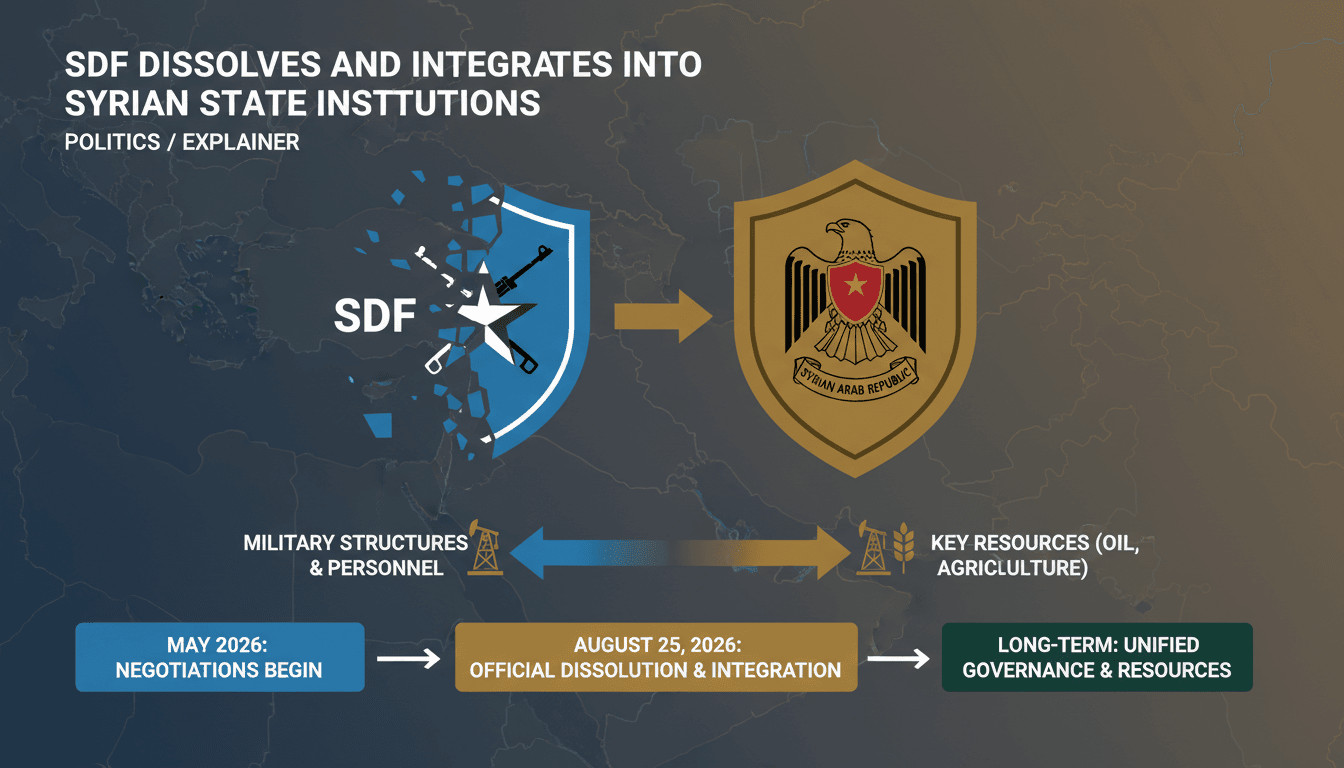
Here's what it means for you.
The integration of the Syrian Democratic Forces into state institutions could influence regional stability and energy markets, indirectly affecting global economic conditions.
Why it matters
This development signals a significant shift in the power dynamics of northeastern Syria, impacting regional governance and economic policies.
What happened (in 30 seconds)
- On August 25, 2026, SDF commander Mazloum Abdi announced the dissolution of the SDF and its integration into Syrian state institutions.
- The integration process, which began in March 2025, involved the absorption of SDF fighters into the Syrian army and the transfer of security and administrative assets to the central government.
- This move follows agreements aimed at unifying military and administrative structures in northeastern Syria, concluding a period of negotiation and limited conflict.
The context you actually need
- The SDF, established over a decade, had maintained de facto control in northeastern Syria, creating parallel military and administrative structures.
- Negotiations for integration intensified in early 2026, focusing on dismantling the SDF's independent command while ensuring a smooth transition for fighters and resources.
- The Syrian government, under President Ahmad al-Sharaa, views this integration as a crucial step toward national unification and restoring state authority across all provinces.
What's really happening
The dissolution of the Syrian Democratic Forces (SDF) and their integration into Syrian state institutions represents a pivotal moment in the ongoing evolution of governance in northeastern Syria. This transition, formalized on August 25, 2026, follows a lengthy negotiation process that began with initial agreements in March 2025. The SDF, which had operated as an autonomous military entity, is now fully absorbed into the Syrian army and other state structures, marking the end of its independent status.
The integration process was not merely a bureaucratic formality; it involved complex logistical and military maneuvers. Over 17 months, SDF fighters were systematically absorbed into Syrian army brigades, with a focus on geographic distribution to prevent the formation of concentrated former units. This strategy aimed to mitigate potential unrest and ensure a smoother transition into the national military framework. Additionally, the transfer of heavy weaponry and military assets to the Syrian Ministry of Defense was a critical component of this integration, reinforcing the central government's control over military resources.
The integration also extended to the SDF's security forces, known as Asayish, which were incorporated into the Syrian Ministry of Interior after a vetting process. This move was designed to maintain local governance while aligning security operations with national policies. The Kurdish administration, represented by figures like Ilham Ahmed, has been involved in these discussions, advocating for the recognition of Kurdish rights within the new state framework.
The implications of this integration are profound. By consolidating military and administrative control, the Syrian government aims to restore stability and unify governance across its territories. This shift is expected to facilitate a more coherent economic policy, particularly regarding the management of vital resources like oil fields and border crossings, which have been under SDF control. The centralization of these assets is anticipated to enhance the government's ability to implement unified economic strategies, potentially leading to improved market predictability.
Internationally, the U.S. envoy has characterized this integration as a historic step toward stability in the region. While immediate market disruptions have not been reported, the control of oil resources by the central authorities is likely to influence regional energy dynamics, which could have ripple effects on global oil markets. As the situation evolves, the Kurdish community continues to advocate for constitutional recognition of their rights, indicating that while military integration has occurred, political negotiations are far from over.
Who feels it first (and how)
- Local Kurdish communities: They may experience shifts in governance and advocacy for rights within the new state framework.
- Syrian military personnel: They will see changes in command structures and operational dynamics as SDF fighters are integrated.
- Energy sector stakeholders: Companies and investors in oil and gas may be affected by changes in resource management and policy direction.
What to watch next
- Kurdish advocacy efforts: Monitor how Kurdish leaders push for constitutional rights within the new governance structure, which could impact regional stability.
- Economic policy shifts: Watch for changes in economic strategies as the Syrian government consolidates control over resources, influencing market conditions.
- International reactions: Pay attention to how foreign governments and organizations respond to this integration, particularly regarding stability and human rights in the region.
The SDF has been dissolved and integrated into Syrian state institutions.
The centralization of military and economic resources will lead to more unified governance in Syria.
The long-term implications for Kurdish rights and regional stability remain uncertain.
Frequently Asked Questions
- Why it matters?
- This development signals a significant shift in the power dynamics of northeastern Syria, impacting regional governance and economic policies.
- What happened (in 30 seconds)?
- On August 25, 2026, SDF commander Mazloum Abdi announced the dissolution of the SDF and its integration into Syrian state institutions. The integration process, which began in March 2025, involved the absorption of SDF fighters into the Syrian army and the transfer of security and administrative assets to the central government. This move follows agreements aimed at unifying military and administrative structures in northeastern Syria, concluding a period of negotiation and limited conflict.
- What's really happening?
- The dissolution of the Syrian Democratic Forces (SDF) and their integration into Syrian state institutions represents a pivotal moment in the ongoing evolution of governance in northeastern Syria. This transition, formalized on August 25, 2026, follows a lengthy negotiation process that began with initial agreements in March 2025. The SDF, which had operated as an autonomous military entity, is now fully absorbed into the Syrian army and other state structures, marking the end of its independent
- Who feels it first (and how)?
- Local Kurdish communities: They may experience shifts in governance and advocacy for rights within the new state framework. Syrian military personnel: They will see changes in command structures and operational dynamics as SDF fighters are integrated. Energy sector stakeholders: Companies and investors in oil and gas may be affected by changes in resource management and policy direction.
- What to watch next?
- Kurdish advocacy efforts: Monitor how Kurdish leaders push for constitutional rights within the new governance structure, which could impact regional stability. Economic policy shifts: Watch for changes in economic strategies as the Syrian government consolidates control over resources, influencing market conditions. International reactions: Pay attention to how foreign governments and organizations respond to this integration, particularly regarding stability and human rights in the region.
Arabic political reporting and analysis.
"Arabic Post is a digital outlet focused on politics and regional affairs."
— A47 Editor
كواليس حلّ “قسد”.. كيف أُنجز اتفاق الاندماج مع دمشق وأين ذهب مقاتلو مظلوم عبدي؟
On August 25, 2026, in a significant announcement from the People's Palace in Damascus, Mazloum Abdi, the leader of the Syrian Democratic Forces (SDF), declared the dissolution of the SDF, marking the end of its status as an independent military orga...
UAE-based English-language newspaper covering regional politics, economics, and global affairs.
"The National reflects Emirati policy perspectives while maintaining international editorial standards."
— A47 Editor
The SDF's dissolution is a historic moment for Syria
The Syrian Democratic Forces (SDF), a Kurdish-led military group, have officially dissolved as an independent entity and integrated into the Syrian national army, marking a historic moment in Syria's ongoing political transition. This decision follow...
Arabic-language reporting focused on domestic developments in Saudi Arabia.
"Okaz is a mainstream Saudi newspaper that often reflects domestic priorities and official-facing coverage."
— A47 Editor
اندماج «قسد».. تعزيز سلطة الدولة السورية
The Syrian Democratic Forces (SDF) announced their dissolution as an independent military entity and will integrate their fighters into the Syrian Army, marking a significant political and strategic shift in the reformation of Syria after years of co...
Comprehensive coverage of Middle Eastern and global issues.
"Al Jazeera is a prominent voice from the Global South, especially the Middle East, with an emphasis on underreported stories."
— A47 Editor
What’s behind the SDF’s deal with Damascus?
The Syrian Democratic Forces (SDF), a Kurdish-led military group, have announced their dissolution as an independent entity following a merger with the Syrian national army. This decision marks a significant shift in the military dynamics of northern...
Global news coverage with extensive reporting on Middle Eastern conflicts and geopolitics.
"Al Jazeera is a Qatar-based broadcaster known for wide regional coverage and alternative perspectives."
— A47 Editor
What’s behind the SDF’s deal with Damascus?
The Syrian Democratic Forces (SDF), a Kurdish-led military group, have announced their dissolution as an independent entity following a merger with the Syrian national army. This decision marks a significant shift in the military dynamics of northern...
UAE-based English-language newspaper covering regional politics, economics, and global affairs.
"The National reflects Emirati policy perspectives while maintaining international editorial standards."
— A47 Editor
How pressure and months of stalling finally brought about the SDF’s dissolution in Syria
The Syrian Democratic Forces (SDF), a Kurdish-led military group, have officially dissolved as an independent entity and integrated into the Syrian national army, marking a significant shift in Syria's military landscape. This decision follows months...
Regional coverage and analysis focused on politics, diplomacy, and business across the Middle East.
"Al-Monitor is known for analytical reporting on Middle East politics and policy developments."
— A47 Editor
Capitulation or compromise? What SDF's dissolution means for Sharaa, Turkey and Syria's Kurds
The Syrian Democratic Forces (SDF) have officially announced their dissolution as an independent military entity, marking a significant shift in the military landscape of northern Syria. This decision follows an agreement with the Syrian government i...
Regional and international reporting focused on Middle Eastern politics, diplomacy, and economics.
"Asharq Al-Awsat is a Saudi-owned international newspaper reflecting mainstream Gulf political perspectives."
— A47 Editor
Kurdish-Led SDF Says It Has Dissolved After Merging with Syrian Army
The Kurdish-led Syrian Democratic Forces (SDF) have officially dissolved as an independent military entity and integrated into the Syrian national army, marking a significant shift in Syria's military landscape. This decision follows months of negoti...