
U.S. conducts airstrikes against Iran following deadly attacks on soldiers in Jordan
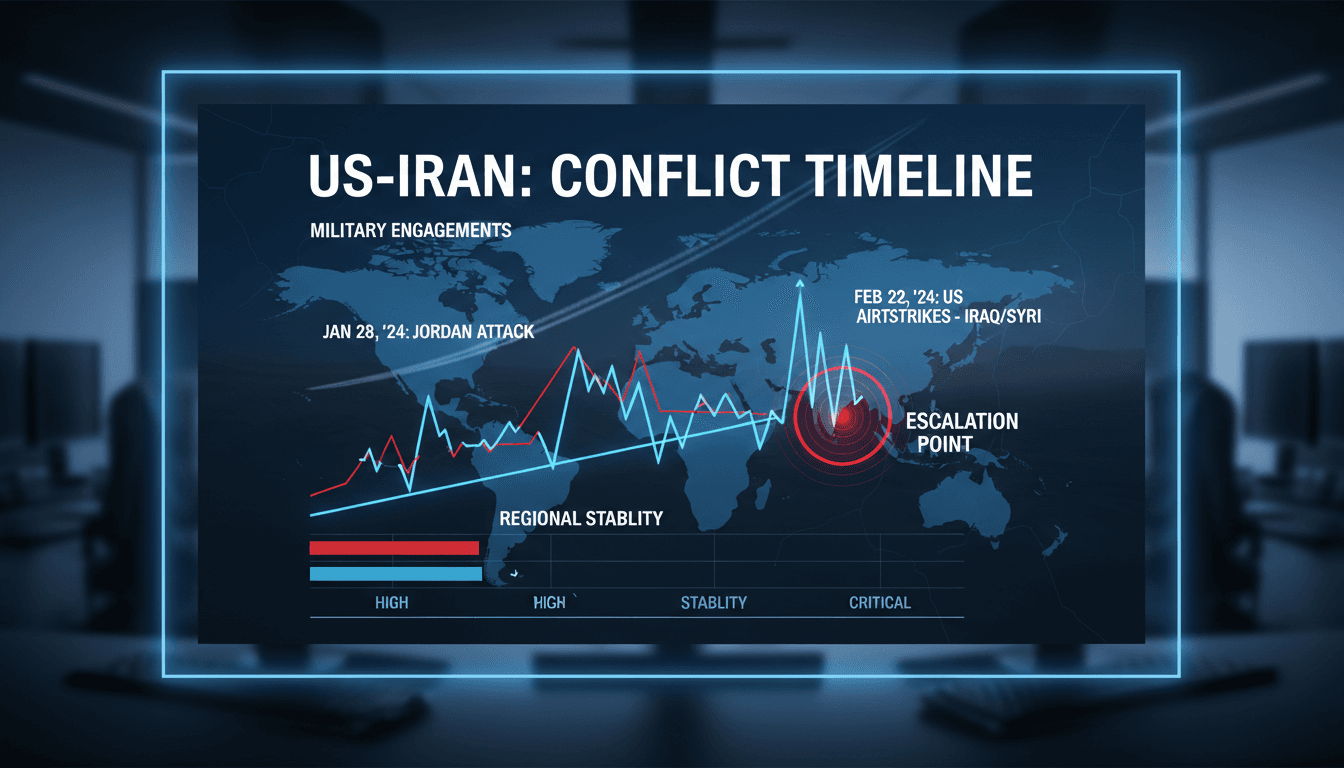
Here's what it means for you.
The recent U.S. airstrikes against Iran signal a significant escalation in military tensions in the Middle East. This development may impact global markets, particularly in sectors sensitive to geopolitical instability, such as oil and defense. Policymakers will need to navigate the complexities of U.S.-Iran relations carefully, as further military engagements could lead to broader regional conflicts. The deaths of American soldiers in Jordan have heightened the stakes, prompting a swift military response from the U.S. This situation underscores the fragile security dynamics in the region and the potential for rapid escalation in hostilities.
What happened
The U.S. military has launched airstrikes against Iran in retaliation for recent attacks that resulted in the deaths of two American soldiers in Jordan. This marks the eighth wave of strikes aimed at weakening Iran's military capabilities. The airstrikes were characterized as a "rapid punishment" for the Iranian Revolutionary Guard, which has been implicated in the attacks.
In addition to the two confirmed fatalities, one American service member remains missing, and four others have been hospitalized. The strikes are a direct response to the increasing aggression from Iranian forces in the region, particularly concerning U.S. military personnel.
The Context
The ongoing conflict between the U.S. and Iran has been marked by a series of military actions and retaliatory measures. The Iranian Revolutionary Guard has been a focal point of U.S. military strategy, as its operations have escalated tensions in the region. The timing of these airstrikes comes after a significant loss of American lives, which has prompted a reassessment of military strategies on both sides.
As the U.S. Central Command (CENTCOM) confirmed, these airstrikes were ordered by the Commander-in-Chief, reflecting a decisive stance against Iranian aggression. The situation remains precarious, with both nations likely to evaluate their next moves in light of the recent developments.
Takeaway
The potential for further military engagements remains high as the U.S. continues to respond to Iranian aggression. Observers should watch for possible Iranian retaliation to the airstrikes, which could escalate the conflict further. Additionally, developments in U.S.-Iran relations will be critical to monitor in the coming days, as both sides reassess their strategies.
The fragile security situation in the region suggests that any miscalculation could lead to broader implications for international stability. Stakeholders will need to remain vigilant as the situation unfolds.
Pan-Arab news coverage spanning politics, business, sports, and regional affairs.
"Asharq Al-Awsat reflects a broad Arab editorial perspective with strong attention to regional geopolitics."
— A47 Editor
الجيش الأميركي ينهي موجة ثامنة من الضربات جوية على إيران
The U.S. military announced the initiation of new airstrikes against Iran as a response to attacks on its forces in Jordan, which resulted in the deaths of two American soldiers. This marks the conclusion of the eighth wave of airstrikes targeting Ir...
Pan-Arab political news and analysis.
"Al-Quds Al-Arabi is a London-based Arabic newspaper known for political coverage."
— A47 Editor
أمريكا تشن هجمات جديدة على إيران
The U.S. military announced on Saturday that it conducted new airstrikes against Iran as a form of 'swift punishment' for the Iranian Revolutionary Guard's attack in Jordan, which resulted in the deaths of two U.S. service members, left another missi...
Arabic-language coverage of international news and geopolitics.
"RT Arabic is a Russian state-funded outlet often criticized for promoting Kremlin-aligned narratives."
— A47 Editor
الجيش الأمريكي يعلن بدء الرد على مقتل جنوده في الأردن بشن غارات جوية جديدة على إيران
The U.S. Central Command (CENTCOM) announced early Sunday that it has begun new airstrikes against Iran, following the deaths of American soldiers in Jordan. This military action is directed by the Commander-in-Chief of the armed forces, indicating a...