
Western News Agencies Call for Accountability from Israel Over Nasser Hospital Strike Killing Journalists
Here's what it means for you.
As a global citizen, the ongoing scrutiny of press safety in conflict zones impacts how news is reported and perceived worldwide.
Why it matters
This incident underscores the critical need for accountability in protecting journalists, influencing media operations and public trust in reporting.
What happened (in 30 seconds)
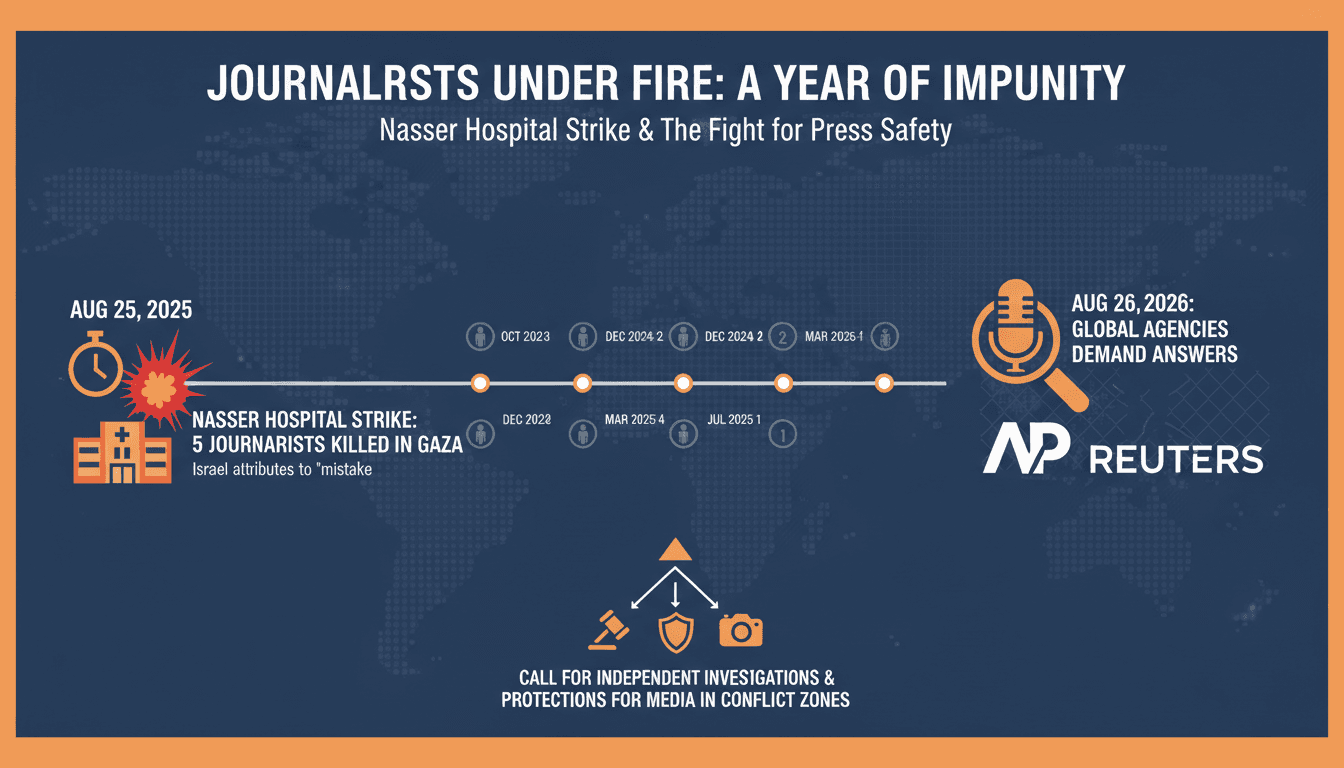
- On August 25, 2025, Israeli forces executed a double-tap airstrike on Nasser Hospital in Gaza, killing five journalists and at least 20 civilians.
- One year later, on August 26, 2026, the Associated Press and Reuters demanded accountability from Israel, highlighting the lack of a transparent investigation.
- The IDF acknowledged the strike but denied targeting journalists, prompting ongoing calls for independent probes into the incident.
The context you actually need
- The Gaza conflict escalated significantly after Hamas attacks on Israel on October 7, 2023, leading to a high number of journalist fatalities.
- The Committee to Protect Journalists reported that Israel was responsible for two-thirds of the 129 journalists killed globally in 2025.
- Previous incidents included the deaths of Al Jazeera journalists near al-Shifa Hospital shortly before the Nasser strike, highlighting a troubling trend of journalist targeting.
What's really happening
The August 25, 2025, airstrike on Nasser Hospital was a pivotal moment in the ongoing Gaza conflict, reflecting a broader pattern of violence against journalists in war zones. The Israeli Defense Forces (IDF) claimed the strike targeted a suspected militant activity, specifically a camera identified as belonging to Reuters cameraman Hussam al-Masri. This initial strike was followed by a second attack aimed at responders and journalists documenting the aftermath, resulting in the tragic deaths of five journalists alongside numerous civilians.
The lack of accountability following this incident has raised significant concerns among Western media organizations. A year later, the Associated Press and Reuters issued a joint statement demanding answers, emphasizing the protected status of hospitals under international law. Their call for accountability highlights the ongoing scrutiny of Israel's military actions, particularly regarding the safety of journalists. The absence of a transparent investigation or any reported consequences for the strike has led to accusations of impunity, further complicating the already tense relationship between Israel and international media.
The Committee to Protect Journalists (CPJ) has documented a disturbing trend of journalist fatalities in the region, with Israel being implicated in the majority of these deaths. This pattern raises critical questions about the safety of journalists operating in conflict zones and the responsibilities of military forces to protect non-combatants, including media personnel. The ongoing conflict has created an environment where journalists are increasingly at risk, leading to calls for stronger protections and accountability measures.
As the situation evolves, the implications for press freedom and the safety of journalists are profound. The demand for independent investigations into incidents like the Nasser Hospital strike reflects a growing recognition of the need for accountability in military operations. This is not just a matter of legal responsibility; it is also about maintaining public trust in the media and ensuring that journalists can operate without fear of violence or retribution.
Who feels it first (and how)
- Journalists: Increased risk and scrutiny in conflict zones, affecting their safety and reporting capabilities.
- Media Organizations: Heightened pressure to advocate for journalist safety and accountability, influencing editorial policies.
- International Community: Growing demands for accountability may lead to diplomatic tensions and calls for reforms in military engagement rules.
What to watch next
- Investigative Outcomes: Monitor the results of any independent investigations into the Nasser Hospital strike, as they could set precedents for accountability in military operations.
- Media Advocacy Movements: Watch for increased advocacy from media organizations pushing for stronger protections for journalists in conflict zones.
- International Reactions: Observe how global governments respond to calls for accountability, which may influence diplomatic relations and military policies.
The Nasser Hospital strike resulted in the deaths of five journalists and at least 20 civilians.
Continued scrutiny and demands for accountability from international media organizations and human rights groups.
The potential impact of this incident on future military operations and journalist safety in conflict zones.
Frequently Asked Questions
- Why it matters?
- This incident underscores the critical need for accountability in protecting journalists, influencing media operations and public trust in reporting.
- What happened (in 30 seconds)?
- On August 25, 2025, Israeli forces executed a double-tap airstrike on Nasser Hospital in Gaza, killing five journalists and at least 20 civilians. One year later, on August 26, 2026, the Associated Press and Reuters demanded accountability from Israel, highlighting the lack of a transparent investigation. The IDF acknowledged the strike but denied targeting journalists, prompting ongoing calls for independent probes into the incident.
- What's really happening?
- The August 25, 2025, airstrike on Nasser Hospital was a pivotal moment in the ongoing Gaza conflict, reflecting a broader pattern of violence against journalists in war zones. The Israeli Defense Forces (IDF) claimed the strike targeted a suspected militant activity, specifically a camera identified as belonging to Reuters cameraman Hussam al-Masri. This initial strike was followed by a second attack aimed at responders and journalists documenting the aftermath, resulting in the tragic deaths of
- Who feels it first (and how)?
- Journalists: Increased risk and scrutiny in conflict zones, affecting their safety and reporting capabilities. Media Organizations: Heightened pressure to advocate for journalist safety and accountability, influencing editorial policies. International Community: Growing demands for accountability may lead to diplomatic tensions and calls for reforms in military engagement rules.
- What to watch next?
- Investigative Outcomes: Monitor the results of any independent investigations into the Nasser Hospital strike, as they could set precedents for accountability in military operations. Media Advocacy Movements: Watch for increased advocacy from media organizations pushing for stronger protections for journalists in conflict zones. International Reactions: Observe how global governments respond to calls for accountability, which may influence diplomatic relations and military policies.
RT is a Russian state-funded network covering global events from a Russian perspective.
"RT is widely criticized for promoting pro-Kremlin narratives and is considered by many to be a state propaganda outlet."
— A47 Editor
Western media demands answers from Israel for killing journalists in Gaza
On the first anniversary of the Israeli airstrike on Gaza's Nasser Hospital, which resulted in the deaths of five journalists, major news organizations such as AP and Reuters are demanding accountability from Israel. The attack, which also killed num...
English-language reporting on Saudi politics, policy, and society.
"Saudi Gazette reflects mainstream Saudi institutional perspectives."
— A47 Editor
No one held accountable a year after Israeli double strike killed journalists at Gaza hospital
A year has passed since an Israeli double strike on Nasser Hospital in Gaza resulted in the deaths of 22 Palestinians, including journalists Hussam Al-Masri and Mariam Dagga, yet no accountability has been established. Israeli officials claimed the s...
Global news coverage with extensive reporting on Middle Eastern conflicts and geopolitics.
"Al Jazeera is a Qatar-based broadcaster known for wide regional coverage and alternative perspectives."
— A47 Editor
One year since Gaza journalist killed by Israel
One year has passed since the killing of AP journalist Mariam Dagga during Israeli strikes on Gaza's Nasser Hospital, which resulted in significant casualties, including journalists and rescue workers. This incident has raised concerns about the safe...
Comprehensive coverage of Middle Eastern and global issues.
"Al Jazeera is a prominent voice from the Global South, especially the Middle East, with an emphasis on underreported stories."
— A47 Editor
One year since Gaza journalist killed by Israel
One year has passed since the killing of AP journalist Mariam Dagga during Israeli strikes on Gaza's Nasser Hospital, which resulted in significant casualties, including journalists and rescue workers. This incident has raised concerns about the safe...
Global coverage of politics, crises, and international affairs.
"HuffPost provides progressive-oriented reporting on international developments, often focusing on humanitarian and social justice issues."
— A47 Editor
A Year After Israeli Strikes Killed Journalists At A Hospital, No One Has Been Held Accountable
One year after Israeli airstrikes targeted Gaza's Nasser Hospital, resulting in the deaths of journalists and rescue workers, no accountability has been established for the attack. The incident raised significant concerns regarding the safety of medi...
International news, politics, and culture.
"Sky News is a UK-based 24-hour channel known for fast-breaking news and political coverage."
— A47 Editor
No one held accountable one year after Israeli double strike on Gaza hospital
One year after an Israeli double strike on the Nasser Hospital in Khan Younis, Gaza, which resulted in the deaths of 22 Palestinians, including journalists and rescue workers, no accountability has been established for the incident. The tragedy has l...