
US Suspends Immigrant Visa Appointments for Global Consular Training on Public Charge Rule
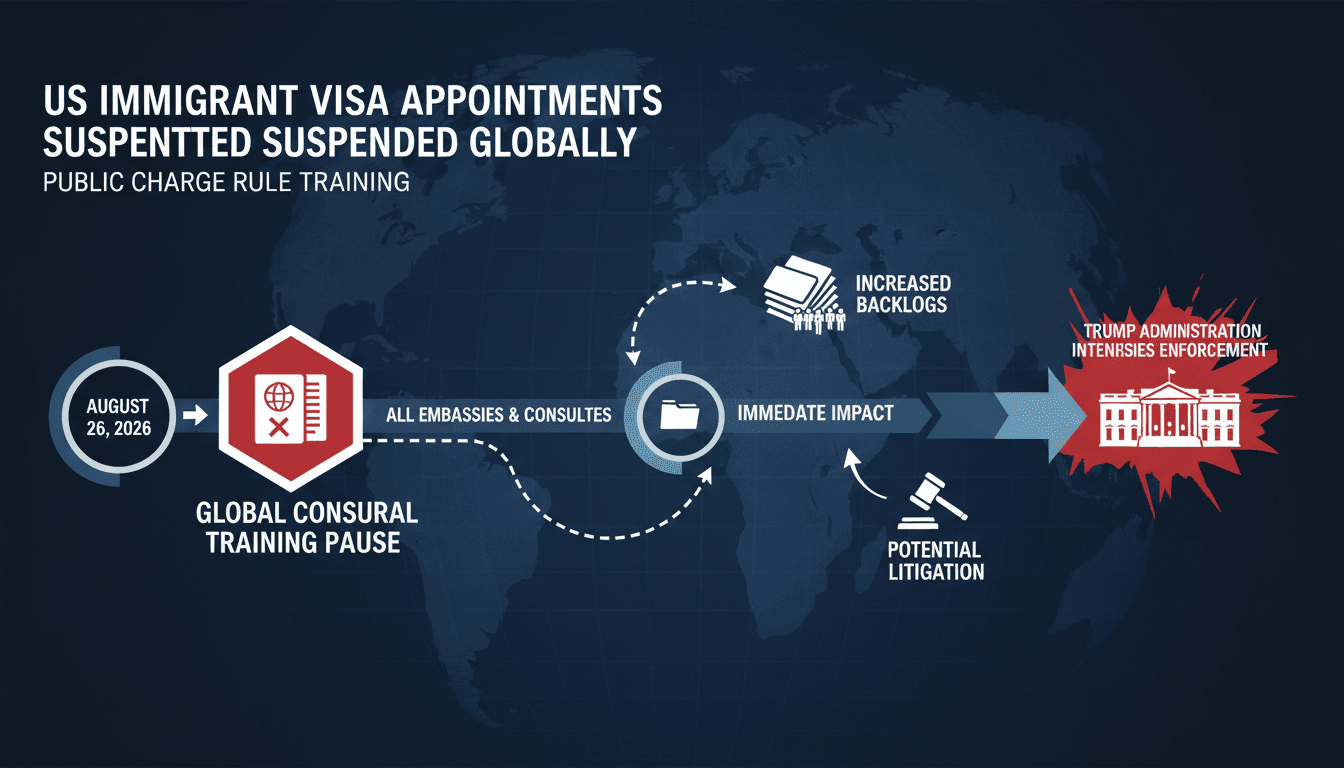
Here's what it means for you.
If you're planning to apply for a U.S. immigrant visa, expect significant delays that could impact your relocation or family reunification plans.
Why it matters
This pause in visa processing reflects a broader trend of intensified immigration enforcement that could reshape legal immigration pathways.
What happened (in 30 seconds)
- On August 26, 2026, the U.S. suspended immigrant visa appointment scheduling worldwide for consular training.
- The training focuses on stricter public charge rule enforcement, assessing applicants' likelihood of relying on public benefits.
- No resumption date for normal scheduling has been announced, leaving many applicants in limbo.
The context you actually need
- The pause is part of a larger immigration crackdown by the Trump administration, which includes higher fees and restricted pathways.
- A recent federal court ruling invalidated a prior policy that suspended processing for applicants from 75 countries, prompting this training initiative.
- The training aims to standardize application reviews, potentially excluding those deemed likely to rely on benefits like Medicaid or SNAP.
What's really happening
The U.S. Department of State's decision to pause immigrant visa appointments is a strategic move to implement a global training program for consular officers. This initiative is designed to enhance the scrutiny of visa applicants under the public charge rule, which evaluates the likelihood of applicants becoming dependent on government assistance. The pause affects family-based and employment-based green card applicants but does not extend to nonimmigrant visas, such as those for tourists or students.
This training comes in the wake of a federal court ruling that invalidated a previous policy aimed at suspending immigrant visas for nationals from 75 countries. The ruling underscored the need for the administration to recalibrate its approach to immigration enforcement, leading to the current pause. The training program, which began in early August, emphasizes comprehensive evaluations of applicants' financial stability and potential reliance on public benefits.
The implications of this pause are significant. With no clear timeline for resuming normal scheduling, applicants are left in uncertainty, which could disrupt relocation plans and family reunification efforts. The pause is expected to exacerbate existing processing backlogs, as many applicants will need to reschedule their interviews once the training concludes. Additionally, the administration's broader immigration enforcement campaign includes plans to revoke up to 200,000 nonimmigrant visas held by individuals who later apply for asylum, further complicating the landscape for those seeking to enter the U.S.
Human rights groups have condemned these actions as discriminatory, arguing that they violate due process. The surge in inquiries and appointment rescheduling requests to immigration legal services indicates a growing concern among applicants about the implications of these changes. As the pause continues, the potential for further litigation looms, particularly in light of the recent judicial invalidation of the 75-country policy.
Who feels it first (and how)
- UAE residents: Applicants in Dubai and Abu Dhabi face indefinite delays in scheduling interviews for U.S. immigrant visas.
- Family-based applicants: Those seeking to reunite with family members in the U.S. will experience disruptions in their plans.
- Employment-based applicants: Expatriates hoping to secure job opportunities in the U.S. may find their timelines extended indefinitely.
What to watch next
- Resumption timeline: Keep an eye on announcements from the U.S. Department of State regarding when normal scheduling will resume, as this will directly impact applicants.
- Litigation developments: Monitor any legal challenges that may arise in response to the pause and its implications for immigration policy.
- Public charge rule changes: Watch for updates on how the public charge rule may evolve, particularly in light of ongoing enforcement initiatives.
The U.S. has paused immigrant visa appointments for training on public charge screening.
Processing backlogs will increase, leading to longer wait times for applicants once scheduling resumes.
The exact timeline for resuming normal visa processing remains unknown.
Frequently Asked Questions
- Why it matters?
- This pause in visa processing reflects a broader trend of intensified immigration enforcement that could reshape legal immigration pathways.
- What happened (in 30 seconds)?
- On August 26, 2026, the U.S. suspended immigrant visa appointment scheduling worldwide for consular training. The training focuses on stricter public charge rule enforcement, assessing applicants' likelihood of relying on public benefits. No resumption date for normal scheduling has been announced, leaving many applicants in limbo.
- What's really happening?
- The U.S. Department of State's decision to pause immigrant visa appointments is a strategic move to implement a global training program for consular officers. This initiative is designed to enhance the scrutiny of visa applicants under the public charge rule, which evaluates the likelihood of applicants becoming dependent on government assistance. The pause affects family-based and employment-based green card applicants but does not extend to nonimmigrant visas, such as those for tourists or stu
- Who feels it first (and how)?
- UAE residents: Applicants in Dubai and Abu Dhabi face indefinite delays in scheduling interviews for U.S. immigrant visas. Family-based applicants: Those seeking to reunite with family members in the U.S. will experience disruptions in their plans. Employment-based applicants: Expatriates hoping to secure job opportunities in the U.S. may find their timelines extended indefinitely.
- What to watch next?
- Resumption timeline: Keep an eye on announcements from the U.S. Department of State regarding when normal scheduling will resume, as this will directly impact applicants. Litigation developments: Monitor any legal challenges that may arise in response to the pause and its implications for immigration policy. Public charge rule changes: Watch for updates on how the public charge rule may evolve, particularly in light of ongoing enforcement initiatives.
Pan-Arab news coverage spanning politics, business, sports, and regional affairs.
"Asharq Al-Awsat reflects a broad Arab editorial perspective with strong attention to regional geopolitics."
— A47 Editor
أميركا تعلق مواعيد تأشيرات الهجرة في سفاراتها حول العالم
The U.S. government, under President Donald Trump, has suspended immigration visa appointments at its embassies worldwide as part of an ongoing campaign against immigration. This decision reflects a significant shift in U.S. immigration policy, impac...
Arabic-language coverage of Saudi, regional, and international affairs.
"Al Bilad offers mainstream Saudi newspaper coverage across domestic and broader Arab topics."
— A47 Editor
واشنطن تعلق مواعيد التأشيرات في سفاراتها وقنصلياتها حول العالم
The United States has suspended visa appointment services at its embassies and consulates worldwide, coinciding with the expansion of immigration enforcement measures under President Donald Trump, which include visa and residency reviews and stricter...
Algerian and regional news coverage.
"Echorouk is a major Algerian outlet with broad national reporting."
— A47 Editor
أميركا تغلق باب التأشيرات.. تعليق المواعيد عالميًا وترامب يستعد لإلغاء 200 ألف تأشيرة
The United States has suspended visa appointments at all its embassies and consulates worldwide as part of an intensified immigration crackdown. The U.S. State Department announced a global training initiative, which will lead to adjustments in visa ...