
Trump Declares National Emergency to Ban Foreign Bulk-Power Equipment in U.S.
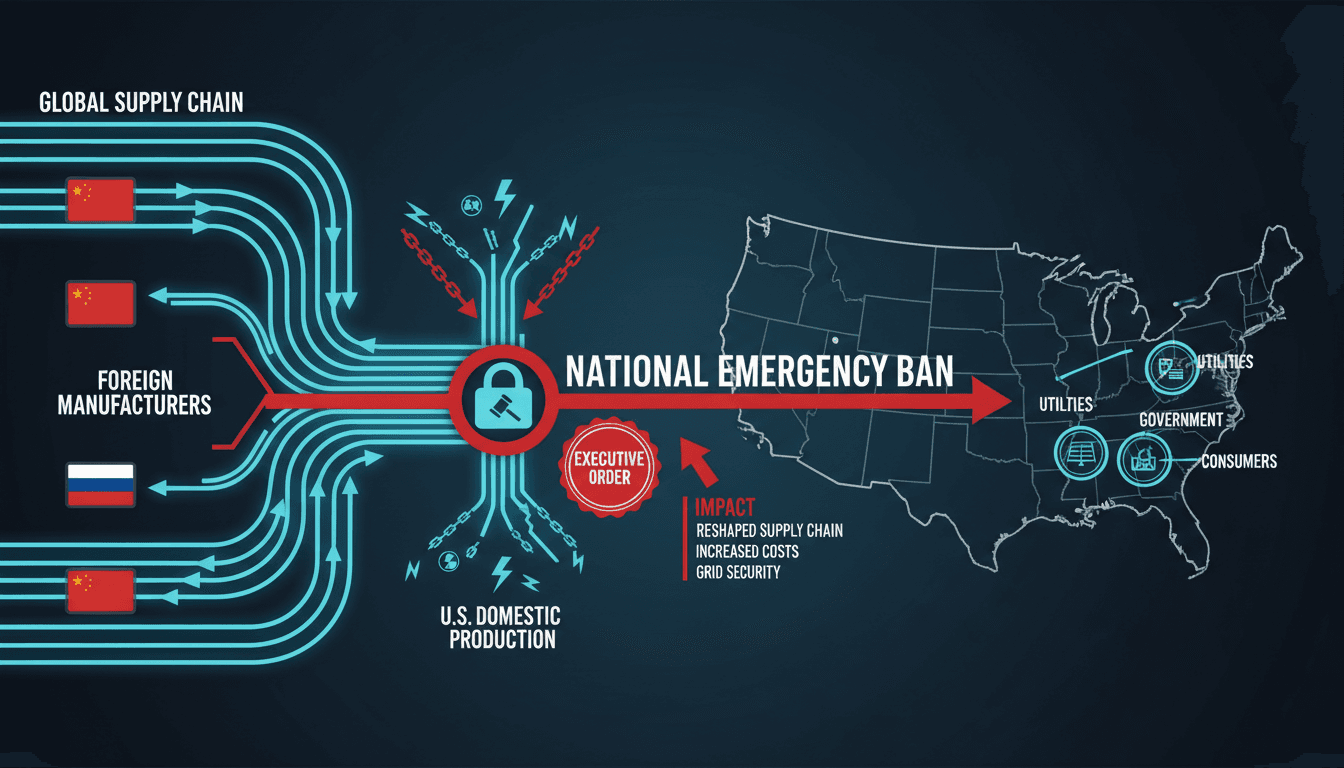
Here's what it means for you.
If you rely on energy infrastructure, this order could reshape supply chains and costs in the U.S. and beyond.
Why it matters
This executive order addresses critical vulnerabilities in the U.S. energy grid, impacting both national security and market dynamics.
What happened (in 30 seconds)
- On August 26, 2026, President Trump signed an executive order declaring a national emergency to restrict foreign bulk-power equipment.
- The order targets foreign-produced electric equipment, including transformers and inverters, due to cybersecurity risks.
- Utilities must comply with new inventory assessments and regulations from the Department of Energy within 120 days.
The context you actually need
- Longstanding concerns over foreign supply chain vulnerabilities have prompted U.S. actions, including previous orders and bans on foreign equipment.
- Recent discoveries of undisclosed communication devices in Chinese-manufactured solar inverters have heightened scrutiny on foreign components.
- Geopolitical tensions and prior cyberattacks on U.S. infrastructure underscore the urgency of securing the energy grid against potential threats.
What's really happening
President Trump’s Executive Order 14420, signed on August 26, 2026, is a strategic response to what the administration describes as an "unusual and extraordinary foreign threat" to the U.S. bulk-power system. This order prohibits the acquisition, importation, transfer, or installation of specific foreign-produced equipment that poses cybersecurity or operational risks. The targeted equipment includes critical components like transformers, inverters, battery storage systems, and industrial control systems.
The directive is rooted in a broader context of national security concerns regarding foreign influence in critical infrastructure. The U.S. has been increasingly vigilant about the risks associated with foreign-sourced components, particularly from nations deemed adversarial. The order builds on previous actions, including a 2020 bulk-power order and a July 2026 ban by the FCC on new foreign-made power inverters with remote capabilities.
The Department of Energy (DOE) is tasked with identifying covered entities and equipment, establishing conditions for existing installations, and issuing formal regulations within 120 days. This timeline is critical as it allows utilities to begin inventory assessments of flagged assets, ensuring compliance without compromising grid reliability.
While the order does not explicitly name countries, it aligns with prior actions targeting entities linked to sanctioned or high-risk nations, particularly China. The implications of this order extend beyond immediate compliance; it signals a shift in how the U.S. approaches energy security and foreign supply chains.
Utility operators are now faced with the challenge of assessing existing foreign-sourced equipment without disrupting service. Cybersecurity firms have emphasized the need for scalable visibility tools to manage these risks effectively. Although no widespread market disruptions have been reported as of late August 2026, the order allows for case-by-case conditions on the continued use of existing equipment, balancing security with operational continuity.
Internationally, parallels can be drawn with the European Commission's restrictions on Chinese inverters in publicly funded projects, indicating a global trend toward tightening regulations on foreign energy equipment. This order not only reshapes the U.S. energy landscape but also has the potential to influence global supply chains and pricing over time.
Who feels it first (and how)
- Utility operators must quickly assess and inventory foreign-sourced equipment to comply with new regulations.
- Cybersecurity firms will see increased demand for tools that provide visibility into energy infrastructure vulnerabilities.
- Energy consumers may experience shifts in pricing and availability of energy equipment as supply chains adjust.
What to watch next
- Implementation of DOE regulations: The upcoming regulations will clarify compliance requirements and could impact the energy market significantly.
- Market response from foreign suppliers: How foreign manufacturers adapt to these restrictions will influence global supply chains and pricing.
- Potential legal challenges: Watch for any legal pushback from affected companies or countries, which could alter the enforcement of the order.
The order prohibits specific foreign-produced energy equipment due to cybersecurity risks.
Utilities will face challenges in compliance without disrupting grid reliability.
The long-term impact on global energy supply chains and pricing remains to be seen.
Frequently Asked Questions
- Why it matters?
- This executive order addresses critical vulnerabilities in the U.S. energy grid, impacting both national security and market dynamics.
- What happened (in 30 seconds)?
- On August 26, 2026, President Trump signed an executive order declaring a national emergency to restrict foreign bulk-power equipment. The order targets foreign-produced electric equipment, including transformers and inverters, due to cybersecurity risks. Utilities must comply with new inventory assessments and regulations from the Department of Energy within 120 days.
- What's really happening?
- President Trump’s Executive Order 14420, signed on August 26, 2026, is a strategic response to what the administration describes as an "unusual and extraordinary foreign threat" to the U.S. bulk-power system. This order prohibits the acquisition, importation, transfer, or installation of specific foreign-produced equipment that poses cybersecurity or operational risks. The targeted equipment includes critical components like transformers, inverters, battery storage systems, and industrial contro
- Who feels it first (and how)?
- Utility operators must quickly assess and inventory foreign-sourced equipment to comply with new regulations. Cybersecurity firms will see increased demand for tools that provide visibility into energy infrastructure vulnerabilities. Energy consumers may experience shifts in pricing and availability of energy equipment as supply chains adjust.
- What to watch next?
- Implementation of DOE regulations: The upcoming regulations will clarify compliance requirements and could impact the energy market significantly. Market response from foreign suppliers: How foreign manufacturers adapt to these restrictions will influence global supply chains and pricing. Potential legal challenges: Watch for any legal pushback from affected companies or countries, which could alter the enforcement of the order.
Global news coverage with extensive reporting on Middle Eastern conflicts and geopolitics.
"Al Jazeera is a Qatar-based broadcaster known for wide regional coverage and alternative perspectives."
— A47 Editor
Trump executive order bans some foreign equipment in US energy grid
President Trump has issued an executive order declaring a national emergency over what he describes as an 'unusual and extraordinary foreign threat' to the U.S. energy grid, banning certain foreign equipment deemed a risk to national security.
Comprehensive coverage of Middle Eastern and global issues.
"Al Jazeera is a prominent voice from the Global South, especially the Middle East, with an emphasis on underreported stories."
— A47 Editor
Trump executive order bans some foreign equipment in US energy grid
President Trump has issued an executive order declaring a national emergency over what he describes as an 'unusual and extraordinary foreign threat' to the U.S. energy grid, banning certain foreign equipment deemed a risk to national security.
Conservative-leaning political and national coverage.
"The Washington Times is a conservative-leaning newspaper known for its political coverage and advocacy of right-of-center viewpoints."
— A47 Editor
Trump declares national emergency vs. foreign grid equipment
President Trump has declared a national emergency to block utilities from connecting certain foreign-made equipment to the U.S. electric grid, citing national security concerns. This executive order aims to prohibit the use of equipment deemed to pos...
Consumer tech news, reviews, and buying guides for gadgets and electronics.
"TechRadar is known for comprehensive buying advice, hardware reviews, and consumer tech news targeted at mainstream audiences."
— A47 Editor
Trump signs order banning some foreign equipment from US energy grid, including some software
Former President Donald Trump has signed an executive order banning certain foreign equipment from the U.S. energy grid, specifically targeting technologies that may pose security risks, with a notable focus on Chinese products. This move follows pre...
Arabic-language coverage of international news and geopolitics.
"RT Arabic is a Russian state-funded outlet often criticized for promoting Kremlin-aligned narratives."
— A47 Editor
ترامب يفرض حالة الطوارئ الوطنية لحماية شبكة الطاقة الأمريكية من التهديدات الأجنبية
President Donald Trump has declared a national emergency to protect the U.S. power grid from foreign threats, allowing for the prohibition of any foreign equipment that poses a risk to the security of the electricity infrastructure. This measure aims...
Oil, metals, and agriculture: supply/demand headlines, OPEC chatter, inventories, and price action.
"Solid tape for energy and metals traders tracking macro and micro catalysts."
— A47 Editor
Trump signs order banning some foreign equipment from US energy grid
Former President Trump has signed an executive order that bans certain foreign equipment from being used in the US energy grid, a move aimed at enhancing national security and protecting critical infrastructure. This decision reflects ongoing concern...