
Qatar Initiates Diplomatic Talks for Navigational Corridor in Strait of Hormuz
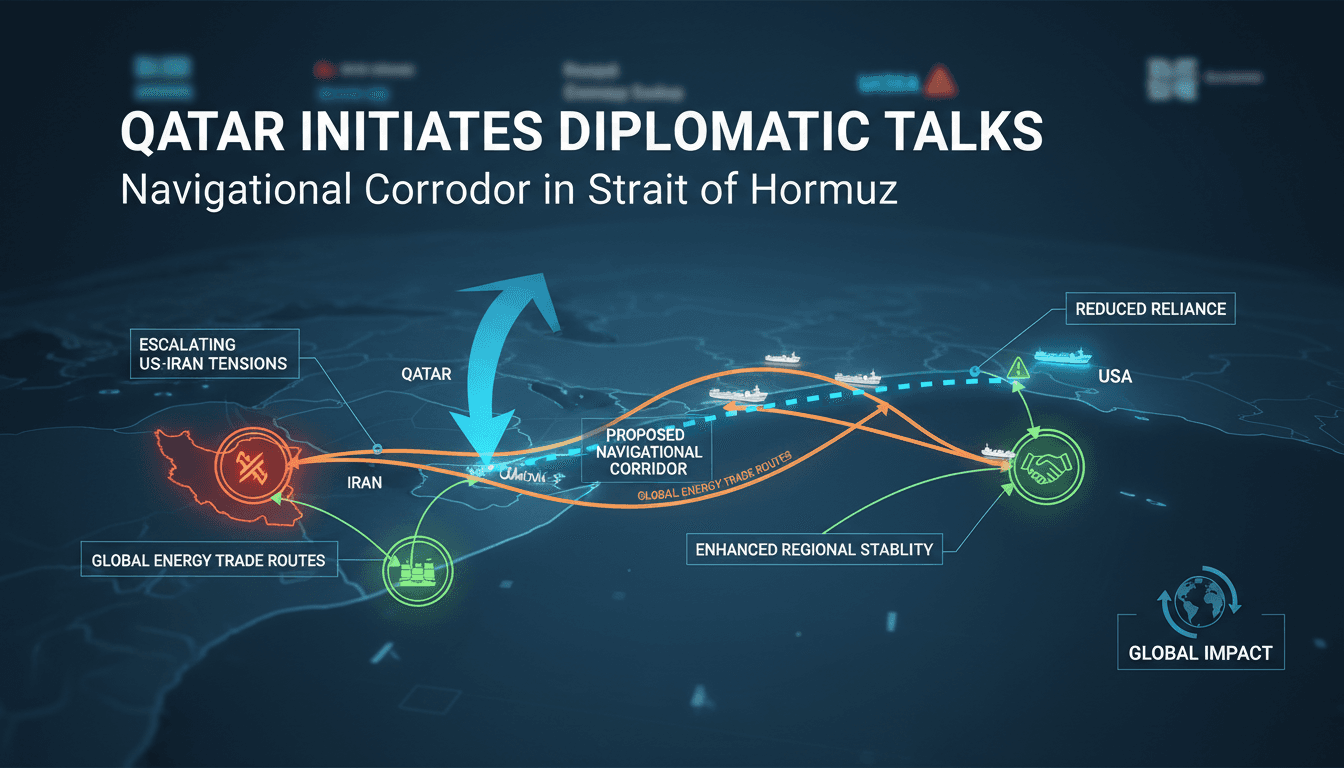
Here's what it means for you.
If you rely on stable energy supplies or shipping routes, this initiative could help stabilize prices and logistics in the Gulf.
Why it matters
This initiative addresses critical navigation issues in the Strait of Hormuz, a vital artery for global energy supplies.
What happened (in 30 seconds)
- Qatar initiated diplomatic talks with Iran and Oman on August 25, 2026, to establish a temporary navigational corridor in the Strait of Hormuz.
- The discussions focus on mine clearance and ensuring freedom of navigation, aiming to reduce regional tensions amid ongoing US-Iran conflicts.
- No formal agreement has been announced, but ongoing discussions signal a potential shift in regional dynamics.
The context you actually need
- Heightened US-Iran tensions in 2026 have led to military and economic pressures, making navigation in the Strait of Hormuz increasingly precarious.
- Oman's earlier mediation resulted in a limited understanding with Iran, setting the stage for Qatar's involvement as a mediator.
- Alternative pipeline developments by Saudi Arabia and the UAE are reducing reliance on the Strait of Hormuz, but disruptions remain a significant risk for Gulf economies.
What's really happening
On August 25, 2026, Qatari Prime Minister and Foreign Minister Sheikh Mohammed bin Abdulrahman Al Thani engaged in separate discussions with Iranian Foreign Minister Abbas Araghchi and Omani Foreign Minister Badr Albusaidi. The talks aimed to build on previous Oman-Iran negotiations to create a temporary joint navigational corridor through the Strait of Hormuz, which is crucial for global energy transport. This initiative is particularly significant given the backdrop of escalating tensions between the US and Iran, which have included military confrontations and economic sanctions.
Qatar's unique position as a US ally with established communication channels to Tehran allows it to act as a mediator in this sensitive geopolitical landscape. The discussions emphasize the importance of freedom of navigation, a principle that Qatar has consistently supported as part of international law. The initiative also includes plans for mine clearance, which is essential for ensuring safe passage through the strait, where maritime security has been a growing concern.
The Al-Quds opinion piece highlights the potential evolution of limited Oman-Iran agreements into a more comprehensive regional navigation system. This contrasts with US strategies aimed at diminishing Iranian influence in the region. By facilitating dialogue, Qatar seeks to de-escalate tensions and promote stability in a critical global energy chokepoint, which could have far-reaching implications for energy markets and regional trade.
As the discussions progress, the lack of a formal agreement does not diminish the significance of the ongoing diplomatic engagement. The initiative reflects a broader trend of regional actors seeking to manage their security and economic interests amid external pressures. For Dubai residents and businesses, the potential stabilization of shipping routes and energy supplies could lead to more predictable logistics costs and fuel prices, directly impacting daily life and economic activities.
Who feels it first (and how)
- Energy companies: They may see fluctuations in oil prices based on the stability of the Strait of Hormuz.
- Shipping industries: Companies relying on Gulf shipping routes could benefit from reduced risks of disruption.
- Local businesses in Dubai: They may experience more stable logistics costs, impacting pricing and supply chains.
- Governments in the Gulf region: They will monitor the outcomes closely, as regional stability affects national security and economic health.
What to watch next
- Progress in diplomatic discussions: Continued engagement between Qatar, Iran, and Oman could lead to formal agreements, impacting regional stability.
- Market reactions: Watch for shifts in oil prices and shipping costs as news emerges from ongoing talks.
- US responses: Any changes in US policy towards Iran or the Gulf region could significantly alter the dynamics of this initiative.
Qatar is actively mediating discussions to establish a navigational corridor.
Continued diplomatic efforts will evolve, potentially leading to formal agreements.
The long-term impact on US-Iran relations and regional stability remains uncertain.
Frequently Asked Questions
- Why it matters?
- This initiative addresses critical navigation issues in the Strait of Hormuz, a vital artery for global energy supplies.
- What happened (in 30 seconds)?
- Qatar initiated diplomatic talks with Iran and Oman on August 25, 2026, to establish a temporary navigational corridor in the Strait of Hormuz. The discussions focus on mine clearance and ensuring freedom of navigation, aiming to reduce regional tensions amid ongoing US-Iran conflicts. No formal agreement has been announced, but ongoing discussions signal a potential shift in regional dynamics.
- What's really happening?
- On August 25, 2026, Qatari Prime Minister and Foreign Minister Sheikh Mohammed bin Abdulrahman Al Thani engaged in separate discussions with Iranian Foreign Minister Abbas Araghchi and Omani Foreign Minister Badr Albusaidi. The talks aimed to build on previous Oman-Iran negotiations to create a temporary joint navigational corridor through the Strait of Hormuz, which is crucial for global energy transport. This initiative is particularly significant given the backdrop of escalating tensions betw
- Who feels it first (and how)?
- Energy companies: They may see fluctuations in oil prices based on the stability of the Strait of Hormuz. Shipping industries: Companies relying on Gulf shipping routes could benefit from reduced risks of disruption. Local businesses in Dubai: They may experience more stable logistics costs, impacting pricing and supply chains. Governments in the Gulf region: They will monitor the outcomes closely, as regional stability affects national security and economic health.
- What to watch next?
- Progress in diplomatic discussions: Continued engagement between Qatar, Iran, and Oman could lead to formal agreements, impacting regional stability. Market reactions: Watch for shifts in oil prices and shipping costs as news emerges from ongoing talks. US responses: Any changes in US policy towards Iran or the Gulf region could significantly alter the dynamics of this initiative.
Pan-Arab political news and analysis.
"Al-Quds Al-Arabi is a London-based Arabic newspaper known for political coverage."
— A47 Editor
مبادرة قطر: نظام إقليمي لحرية الملاحة؟
The visit of Qatari Prime Minister and Foreign Minister Sheikh Mohammed bin Abdulrahman Al Thani to Tehran occurs amid a significant deadlock in U.S.-Iran relations, characterized by military power struggles and ineffective sanctions. This Qatari ini...
Arabic-language coverage of political affairs and current events.
"Okaz political coverage typically follows mainstream Saudi framing on national and regional affairs."
— A47 Editor
ممر ملاحي وتطهير من الألغام.. تحركات قطرية إيرانية لإعادة فتح «هرمز»
Qatari Prime Minister and Foreign Minister Sheikh Mohammed bin Abdulrahman Al Thani emphasized the importance of respecting the sovereignty of neighboring countries and freedom of navigation during a meeting with Iranian Foreign Minister Abbas Araghc...
Jordanian news and regional updates.
"Roya News is a Jordanian outlet focused on breaking news and local affairs."
— A47 Editor
مباحثات قطرية إيرانية في طهران بشأن أمن الملاحة في مضيق هرمز
The Qatari Prime Minister and Foreign Minister, Sheikh Mohammed bin Abdulrahman Al Thani, held discussions in Tehran regarding maritime security in the Strait of Hormuz. This meeting underscores the importance of collaboration between Qatar and Iran ...
Jordanian news and regional updates.
"Roya News is a Jordanian outlet focused on breaking news and local affairs."
— A47 Editor
الخارجية القطرية: رئيس الوزراء يزور طهران الخميس لبحث خفض التصعيد وعودة الملاحة في هرمز
The Qatari Foreign Ministry announced that the Prime Minister will visit Tehran on Thursday to discuss de-escalation and the resumption of navigation in the Strait of Hormuz. This visit highlights ongoing diplomatic efforts to address tensions in the...
Pan-Arab news coverage spanning politics, business, sports, and regional affairs.
"Asharq Al-Awsat reflects a broad Arab editorial perspective with strong attention to regional geopolitics."
— A47 Editor
عُمان وإيران تتفقان على ممر مؤقت في «هرمز»
Iranian Foreign Minister Abbas Araqchi and Omani Foreign Minister Badr al-Busaidi began discussions in Tehran on Tuesday regarding navigation arrangements in the Strait of Hormuz, aiming to finalize agreements.