
Germany loses UN Security Council seat for the first time
Here's what it means for you.
Germany's recent defeat in securing a non-permanent seat on the UN Security Council signals a pivotal moment in its international standing. This loss may prompt a reevaluation of its foreign policy, particularly regarding its support for Ukraine and Israel, which could have alienated some member states. The implications for Germany's diplomatic strategies are significant, as it seeks to regain influence on the global stage. The outcome raises questions about Chancellor Friedrich Merz's government and its approach to international relations. As Germany navigates this setback, the potential for shifts in its foreign policy could reshape alliances and partnerships moving forward.
What happened
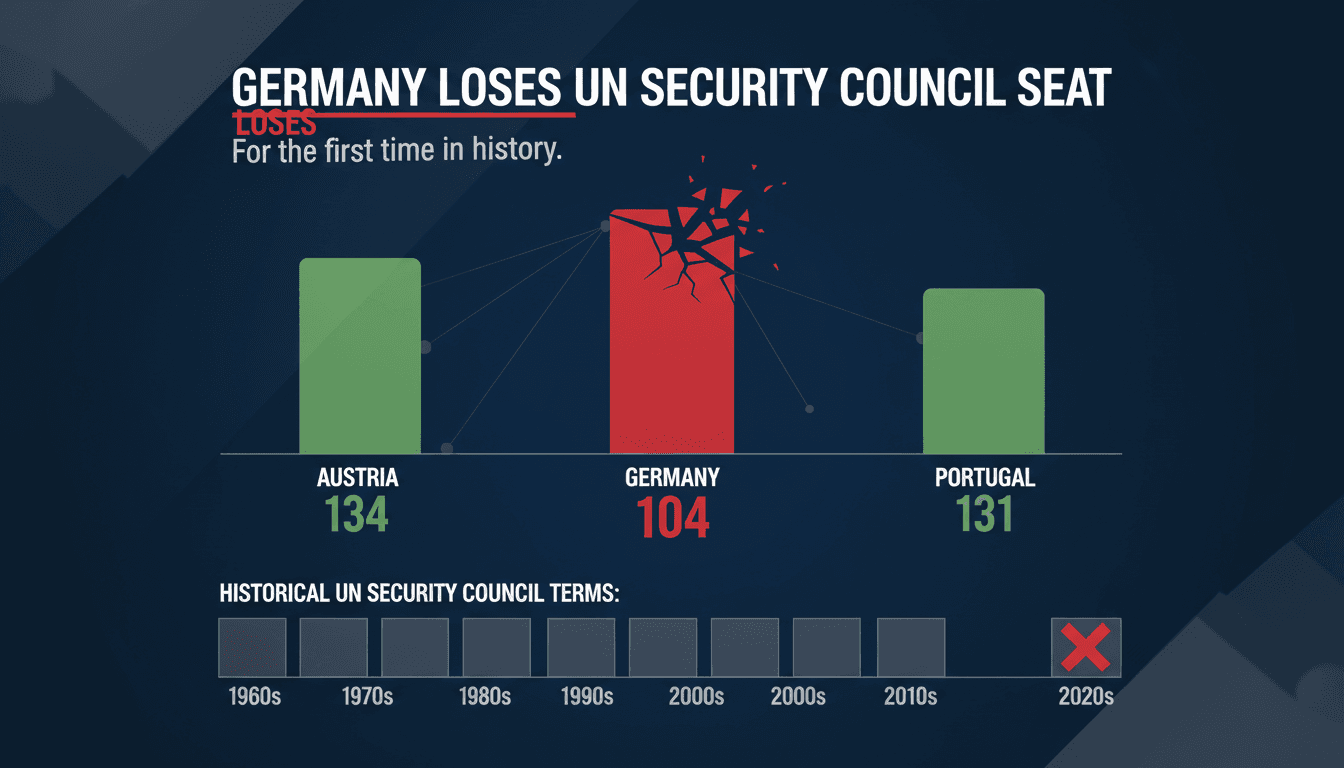
Germany has failed to secure a non-permanent seat on the UN Security Council for the first time, losing out to Austria and Portugal. In the recent election, Germany received only 104 votes, while Austria garnered 134 and Portugal received 131. This marks a notable shift, as Germany has previously served six terms on the Security Council without facing such a defeat.
German officials have suggested that the country's strong support for Ukraine and Israel may have influenced the voting outcome. This loss has sparked criticism of the current government and raised concerns about Germany's role in international leadership.
The Context
The UN Security Council consists of five permanent members and ten non-permanent members, with elections held periodically. Germany's defeat is particularly significant as it reflects a changing landscape in international diplomacy, where member states may be reassessing their alliances and priorities. The timing of this election, held on June 4, 2026, coincides with heightened geopolitical tensions, particularly in Eastern Europe and the Middle East.
Germany's firm stances on international issues have historically positioned it as a key player in global affairs. However, this recent setback may indicate a shift in how other nations perceive Germany's influence and leadership capabilities.
Takeaway
Germany's loss in the UN Security Council election may lead to a critical reassessment of its foreign policy and diplomatic strategies. Observers should watch for potential shifts in Germany's approach to its relationships with Israel and Ukraine, as these have been identified as factors in the recent defeat.
Reactions from other European nations regarding Germany's failure could also provide insights into the evolving dynamics of international diplomacy. The long-term implications of this event may reshape Germany's aspirations for greater influence on the world stage.
Top international stories selected by The Guardian editors.
"The Guardian is known for its progressive editorial stance and in-depth analysis."
— A47 Editor
‘Embarrassing’: pressure on Merz after Germany’s failure to win UN security council seat
Germany has faced an unprecedented setback by failing to secure a non-permanent seat on the UN Security Council for the first time, losing to Austria and Portugal in a recent vote. This failure has sparked criticism across the political spectrum, par...
Global news coverage with extensive reporting on Middle Eastern conflicts and geopolitics.
"Al Jazeera is a Qatar-based broadcaster known for wide regional coverage and alternative perspectives."
— A47 Editor
Did Germany lose its UNSC seat because of support for Israel?
Germany has faced a historic setback by failing to secure a non-permanent seat on the United Nations Security Council (UNSC) for the first time, losing to Austria and Portugal in a recent General Assembly vote. This defeat highlights a significant mo...
Comprehensive coverage of Middle Eastern and global issues.
"Al Jazeera is a prominent voice from the Global South, especially the Middle East, with an emphasis on underreported stories."
— A47 Editor
Did Germany lose its UNSC seat because of support for Israel?
Germany has faced a historic setback by failing to secure a non-permanent seat on the United Nations Security Council (UNSC) for the first time, losing to Austria and Portugal in a recent General Assembly vote. This defeat highlights a significant mo...
English-language reporting on Saudi politics, policy, and society.
"Saudi Gazette reflects mainstream Saudi institutional perspectives."
— A47 Editor
Germany blames support for Ukraine and Israel for 'bitter defeat' in Security Council bid
Germany's bid for a rotating seat on the UN Security Council has failed, with the country receiving 104 votes, falling short of the 134 votes secured by Portugal and 131 by Austria. Foreign Minister Johann Wadephul indicated that Germany's strong sup...
Global news coverage with extensive reporting on Middle Eastern conflicts and geopolitics.
"Al Jazeera is a Qatar-based broadcaster known for wide regional coverage and alternative perspectives."
— A47 Editor
Germany admits failure to secure UNSC seat likely due to support for Israel
Germany has faced a historic setback by failing to secure a non-permanent seat on the UN Security Council for the first time, losing to Austria and Portugal in a recent General Assembly vote. This failure has been attributed to its strong support for...
Comprehensive coverage of Middle Eastern and global issues.
"Al Jazeera is a prominent voice from the Global South, especially the Middle East, with an emphasis on underreported stories."
— A47 Editor
Germany admits failure to secure UNSC seat likely due to support for Israel
Germany has faced a historic setback by failing to secure a non-permanent seat on the UN Security Council for the first time, losing to Austria and Portugal in a recent General Assembly vote. This failure has been attributed to its strong support for...