
Mass migration from Morocco leads to unrest in Ceuta
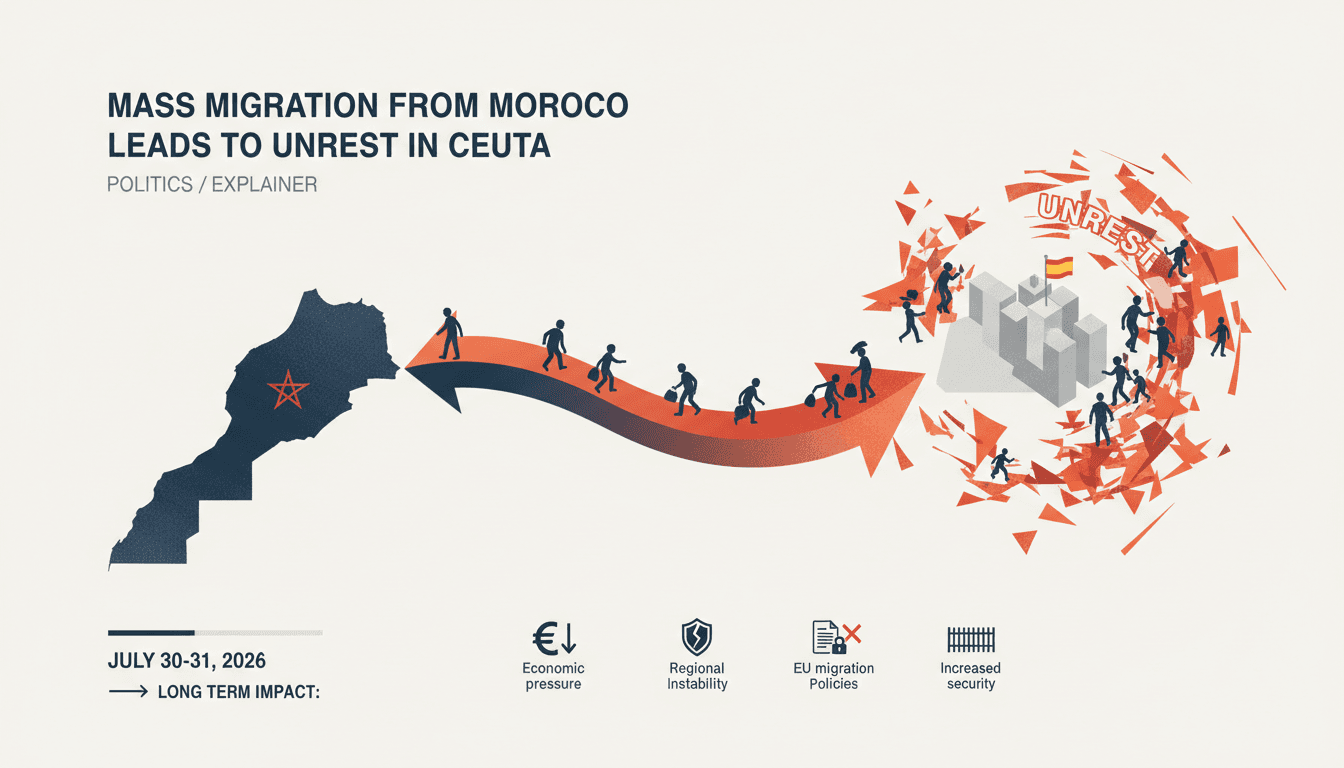
Here's what it means for you.
If you’re in Europe or involved in migration policy, the events in Ceuta could reshape discussions on border security and humanitarian aid.
Why it matters
This incident highlights the fragility of border management in Europe and the potential for social unrest in response to migration pressures.
What happened (in 30 seconds)
- Over 70,000 migrants crossed from Morocco into Ceuta on July 30-31, 2026, marking a significant surge in irregular migration.
- Local infrastructure was overwhelmed, leading to protests and clashes between residents and police as tensions escalated.
- Spanish authorities requested Frontex assistance and centralized command to manage the crisis amid accusations of governmental neglect.
The context you actually need
- Ceuta's historical significance: As a Spanish exclave in North Africa, Ceuta has long been a focal point for migration from Morocco, influenced by economic and political factors.
- Economic pressures in Morocco: High youth unemployment and economic instability have driven many to seek better opportunities in Europe, exacerbating migration flows.
- Diplomatic tensions: Ongoing disputes between Spain and Morocco over territorial integrity have contributed to the volatility of migration patterns.
What's really happening
The mass influx of migrants into Ceuta is not just a random occurrence; it is the result of a complex interplay of socio-economic and political factors. The July 2026 surge was the largest in recent EU border history, with over 70,000 individuals attempting to cross into the enclave. While many returned to Morocco shortly after due to inadequate resources, an estimated 3,500 to 10,000 remained, leading to significant strain on local infrastructure and services.
Local residents expressed their frustrations through protests, citing concerns over security, hygiene, and resource allocation. The situation escalated into clashes with police, as demonstrators blocked aid and set fire to migrant camps. This unrest reflects deeper societal tensions, where local populations feel threatened by the rapid demographic changes and the perceived inaction of the Spanish government.
The Spanish authorities' response has been characterized by a centralized command structure, with the Interior Minister and Prime Minister facing criticism for their handling of the crisis. The request for Frontex assistance indicates a recognition of the need for external support in managing the situation, but it also raises questions about the adequacy of national responses to migration challenges.
The underlying mechanisms driving this crisis include economic disparities between Morocco and Europe, as well as the impact of regional instability. The EU's migration policies have often been reactive rather than proactive, leading to situations where local communities bear the brunt of sudden influxes. This incident serves as a stark reminder of the need for comprehensive migration strategies that address both humanitarian concerns and security issues.
Who feels it first (and how)
- Local residents: Increased tensions and resource strain lead to protests and community unrest.
- Migrants: Vulnerable populations face dire conditions and limited support, impacting their safety and well-being.
- Spanish authorities: Government officials face scrutiny and pressure to respond effectively to the crisis, impacting political stability.
What to watch next
- Continued protests: Monitor the frequency and intensity of local protests in Ceuta, as they may influence broader migration policies.
- EU migration policy reviews: Watch for discussions within the EU regarding migration strategies, particularly in response to this incident.
- Frontex involvement: Observe how Frontex's support impacts the situation on the ground and whether it leads to improved conditions for both migrants and residents.
The influx of migrants overwhelmed local infrastructure and sparked social unrest.
Continued tensions between local residents and authorities as the situation evolves.
The long-term impact on EU migration policy and relations between Spain and Morocco.
Frequently Asked Questions
- Why it matters?
- This incident highlights the fragility of border management in Europe and the potential for social unrest in response to migration pressures.
- What happened (in 30 seconds)?
- Over 70,000 migrants crossed from Morocco into Ceuta on July 30-31, 2026, marking a significant surge in irregular migration. Local infrastructure was overwhelmed, leading to protests and clashes between residents and police as tensions escalated. Spanish authorities requested Frontex assistance and centralized command to manage the crisis amid accusations of governmental neglect.
- What's really happening?
- The mass influx of migrants into Ceuta is not just a random occurrence; it is the result of a complex interplay of socio-economic and political factors. The July 2026 surge was the largest in recent EU border history, with over 70,000 individuals attempting to cross into the enclave. While many returned to Morocco shortly after due to inadequate resources, an estimated 3,500 to 10,000 remained, leading to significant strain on local infrastructure and services. Local residents expressed their f
- Who feels it first (and how)?
- Local residents: Increased tensions and resource strain lead to protests and community unrest. Migrants: Vulnerable populations face dire conditions and limited support, impacting their safety and well-being. Spanish authorities: Government officials face scrutiny and pressure to respond effectively to the crisis, impacting political stability.
- What to watch next?
- Continued protests: Monitor the frequency and intensity of local protests in Ceuta, as they may influence broader migration policies. EU migration policy reviews: Watch for discussions within the EU regarding migration strategies, particularly in response to this incident. Frontex involvement: Observe how Frontex's support impacts the situation on the ground and whether it leads to improved conditions for both migrants and residents.
Arabic-language coverage of international news and geopolitics.
"RT Arabic is a Russian state-funded outlet often criticized for promoting Kremlin-aligned narratives."
— A47 Editor
توافد المهاجرين يفاقم التوتر في سبتة
Tensions in the Spanish city of Ceuta have escalated due to the arrival of thousands of migrants from Morocco, prompting authorities to emphasize the need for increased efforts to manage the situation.
Pan-Arab news coverage spanning politics, business, sports, and regional affairs.
"Asharq Al-Awsat reflects a broad Arab editorial perspective with strong attention to regional geopolitics."
— A47 Editor
مظاهرات مناهضة للمهاجرين في سبتة تتحول إلى مواجهات مع الشرطة
Protests against the security situation in Ceuta, a small Spanish enclave in North Africa, escalated into clashes between local residents and police forces. The demonstrations were primarily fueled by discontent over the handling of immigration and s...
Arabic-language coverage of international news and geopolitics.
"RT Arabic is a Russian state-funded outlet often criticized for promoting Kremlin-aligned narratives."
— A47 Editor
سبتة.. احتجاجات عنيفة وأزمة إنسانية تعصف بالجيب الإسباني بعد شهر من تدفق المهاجرين
Tensions continue to escalate in the Spanish city of Ceuta as protests against migrants have turned into clashes with police, following a month of thousands of migrants arriving from Morocco. The situation has led to a humanitarian crisis in the regi...
Pan-Arab political news and analysis.
"Al-Quds Al-Arabi is a London-based Arabic newspaper known for political coverage."
— A47 Editor
التظاهرات المناهضة للمهاجرين في سبتة تتحول إلى مواجهات مع الشرطة
Protests against the security situation in Ceuta, a small enclave in North Africa, escalated into clashes between local residents and police on Thursday, following a significant influx of migrants from Morocco over the past month. Police intervened t...