
US Military Judge Rules Khalid Sheikh Mohammed's 2007 Confessions Inadmissible in September 11 Case
Here's what it means for you.
The exclusion of key evidence in a high-profile terrorism case could impact global counterterrorism strategies and legal precedents.
Why it matters
This ruling raises questions about the admissibility of evidence obtained under coercion, potentially affecting future military and civilian trials.
What happened (in 30 seconds)
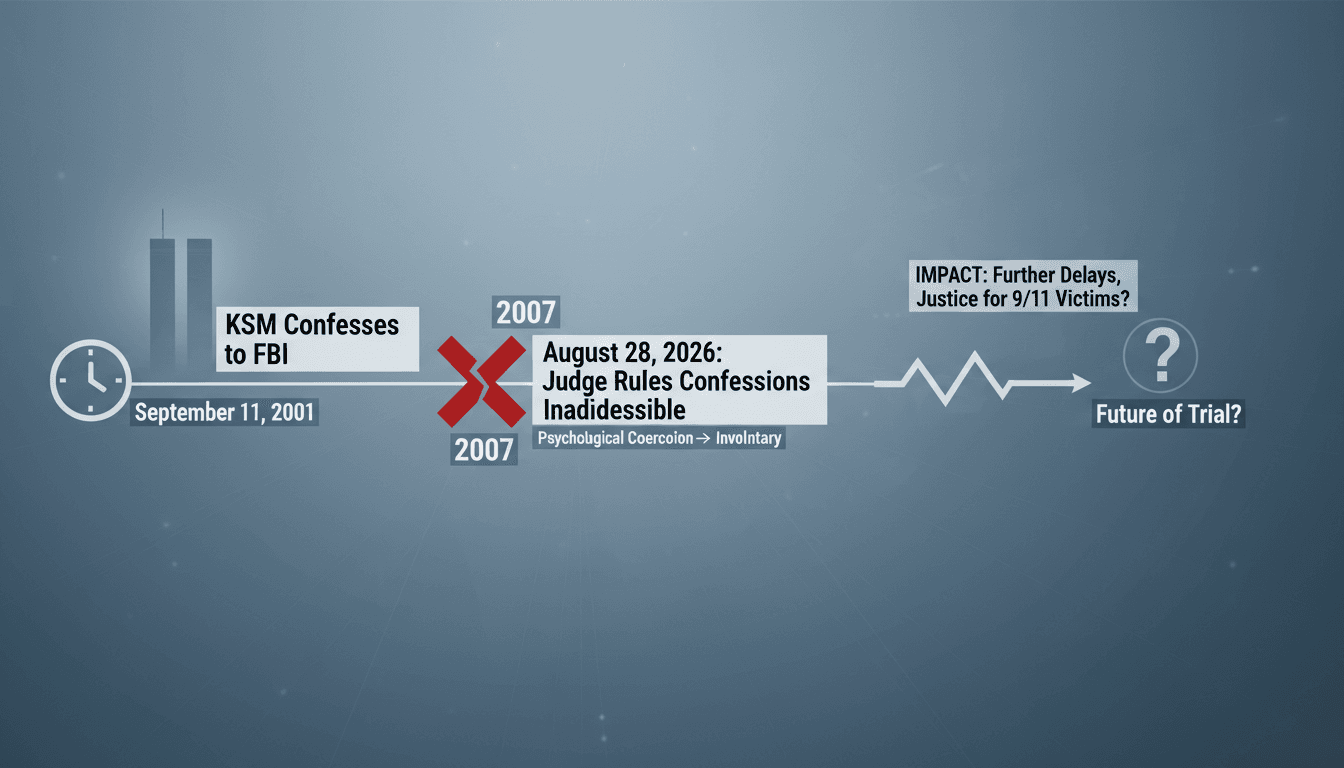
- On August 28, 2026, a US military judge ruled Khalid Sheikh Mohammed's 2007 confessions inadmissible due to coercion.
- The decision stems from findings of psychological conditioning during CIA custody and lack of proper rights advisements during FBI interrogations.
- Prosecutors are considering an appeal, which could delay the trial set for June 2028.
The context you actually need
- Khalid Sheikh Mohammed, captured in 2003, was subjected to CIA enhanced interrogation techniques before his transfer to Guantanamo Bay.
- Previous confessions from co-defendant Ammar al-Baluchi were also excluded, indicating a trend in the military commission's approach to torture-derived evidence.
- The case has faced extensive pretrial litigation, highlighting ongoing debates about the legality and ethics of interrogation methods used in counterterrorism.
What's really happening
The ruling by Lt. Col. Michael Schrama marks a significant moment in the long-running military commission case against Khalid Sheikh Mohammed, the alleged mastermind behind the September 11 attacks. The judge's 45-page decision concluded that the prosecution failed to demonstrate that Mohammed's confessions to FBI agents were voluntary. This determination was based on the assertion that the psychological conditioning he experienced during CIA custody had a lasting impact on his ability to provide voluntary statements.
The implications of this ruling extend beyond the immediate case. It underscores the legal complexities surrounding evidence obtained through coercive interrogation techniques, which have been widely criticized for their ethical implications. The decision also reflects a growing judicial scrutiny of the methods used in the War on Terror, particularly as they relate to the rights of defendants. The military commission system has faced criticism for its handling of cases involving terrorism suspects, and this ruling may further complicate the prosecution's efforts to secure convictions based on evidence that is increasingly viewed as tainted.
Moreover, the ruling could set a precedent for future cases involving similar circumstances. If the courts continue to exclude evidence obtained under coercion, it may force prosecutors to rethink their strategies in terrorism-related cases. This could lead to a reevaluation of how intelligence is gathered and used in legal proceedings, potentially impacting national security policies.
The decision also raises concerns among victims' families and survivors of the September 11 attacks, many of whom fear that prolonged legal battles may prevent them from seeing justice served in their lifetimes. The emotional toll of waiting for resolution in such a high-profile case cannot be understated, and the ruling may exacerbate feelings of frustration and helplessness among those affected by the attacks.
As the prosecution considers an appeal, the timeline for resolution remains uncertain. The potential for further delays in the trial, originally set for June 2028, adds another layer of complexity to an already convoluted legal process. The outcome of this case will likely reverberate through the legal system and influence how future terrorism cases are handled, both in military commissions and civilian courts.
Who feels it first (and how)
- Victims' families: Concerned about prolonged timelines and the possibility of not seeing justice.
- Legal professionals: Attorneys and judges involved in military commissions may face increased scrutiny and pressure regarding evidence admissibility.
- Counterterrorism agencies: May need to adjust interrogation practices and legal strategies based on evolving judicial standards.
What to watch next
- Prosecutors' appeal decision: If they choose to appeal the ruling, it could further delay the trial and set new legal precedents.
- Future rulings on similar cases: Watch for how courts handle evidence obtained through coercive methods in upcoming terrorism-related trials.
- Public sentiment: Monitor reactions from victims' families and the broader public, as their responses may influence future legal and policy decisions.
The ruling excludes Khalid Sheikh Mohammed's 2007 confessions from the trial.
The prosecution will appeal the ruling, potentially delaying the trial further.
The long-term implications for military commissions and counterterrorism policies remain uncertain.
Frequently Asked Questions
- Why it matters?
- This ruling raises questions about the admissibility of evidence obtained under coercion, potentially affecting future military and civilian trials.
- What happened (in 30 seconds)?
- On August 28, 2026, a US military judge ruled Khalid Sheikh Mohammed's 2007 confessions inadmissible due to coercion. The decision stems from findings of psychological conditioning during CIA custody and lack of proper rights advisements during FBI interrogations. Prosecutors are considering an appeal, which could delay the trial set for June 2028.
- What's really happening?
- The ruling by Lt. Col. Michael Schrama marks a significant moment in the long-running military commission case against Khalid Sheikh Mohammed, the alleged mastermind behind the September 11 attacks. The judge's 45-page decision concluded that the prosecution failed to demonstrate that Mohammed's confessions to FBI agents were voluntary. This determination was based on the assertion that the psychological conditioning he experienced during CIA custody had a lasting impact on his ability to provid
- Who feels it first (and how)?
- Victims' families: Concerned about prolonged timelines and the possibility of not seeing justice. Legal professionals: Attorneys and judges involved in military commissions may face increased scrutiny and pressure regarding evidence admissibility. Counterterrorism agencies: May need to adjust interrogation practices and legal strategies based on evolving judicial standards.
- What to watch next?
- Prosecutors' appeal decision: If they choose to appeal the ruling, it could further delay the trial and set new legal precedents. Future rulings on similar cases: Watch for how courts handle evidence obtained through coercive methods in upcoming terrorism-related trials. Public sentiment: Monitor reactions from victims' families and the broader public, as their responses may influence future legal and policy decisions.
Arabic-language coverage of international news and geopolitics.
"RT Arabic is a Russian state-funded outlet often criticized for promoting Kremlin-aligned narratives."
— A47 Editor
"نيويورك تايمز": قاض عسكري أمريكي يستبعد اعترافا رئيسيا في قضية هجمات 11 سبتمبر
A U.S. military judge has ruled to exclude key confessions made by Khalid Sheikh Mohammed, the alleged mastermind behind the September 11 attacks, during interrogations with FBI agents. This decision represents a significant setback for the prosecuti...
Pan-Arab news coverage spanning politics, business, sports, and regional affairs.
"Asharq Al-Awsat reflects a broad Arab editorial perspective with strong attention to regional geopolitics."
— A47 Editor
تحديد موعد لمحاكمة المتهم بتدبير «هجمات 11 سبتمبر»
A U.S. Air Force judge has ordered Khalid Sheikh Mohammed, the alleged mastermind behind the September 11, 2001 attacks, to appear before a military court. This decision marks a significant step in the long-standing legal proceedings against him, whi...
Pan-Arab political news and analysis.
"Al-Quds Al-Arabi is a London-based Arabic newspaper known for political coverage."
— A47 Editor
تحديد يونيو 2028 موعدا لمحاكمة المتهم بتدبير هجمات 11 سبتمبر
A U.S. Air Force judge has scheduled a military trial for Khalid Sheikh Mohammed, the alleged mastermind behind the September 11, 2001 attacks, along with three other defendants, to take place in June 2028. This decision, made by Lieutenant Colonel M...