
Keir Starmer resigns as Prime Minister of the United Kingdom
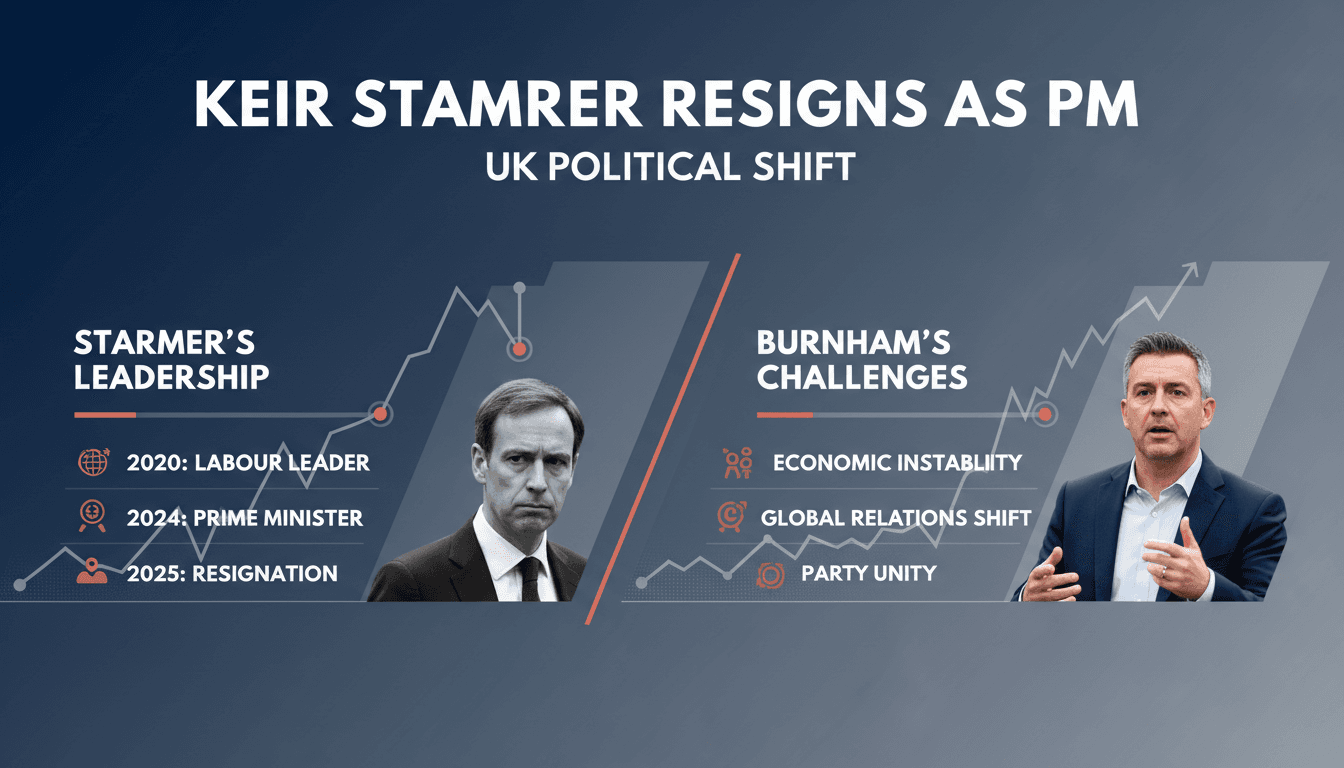
Here's what it means for you.
Keir Starmer's resignation as Prime Minister signals a pivotal moment in UK politics, with potential implications for both domestic and international policy. As Andy Burnham steps into the role, the Labour Party must navigate the complexities of global affairs while addressing pressing national issues. This transition may reshape the political landscape, influencing public sentiment and party dynamics. Starmer's departure also raises questions about the future direction of the Labour Party, particularly in light of his relatively short tenure of two years. The emotional weight of his decision reflects the personal challenges leaders face in high-stakes environments.
What happened
Keir Starmer announced his resignation as Prime Minister of the United Kingdom, describing the decision as "intensely personal." In his first interview since stepping down, he discussed the emotional toll of his leadership and the challenges that lie ahead for his successor, Andy Burnham. Starmer emphasized the importance of maintaining focus on international affairs during this transition.
His resignation comes after a weekend spent with family, highlighting the personal reflection that influenced his decision. Starmer served as Prime Minister for two years, a relatively short duration that underscores the challenges he faced in office.
The Context
Starmer's resignation marks a significant shift in the political landscape of the UK. Having led the Labour Party for two years, he acknowledged the difficulty of accepting the end of his political career. His leadership was characterized by navigating complex domestic and international issues, which will now fall to Burnham.
The timing of his resignation, announced in July 2026, coincides with ongoing global complexities that require adept leadership. As the Labour Party prepares for this transition, the stakes are high for both the party and the nation.
Takeaway
As Andy Burnham prepares to assume leadership, the Labour Party faces the challenge of addressing both domestic and international issues. Starmer's resignation may influence the party's direction and strategy moving forward, particularly in the realm of international diplomacy. Observers should monitor Burnham's approach to these challenges as he steps into his new role.
The political landscape in the UK is poised for change, and the Labour Party's response to Starmer's legacy will be crucial in shaping its future. Reactions from party members and the public will also provide insight into the evolving dynamics within the party.
International coverage from The Guardian's global desks.
"The Guardian is known for its progressive editorial stance and in-depth analysis."
— A47 Editor
Starmer warns Burnham he cannot spend less time on diplomacy
Keir Starmer has publicly warned Andy Burnham, his likely successor as Prime Minister, that he cannot afford to spend less time on international diplomacy. This statement comes in the wake of Starmer's resignation, which he described as an 'intensely...
United Kingdom-focused news including local politics, business, and social issues.
"BBC News is widely regarded as a reputable international news organization, known for its impartial tone and public service mandate."
— A47 Editor
Starmer tells of 'intensely personal' decision to quit and warns Burnham in first interview since resigning
In a candid interview with BBC News, Keir Starmer discussed his decision to resign as Prime Minister, describing it as an 'intensely personal' choice and acknowledging the difficulty of accepting the end of his political career.
Political developments, policy debates, elections, and government affairs in the UK.
"BBC News is widely regarded as a reputable international news organization, known for its impartial tone and public service mandate."
— A47 Editor
Starmer says decision to step down 'intensely personal'
Keir Starmer announced his resignation as Prime Minister, describing the decision as 'intensely personal' after a weekend spent with family. This marks a significant moment in UK politics, occurring less than two years after his election victory and ...