
Israeli Minister Ben-Gvir Proposes Phased Emigration Plan for Gaza Palestinians
Here's what it means for you.
The proposed emigration plan could reshape geopolitical dynamics and humanitarian conditions in the region, impacting global markets and international relations.
Why it matters
This policy proposal raises significant concerns about human rights and international law, potentially influencing global diplomatic relations and humanitarian aid flows.
What happened (in 30 seconds)
- On September 3, 2026, Israeli National Security Minister Itamar Ben-Gvir announced a phased emigration plan targeting Gaza's 2 million Palestinian residents.
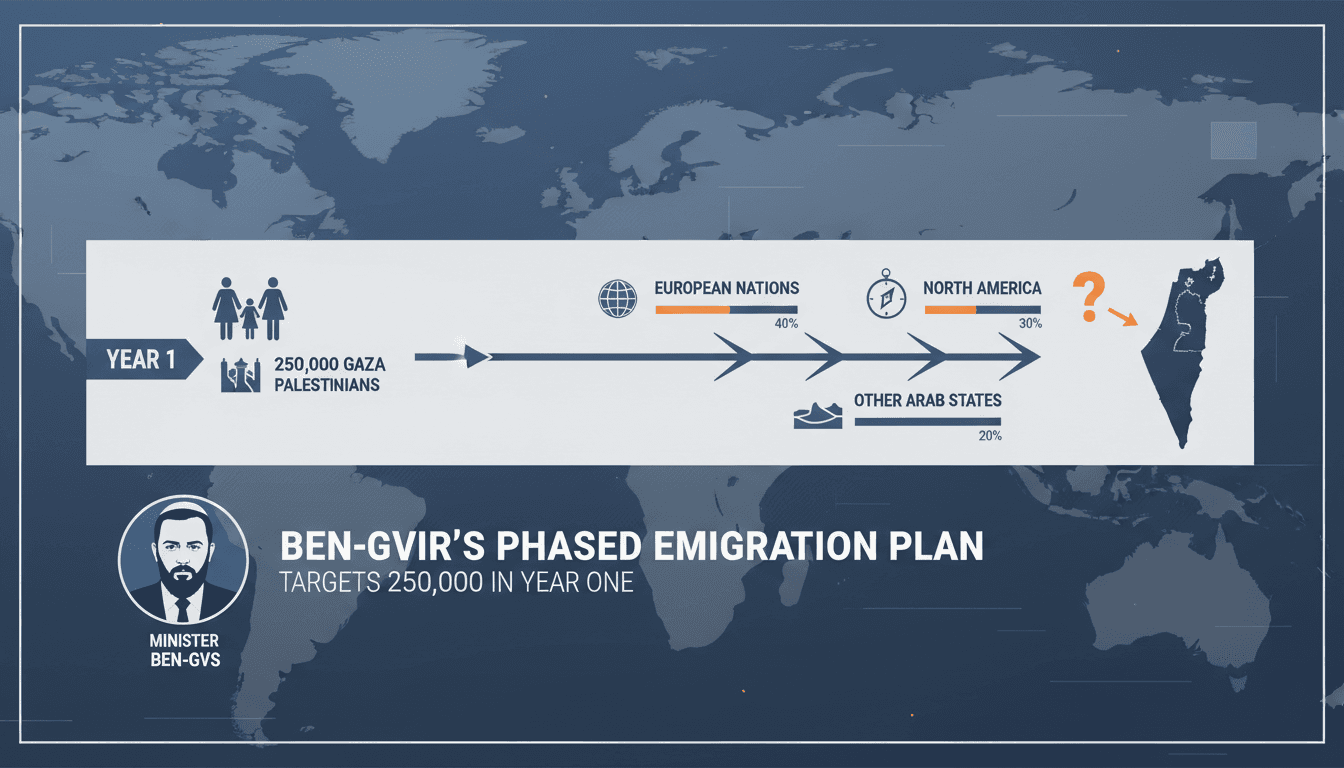
- The plan aims for the voluntary departure of 250,000 individuals in the first year, with the remainder over subsequent years, framed as a 'National Work Plan for Voluntary Emigration from the Gaza Strip.'
- International bodies have raised concerns about the potential for forced displacement, given the ongoing humanitarian crisis in Gaza.
The context you actually need
- Gaza's population: Approximately 2 million Palestinians are currently living under Israeli control, with ongoing humanitarian challenges documented by international organizations.
- Political backdrop: The announcement comes ahead of Israel's October 2026 elections, where Ben-Gvir's party seeks to solidify its influence amid rising tensions.
- Historical precedents: Previous proposals for 'voluntary migration' have been discussed in Israeli political circles but were deprioritized, highlighting the contentious nature of this issue.
What's really happening
Itamar Ben-Gvir's announcement of the 'Disengagement 710' plan reflects a strategic move within the Israeli political landscape, particularly as the country approaches elections. The proposal outlines a phased emigration of Gaza's Palestinian population, starting with 250,000 individuals in the first year and extending to nearly 2 million over seven years. This initiative is framed as a voluntary departure, with incentives such as travel assistance, housing, training, and payments to host countries, which include Turkey, Ethiopia, Congo, and unspecified Arab states.
The timing of this announcement is crucial. With elections scheduled for October 27, 2026, Ben-Gvir's party, Otzma Yehudit, is leveraging this proposal to galvanize support among its base, which is increasingly focused on hardline policies regarding Palestinians. The plan's emphasis on 'voluntary' emigration is contentious, as it raises questions about the true nature of consent given the dire humanitarian conditions in Gaza, where many residents face severe restrictions on movement, access to resources, and basic services.
Moreover, the proposal has not been officially endorsed by Prime Minister Benjamin Netanyahu, who has instead focused on military operations and territorial control in Gaza. This lack of direct endorsement suggests that while the plan may serve as an electoral platform, its actual implementation remains uncertain and contingent on various factors, including U.S. approval as indicated by Defense Minister Israel Katz.
The international community is closely monitoring this situation, particularly given the potential implications for human rights and international law. The Geneva Conventions prohibit forced displacement, and the framing of this plan as 'voluntary' could be seen as an attempt to circumvent these legal frameworks. As humanitarian conditions in Gaza continue to deteriorate, the proposal could exacerbate existing tensions and lead to increased scrutiny from global human rights organizations.
In summary, while the phased emigration plan may appear as a political maneuver aimed at securing electoral gains, it carries significant implications for the future of Gaza's Palestinian population and the broader geopolitical landscape in the region.
Who feels it first (and how)
- Palestinian residents of Gaza: Directly impacted by the proposed emigration plan, facing potential displacement and loss of community.
- Israeli political parties: The far-right Otzma Yehudit party may gain electoral support, while other parties may face pressure to respond to the proposal.
- International humanitarian organizations: Increased scrutiny and potential operational challenges in addressing the humanitarian crisis in Gaza.
What to watch next
- International reactions: Monitor responses from global human rights organizations and foreign governments regarding the legality and humanitarian implications of the plan.
- U.S. approval: The extent to which the U.S. government supports or opposes the emigration plan could significantly influence its implementation.
- Election outcomes: The results of the October 2026 elections will determine the political viability of the emigration plan and its potential execution.
The proposal aims for the emigration of 2 million Palestinians from Gaza over several years.
The plan will face significant international scrutiny and potential legal challenges regarding human rights.
The actual implementation timeline and the extent of U.S. involvement or approval remain uncertain.
Frequently Asked Questions
- Why it matters?
- This policy proposal raises significant concerns about human rights and international law, potentially influencing global diplomatic relations and humanitarian aid flows.
- What happened (in 30 seconds)?
- On September 3, 2026, Israeli National Security Minister Itamar Ben-Gvir announced a phased emigration plan targeting Gaza's 2 million Palestinian residents. The plan aims for the voluntary departure of 250,000 individuals in the first year, with the remainder over subsequent years, framed as a 'National Work Plan for Voluntary Emigration from the Gaza Strip.' International bodies have raised concerns about the potential for forced displacement, given the ongoing humanitarian crisis in Gaza.
- What's really happening?
- Itamar Ben-Gvir's announcement of the 'Disengagement 710' plan reflects a strategic move within the Israeli political landscape, particularly as the country approaches elections. The proposal outlines a phased emigration of Gaza's Palestinian population, starting with 250,000 individuals in the first year and extending to nearly 2 million over seven years. This initiative is framed as a voluntary departure, with incentives such as travel assistance, housing, training, and payments to host countr
- Who feels it first (and how)?
- Palestinian residents of Gaza: Directly impacted by the proposed emigration plan, facing potential displacement and loss of community. Israeli political parties: The far-right Otzma Yehudit party may gain electoral support, while other parties may face pressure to respond to the proposal. International humanitarian organizations: Increased scrutiny and potential operational challenges in addressing the humanitarian crisis in Gaza.
- What to watch next?
- International reactions: Monitor responses from global human rights organizations and foreign governments regarding the legality and humanitarian implications of the plan. U.S. approval: The extent to which the U.S. government supports or opposes the emigration plan could significantly influence its implementation. Election outcomes: The results of the October 2026 elections will determine the political viability of the emigration plan and its potential execution.
International coverage from The Guardian's global desks.
"The Guardian is known for its progressive editorial stance and in-depth analysis."
— A47 Editor
Far-right Israeli minister outlines plan for removal of all Palestinians from Gaza
Itamar Ben-Gvir, Israel's far-right national security minister, has proposed a controversial plan for the forced expulsion of all Palestinians from Gaza, aiming to displace 250,000 individuals in the first year and the remaining population of approxi...
Regional and international reporting focused on Middle Eastern politics, diplomacy, and economics.
"Asharq Al-Awsat is a Saudi-owned international newspaper reflecting mainstream Gulf political perspectives."
— A47 Editor
Israeli Minister Presents Plan to Remove Gaza Population
Israeli National Security Minister Itamar Ben-Gvir has proposed a controversial plan aimed at removing the population of Gaza, a move that has sparked significant backlash and raised concerns about humanitarian implications. This proposal aligns with...
International coverage from The Guardian's global desks.
"The Guardian is known for its progressive editorial stance and in-depth analysis."
— A47 Editor
Israel ‘seeking Trump’s support for plan to expel Palestinians from Gaza’
Israel's Defense Minister, Israel Katz, announced that the country is seeking Donald Trump's support for plans to expel Palestinians from the Gaza Strip, which has drawn widespread condemnation as a potential war crime. Katz stated that the Israeli g...
European coverage of Middle East politics and security issues.
"France 24 offers international reporting with a European editorial perspective."
— A47 Editor
Israel ‘organised and prepared’ to remove Gaza population if US gives green light, Katz says
Israel's Defense Minister, Israel Katz, stated that the country is 'organised and prepared' to remove Palestinians from Gaza if the United States provides the necessary approval, indicating a readiness to address the ongoing crisis through forced dis...
Coverage of current events and conflicts in the Middle East.
"France 24 is viewed as a globally focused outlet with balanced coverage and a European perspective."
— A47 Editor
Israel ‘organised and prepared’ to remove Gaza population if US gives green light, Katz says
Israel's Defense Minister, Israel Katz, stated that the country is 'organised and prepared' to remove Palestinians from Gaza if the United States provides the necessary approval, indicating a readiness to address the ongoing crisis through forced dis...