
USS Abraham Lincoln Crew Completes Record 272-Day Deployment Amid Iran Operations
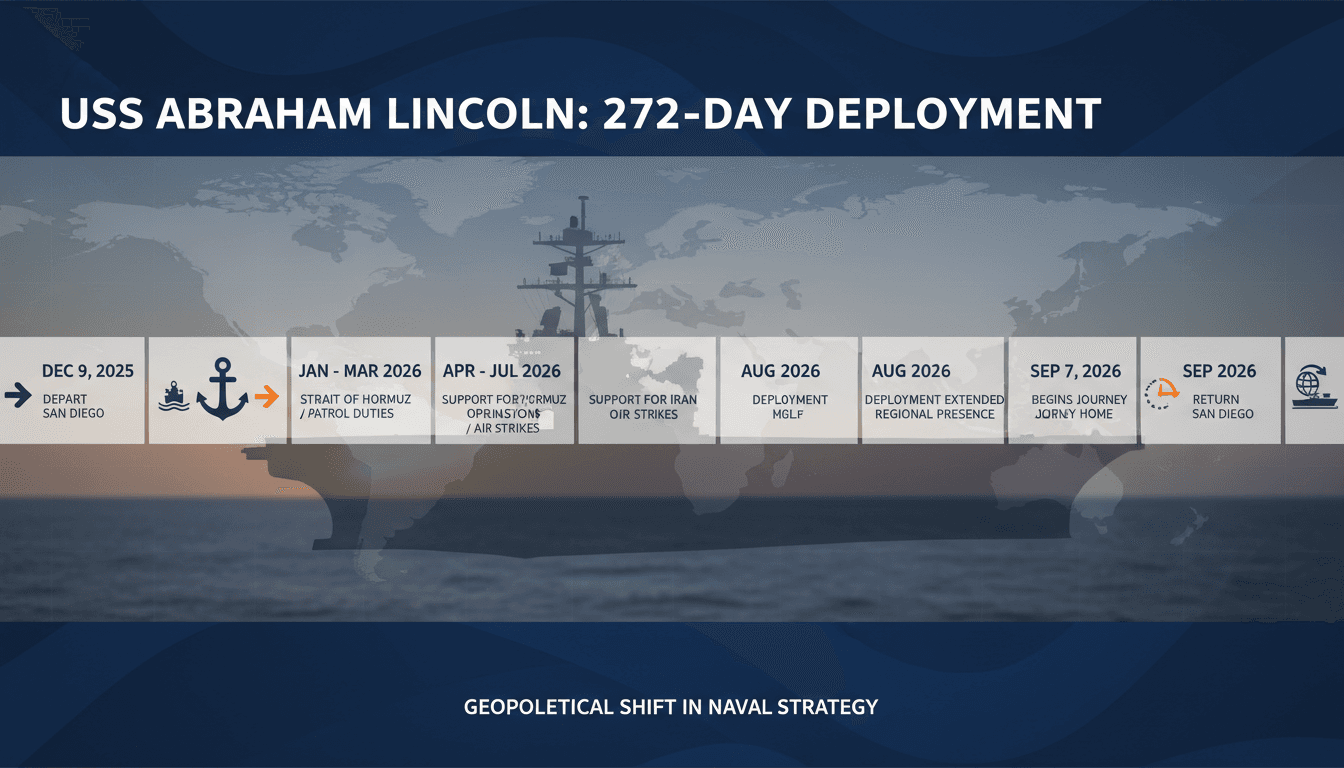
Here's what it means for you.
The extended deployment of the USS Abraham Lincoln underscores the U.S. military's commitment to regional stability, which can impact global markets and security dynamics.
Why it matters
The record-breaking deployment reflects heightened military engagement in the Middle East, influencing geopolitical stability and economic conditions worldwide.
What happened (in 30 seconds)
- USS Abraham Lincoln returned home on September 7, 2026, after a record 272-day deployment.
- Extended mission was due to ongoing U.S. military operations against Iran, including a maritime blockade.
- Crew resilience was praised by U.S. Central Command and Navy leadership, highlighting operational success.
The context you actually need
- Deployment duration: The USS Abraham Lincoln's mission lasted nearly 10 months, significantly longer than the original six-month plan.
- Operational challenges: Limited port calls and logistical disruptions, including the loss of a supply hub in Bahrain, complicated the mission.
- Regional implications: The deployment occurred amid escalated tensions with Iran, affecting maritime security and U.S. military posture in the region.
What's really happening
The USS Abraham Lincoln's deployment is a reflection of the U.S. military's strategic posture in the Middle East, particularly in response to escalating tensions with Iran. Originally scheduled for a six-month mission, the deployment was extended due to the need for sustained military presence amid ongoing conflicts. This extension highlights the U.S. commitment to maintaining regional stability and deterring potential threats.
The operational environment was fraught with challenges, including limited port calls and logistical disruptions. The loss of a key supply hub in Bahrain further complicated resupply efforts, forcing the carrier to remain at sea for extended periods. Over 200 consecutive days at sea is a modern record for a U.S. aircraft carrier, emphasizing the crew's resilience and adaptability under pressure.
The successful relief by the USS George Washington allowed the Lincoln to depart the Arabian Sea, marking a critical transition in U.S. naval operations. The port call in Thailand was the first extended break in nearly nine months, providing much-needed rest for the crew and a chance to replenish supplies. This operational tempo reflects the U.S. Navy's strategic focus on maintaining a robust presence in the Indo-Pacific and Middle Eastern regions.
The implications of this deployment extend beyond military readiness. The U.S. military's sustained presence in the region can influence global oil markets, maritime security, and international trade routes. As tensions with Iran continue, the U.S. Navy's operations serve as a deterrent against potential aggression, impacting not only regional players but also global economic conditions.
Moreover, the high retention rates and mission accomplishment highlighted by Navy leadership indicate a positive morale among service members, which is crucial for maintaining operational effectiveness. The successful completion of this deployment may also influence future military planning and resource allocation, as the U.S. assesses its strategic priorities in a rapidly changing global landscape.
Who feels it first (and how)
- Military personnel: Sailors and Marines experience extended deployments, impacting their families and personal lives.
- Defense contractors: Companies involved in military logistics and support may see increased demand for services related to extended operations.
- Global markets: Investors and businesses monitoring geopolitical stability may react to changes in U.S. military posture and regional tensions.
What to watch next
- Future deployments: Monitor upcoming U.S. Navy operations in the Middle East and Indo-Pacific, as they may signal shifts in military strategy.
- Iran relations: Watch for developments in U.S.-Iran negotiations, which could impact military engagement and regional stability.
- Market reactions: Keep an eye on oil prices and global trade patterns, as military operations can influence supply chains and economic conditions.
The USS Abraham Lincoln completed a record 272-day deployment.
Future U.S. military operations will continue to focus on the Middle East and Indo-Pacific regions.
The long-term impact of this deployment on U.S.-Iran relations and regional stability remains uncertain.
Frequently Asked Questions
- Why it matters?
- The record-breaking deployment reflects heightened military engagement in the Middle East, influencing geopolitical stability and economic conditions worldwide.
- What happened (in 30 seconds)?
- USS Abraham Lincoln returned home on September 7, 2026, after a record 272-day deployment. Extended mission was due to ongoing U.S. military operations against Iran, including a maritime blockade. Crew resilience was praised by U.S. Central Command and Navy leadership, highlighting operational success.
- What's really happening?
- The USS Abraham Lincoln's deployment is a reflection of the U.S. military's strategic posture in the Middle East, particularly in response to escalating tensions with Iran. Originally scheduled for a six-month mission, the deployment was extended due to the need for sustained military presence amid ongoing conflicts. This extension highlights the U.S. commitment to maintaining regional stability and deterring potential threats. The operational environment was fraught with challenges, including
- Who feels it first (and how)?
- Military personnel: Sailors and Marines experience extended deployments, impacting their families and personal lives. Defense contractors: Companies involved in military logistics and support may see increased demand for services related to extended operations. Global markets: Investors and businesses monitoring geopolitical stability may react to changes in U.S. military posture and regional tensions.
- What to watch next?
- Future deployments: Monitor upcoming U.S. Navy operations in the Middle East and Indo-Pacific, as they may signal shifts in military strategy. Iran relations: Watch for developments in U.S.-Iran negotiations, which could impact military engagement and regional stability. Market reactions: Keep an eye on oil prices and global trade patterns, as military operations can influence supply chains and economic conditions.
Comprehensive coverage of global events, politics, and international issues.
"NBC News is a mainstream outlet known for comprehensive national and international coverage with a centrist to slightly left-leaning editorial tone."
— A47 Editor
USS Lincoln crew heading back home after record-breaking deployment
The crew of the USS Abraham Lincoln is returning to California after a record-breaking deployment of nearly 10 months, primarily supporting military operations in Iran. The sailors recently enjoyed a brief stop in Pattaya, Thailand, for rest and reco...
Global markets, investing, and macroeconomics from a premier financial newsroom.
"Bloomberg is respected for in-depth financial reporting and data-driven analysis."
— A47 Editor
USS Lincoln Sailors Describe Toll of Deployment
The USS Abraham Lincoln's crew recently completed a 286-day deployment, which included a record 264 consecutive days at sea, and received a port visit in Thailand. Sailors reported food shortages, limited communication with families, and uncertainty ...
Regional coverage and analysis focused on politics, diplomacy, and business across the Middle East.
"Al-Monitor is known for analytical reporting on Middle East politics and policy developments."
— A47 Editor
US carrier Abraham Lincoln departs Thailand after respite visit
The U.S. aircraft carrier Abraham Lincoln departed Thailand on September 6 after a five-day port visit, concluding a respite from a lengthy deployment that included operations in the Middle East. Captain Dan Keeler expressed gratitude for the hospita...