
Syria Begins Destruction of Chemical Weapons Materials Under OPCW Oversight
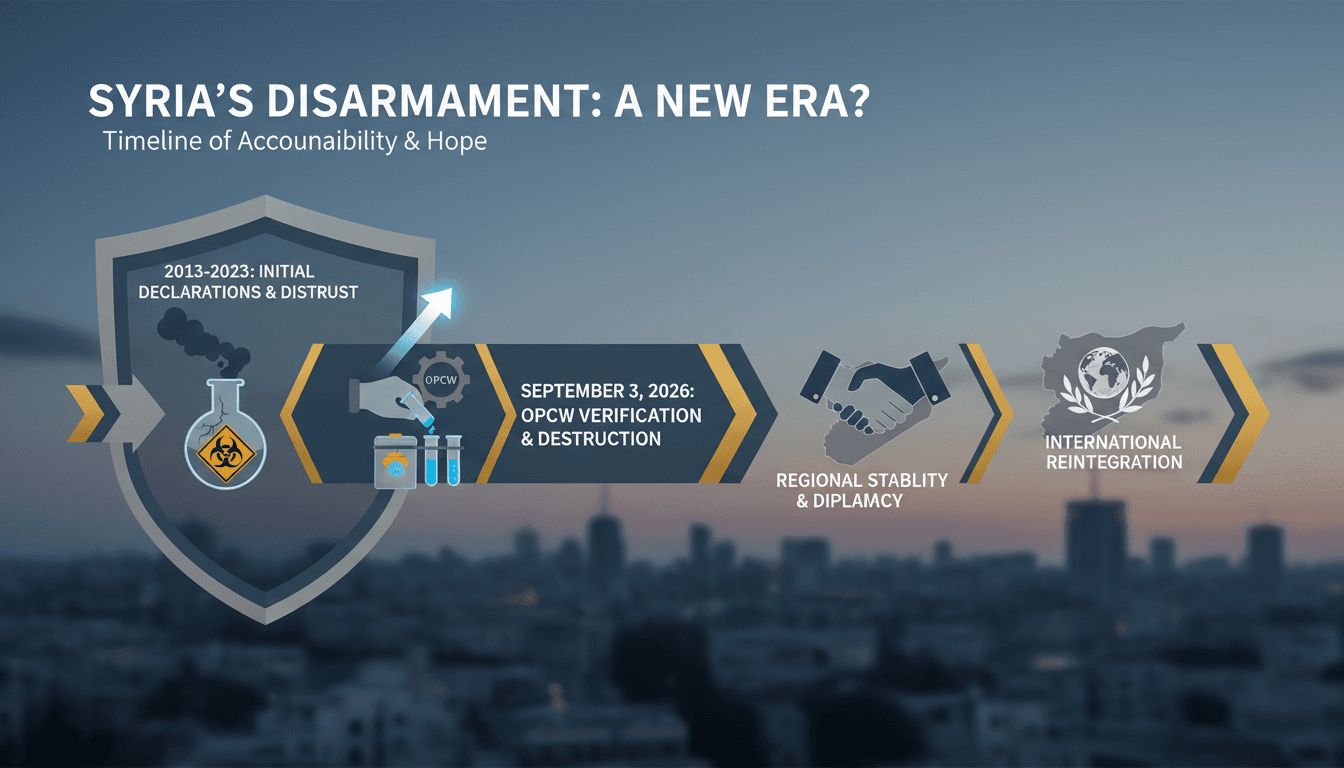
Here's what it means for you.
The ongoing disarmament of chemical weapons in Syria could influence regional stability and international relations.
Why it matters
This initiative represents a significant step toward accountability in a region long plagued by conflict and chemical warfare.
What happened (in 30 seconds)
- On September 3, 2026, Syria began the destruction of 42 aerial bombs containing chemical weapons, marking the first such action on its soil in over a decade.
- The operation is overseen by the OPCW, ensuring compliance and verification of the destruction process.
- This move follows the Assad regime's collapse in December 2024 and signals a policy shift toward greater accountability and security.
The context you actually need
- The Assad regime's chemical weapons program was notorious for its brutal attacks during the Syrian civil war, resulting in thousands of civilian casualties.
- Following the regime's fall, the new Syrian leadership has cooperated with the OPCW, regaining voting rights and submitting amended declarations regarding chemical weapons.
- In May 2026, OPCW inspectors uncovered previously undeclared materials, prompting expedited destruction plans that were approved by the OPCW Executive Council.
What's really happening
The destruction of chemical weapons in Syria is a pivotal moment in the country's transition from a regime known for its brutality to a government seeking legitimacy and accountability. The Assad regime's chemical weapons program, which included the use of sarin and chlorine gas, has left a dark legacy, symbolizing the conflict's brutality and resulting in significant civilian casualties. The new Syrian transitional government, formed after the regime's collapse in December 2024, has initiated a cooperative relationship with the Organisation for the Prohibition of Chemical Weapons (OPCW). This cooperation is crucial for regaining international standing and addressing the legacy of the previous regime.
The recent destruction of 42 aerial bombs classified as Category 3 chemical weapons is the first verified on-site destruction in Syria since 2014. This operation, overseen by the OPCW, is not just a technical procedure; it represents a profound political transformation. Syrian envoy Ibrahim Olabi described the event as a significant step toward accountability, emphasizing the importance of site security and the prevention of proliferation risks. The OPCW's involvement ensures that the destruction is irreversible and meets international standards, which is vital for restoring trust among the international community.
However, the process is not without its challenges. Russia has expressed skepticism regarding the OPCW's findings, calling for verifiable evidence of the destruction. This skepticism highlights the geopolitical tensions surrounding the issue, as different nations have varying interests in the outcome of Syria's disarmament. The United States, on the other hand, has welcomed the progress, urging continued support for accountability and the restoration of OPCW rights.
As Syria prepares for its first court hearing related to chemical weapons use, the implications of this disarmament extend beyond mere compliance with international norms. It signals a potential shift in the balance of power within the region and could influence future diplomatic relations. The successful destruction of these weapons may pave the way for further disarmament initiatives and contribute to broader regional stability.
Who feels it first (and how)
- International organizations: Increased scrutiny and oversight responsibilities from the OPCW and UN.
- Syrian citizens: Potentially improved security and accountability in governance.
- Regional governments: Changes in diplomatic relations and security dynamics in the Middle East.
What to watch next
- Future OPCW inspections: Continued verification of disarmament efforts will be crucial for maintaining international trust.
- Court hearings on chemical weapons use: The outcomes could set precedents for accountability and justice in Syria.
- Geopolitical responses: Watch for shifts in diplomatic relations, particularly between Russia, the US, and regional players.
The destruction of 42 aerial bombs has been verified by the OPCW.
Continued cooperation between the Syrian transitional government and the OPCW will lead to further disarmament efforts.
The long-term impact on regional stability and international relations remains uncertain.
Frequently Asked Questions
- Why it matters?
- This initiative represents a significant step toward accountability in a region long plagued by conflict and chemical warfare.
- What happened (in 30 seconds)?
- On September 3, 2026, Syria began the destruction of 42 aerial bombs containing chemical weapons, marking the first such action on its soil in over a decade. The operation is overseen by the OPCW, ensuring compliance and verification of the destruction process. This move follows the Assad regime's collapse in December 2024 and signals a policy shift toward greater accountability and security.
- What's really happening?
- The destruction of chemical weapons in Syria is a pivotal moment in the country's transition from a regime known for its brutality to a government seeking legitimacy and accountability. The Assad regime's chemical weapons program, which included the use of sarin and chlorine gas, has left a dark legacy, symbolizing the conflict's brutality and resulting in significant civilian casualties. The new Syrian transitional government, formed after the regime's collapse in December 2024, has initiated a
- Who feels it first (and how)?
- International organizations: Increased scrutiny and oversight responsibilities from the OPCW and UN. Syrian citizens: Potentially improved security and accountability in governance. Regional governments: Changes in diplomatic relations and security dynamics in the Middle East.
- What to watch next?
- Future OPCW inspections: Continued verification of disarmament efforts will be crucial for maintaining international trust. Court hearings on chemical weapons use: The outcomes could set precedents for accountability and justice in Syria. Geopolitical responses: Watch for shifts in diplomatic relations, particularly between Russia, the US, and regional players.
UAE-based English-language newspaper covering regional politics, economics, and global affairs.
"The National reflects Emirati policy perspectives while maintaining international editorial standards."
— A47 Editor
Syria begins destroying chemical weapon materials in break with Assad era
Syria has commenced the destruction of chemical weapon materials associated with the Assad era, marking a significant shift in its disarmament efforts and compliance with international norms. This initiative reflects the country's commitment to movin...
Regional coverage and analysis focused on politics, diplomacy, and business across the Middle East.
"Al-Monitor is known for analytical reporting on Middle East politics and policy developments."
— A47 Editor
Syria begins destroying Assad-era chemical weapons
Syria has commenced the destruction of remnants from the Assad-era chemical weapons program, marking the first such action in a decade. This initiative follows the discovery of materials linked to chemical attacks during the civil war, as reported by...
Regional and international reporting focused on Middle Eastern politics, diplomacy, and economics.
"Asharq Al-Awsat is a Saudi-owned international newspaper reflecting mainstream Gulf political perspectives."
— A47 Editor
Syria Says Begun Destroying Assad-Era Chemical Weapon Materials
Syria has announced the commencement of the destruction of chemical weapon materials from the Assad era, marking a significant step in its commitment to disarmament and compliance with international norms. This move is part of broader efforts to addr...