
Trump Proposes European Repayment for Ukraine Military Aid
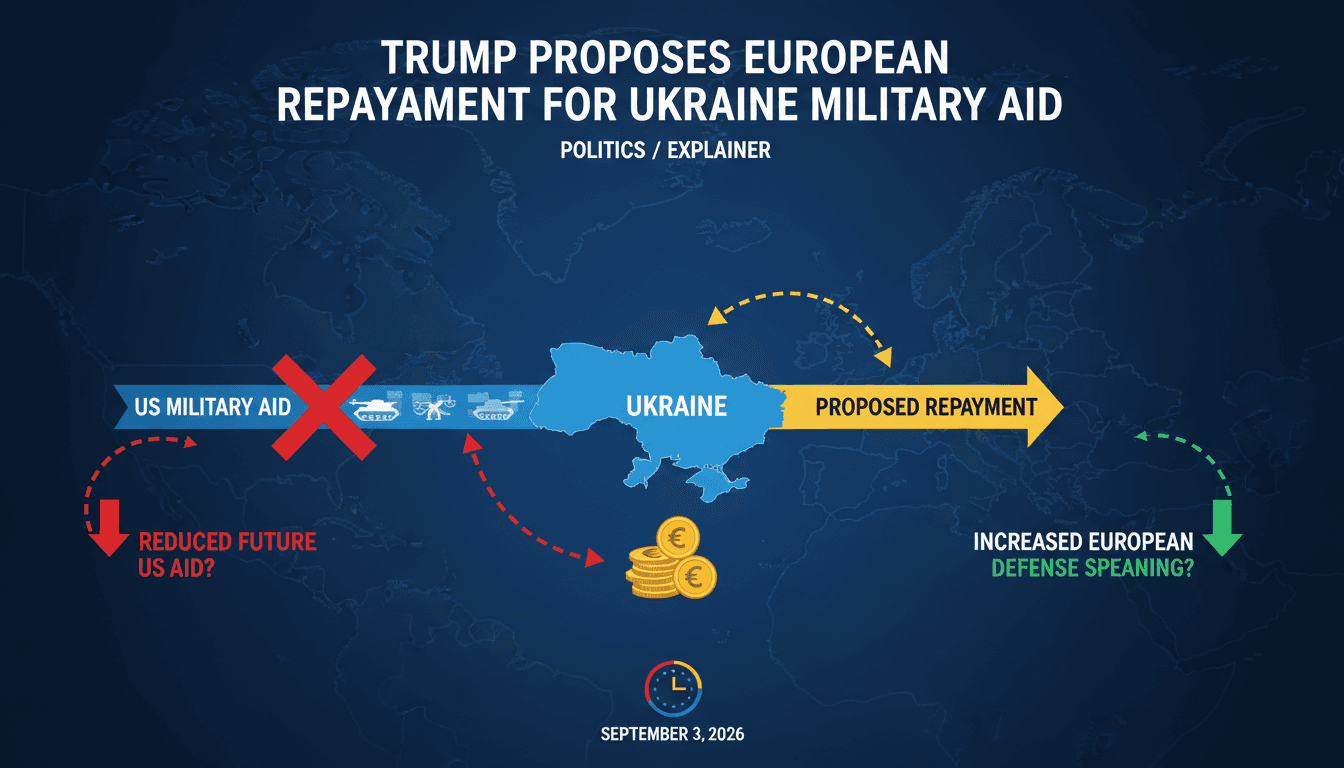
Here's what it means for you.
If you’re involved in international business or defense sectors, this shift could impact funding dynamics and procurement strategies.
Why it matters
This demand could reshape transatlantic relations and influence future military aid structures.
What happened (in 30 seconds)
- On September 3, 2026, President Trump announced via social media that the US would seek repayment from European nations for military aid provided to Ukraine during the Biden administration.
- Trump claimed that hundreds of billions of dollars in assistance were given free of charge, suggesting Europe should have covered these costs.
- European officials have not confirmed any repayment negotiations, emphasizing ongoing support through loans and procurement.
The context you actually need
- Since February 2022, the US has provided significant military assistance to Ukraine, while European nations have increasingly taken the lead in total aid allocations.
- By mid-2026, Europe had allocated more military aid than the US in several instances, utilizing mechanisms like the EU's €90 billion Ukraine Support Loan.
- Trump's return to office has shifted US policy towards demanding greater European contributions and questioning the volume of past aid.
What's really happening
President Trump's announcement reflects a significant shift in the US approach to military aid and transatlantic relations. The statement comes amid ongoing tensions regarding burden-sharing in the defense of Ukraine against Russian aggression. Since Russia's full-scale invasion in February 2022, the US has been a major supplier of military assistance, but European nations have increasingly taken the lead in total aid contributions. By mid-2026, Europe had allocated more military aid than the US during several periods, highlighting a growing reliance on European financing for US weapons supplied to Ukraine.
The Prioritized Ukraine Requirements List (PURL), established in 2025, already requires European financing for US weapons supplied to Ukraine. This mechanism underscores the complexity of transatlantic defense cooperation, where European nations are expected to contribute financially to US military systems. Trump's demand for repayment could be seen as an attempt to recalibrate this relationship, pushing European allies to shoulder more of the financial burden for military support.
The timing of Trump's announcement is also critical. It coincides with reports of US munitions stockpile depletion due to concurrent conflicts, including tensions with Iran. This depletion raises questions about the sustainability of US military support for Ukraine and the need for European nations to step up their contributions. European officials have responded by reiterating their commitment to supporting Ukraine through loans and procurement, but they have not publicly accepted or rejected Trump's repayment demands.
This situation creates a complex dynamic where European nations must balance their ongoing support for Ukraine with the potential implications of Trump's demands. The lack of immediate acceptance or rejection of repayment negotiations indicates a cautious approach, as European nations navigate their own defense budgets and political landscapes. The outcome of this situation could have far-reaching implications for future military aid structures and transatlantic relations.
Who feels it first (and how)
- European governments: They may face pressure to increase defense budgets or adjust aid strategies.
- Defense contractors: Companies involved in military procurement could see shifts in contracts and funding sources.
- Ukrainian officials: They will continue to advocate for military support, potentially complicating negotiations with European nations.
What to watch next
- European response: Monitor how European nations react to Trump's repayment demand and whether they adjust their military aid strategies.
- US military stockpiles: Keep an eye on the status of US munitions and how it affects ongoing support for Ukraine.
- Transatlantic trade discussions: Watch for shifts in trade negotiations that may arise from these new dynamics in military aid.
Trump has announced a demand for repayment from Europe for military aid to Ukraine.
European nations will continue to support Ukraine but may reassess their funding mechanisms.
The long-term implications of this demand on transatlantic relations and military aid structures.
Frequently Asked Questions
- Why it matters?
- This demand could reshape transatlantic relations and influence future military aid structures.
- What happened (in 30 seconds)?
- On September 3, 2026, President Trump announced via social media that the US would seek repayment from European nations for military aid provided to Ukraine during the Biden administration. Trump claimed that hundreds of billions of dollars in assistance were given free of charge, suggesting Europe should have covered these costs. European officials have not confirmed any repayment negotiations, emphasizing ongoing support through loans and procurement.
- What's really happening?
- President Trump's announcement reflects a significant shift in the US approach to military aid and transatlantic relations. The statement comes amid ongoing tensions regarding burden-sharing in the defense of Ukraine against Russian aggression. Since Russia's full-scale invasion in February 2022, the US has been a major supplier of military assistance, but European nations have increasingly taken the lead in total aid contributions. By mid-2026, Europe had allocated more military aid than the US
- Who feels it first (and how)?
- European governments: They may face pressure to increase defense budgets or adjust aid strategies. Defense contractors: Companies involved in military procurement could see shifts in contracts and funding sources. Ukrainian officials: They will continue to advocate for military support, potentially complicating negotiations with European nations.
- What to watch next?
- European response: Monitor how European nations react to Trump's repayment demand and whether they adjust their military aid strategies. US military stockpiles: Keep an eye on the status of US munitions and how it affects ongoing support for Ukraine. Transatlantic trade discussions: Watch for shifts in trade negotiations that may arise from these new dynamics in military aid.
Global news coverage with extensive reporting on Middle Eastern conflicts and geopolitics.
"Al Jazeera is a Qatar-based broadcaster known for wide regional coverage and alternative perspectives."
— A47 Editor
Will Europe pay the US to provide military aid to Ukraine?
US President Donald Trump has expressed dissatisfaction with the financial support previously extended to Ukraine for its military efforts, indicating intentions to retract such funding. This statement underscores a shift in the US's approach to inte...
Comprehensive coverage of Middle Eastern and global issues.
"Al Jazeera is a prominent voice from the Global South, especially the Middle East, with an emphasis on underreported stories."
— A47 Editor
Will Europe pay the US to provide military aid to Ukraine?
US President Donald Trump has expressed dissatisfaction with the financial support previously extended to Ukraine for its military efforts, indicating intentions to retract such funding. This statement underscores a shift in the US's approach to inte...
English-language reporting on Saudi politics, policy, and society.
"Saudi Gazette reflects mainstream Saudi institutional perspectives."
— A47 Editor
Trump says US to ask Europe to pay back aid given to Ukraine by Biden
US President Donald Trump announced that he will request European nations to reimburse the aid provided to Ukraine during Joe Biden's administration, amidst the ongoing conflict with Russia. In a social media post, Trump criticized the US's depleted ...
Regional and international reporting focused on Middle Eastern politics, diplomacy, and economics.
"Asharq Al-Awsat is a Saudi-owned international newspaper reflecting mainstream Gulf political perspectives."
— A47 Editor
US to Seek Back Payment from Europe for Ukraine Aid, Trump Says
Former President Donald Trump announced that the United States will seek back payments from European nations for their contributions to Ukraine aid, emphasizing the need for Europe to fulfill its financial obligations amid ongoing military support fo...