
UAE President Grants Pardon to Convicted Activist Abdulrahman Youssef Al-Qaradawi
Here's what it means for you.
This development signals potential shifts in regional political dynamics and the UAE's approach to dissent.
Why it matters
The pardon reflects the UAE's balancing act between maintaining security and responding to international pressures regarding human rights.
What happened (in 30 seconds)
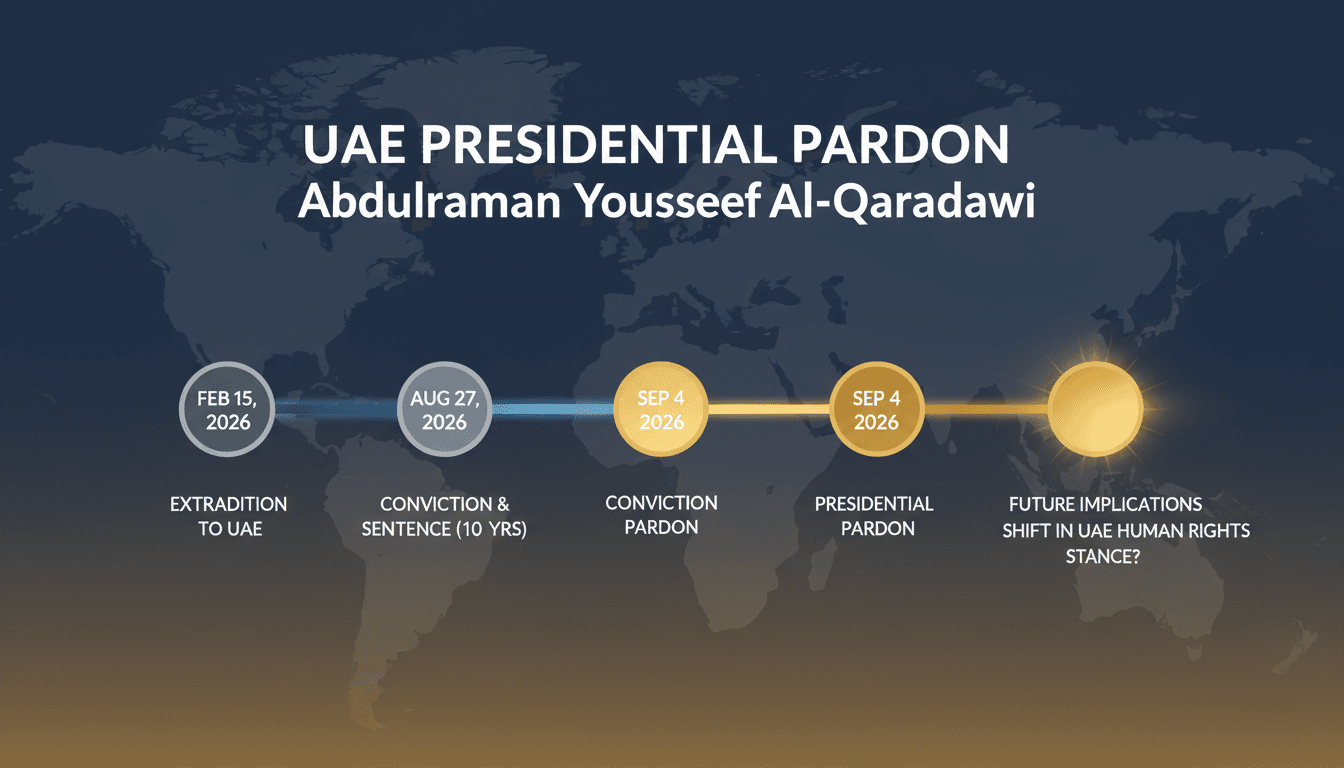
- Presidential pardon issued: On September 4, 2026, UAE President Sheikh Mohammed bin Zayed Al Nahyan granted a pardon to Abdulrahman Youssef Al-Qaradawi.
- Conviction details: Al-Qaradawi was sentenced to 10 years in prison and fined 200,000 AED by the Abu Dhabi Federal Court on August 27, 2026, for electronic crimes.
- Immediate release: Following the pardon, procedures for Al-Qaradawi's release were enacted without delay.
The context you actually need
- Background of the case: Al-Qaradawi was extradited from Lebanon in January 2025 after being detained for a video deemed offensive, highlighting the UAE's strict enforcement of electronic crime laws.
- Family reactions: Al-Qaradawi's family expressed gratitude towards UAE and Turkish leaders following the pardon, indicating diplomatic ties at play.
- Ongoing legal issues: Despite the pardon, Al-Qaradawi faces separate legal challenges in Egypt, which could complicate his future.
What's really happening
The recent pardon of Abdulrahman Youssef Al-Qaradawi by UAE President Sheikh Mohammed bin Zayed Al Nahyan is a significant event that underscores the complex interplay of legal, political, and social factors in the region. Al-Qaradawi, a poet and activist, was convicted on charges related to electronic crimes, which the UAE has increasingly enforced against opposition figures. His extradition from Lebanon in January 2025, following a controversial video, set the stage for a legal battle that culminated in a 10-year prison sentence and a hefty fine.
The rapid transition from conviction to pardon raises questions about the UAE's judicial processes and the influence of external diplomatic pressures. The UAE has been under scrutiny for its human rights record, particularly regarding freedom of expression and political dissent. By issuing a pardon, the UAE may be attempting to project a more lenient image to the international community, especially as it seeks to strengthen ties with Turkey and other nations.
This move could also be interpreted as a strategic decision to mitigate potential unrest or backlash from Al-Qaradawi's supporters, both domestically and abroad. The UAE's leadership is likely aware of the delicate balance it must maintain between enforcing laws that ensure public security and addressing the growing calls for reform and human rights improvements. The pardon could be seen as a calculated risk, aimed at appeasing critics while still asserting control over dissent.
Moreover, the case highlights the broader implications of the UAE's legal framework, particularly its electronic crimes laws, which have been criticized for their vagueness and potential for misuse against political opponents. The swift implementation of the pardon suggests a desire to close this chapter quickly, but it also raises concerns about the consistency and fairness of the judicial system.
As the UAE navigates its position on the global stage, the Al-Qaradawi case serves as a reminder of the challenges it faces in balancing security, diplomacy, and human rights. The implications of this pardon extend beyond Al-Qaradawi himself, potentially influencing how other activists and opposition figures are treated in the future.
Who feels it first (and how)
- Activists and opposition figures: Increased scrutiny and potential leniency in legal actions could affect their safety and freedom.
- Legal professionals: Changes in judicial processes may lead to shifts in how cases are handled, particularly regarding electronic crimes.
- International relations experts: The pardon may influence diplomatic discussions and negotiations involving the UAE and other nations.
What to watch next
- Future legal reforms: Monitor any changes in the UAE's electronic crimes laws that could impact how dissent is managed.
- Diplomatic engagements: Watch for increased interactions between the UAE and Turkey, as this could signal a shift in regional alliances.
- Public sentiment: Keep an eye on reactions from activists and the general public regarding the pardon, as this could indicate broader societal trends.
The UAE issued a presidential pardon for Abdulrahman Al-Qaradawi following his conviction.
The case may influence future legal actions against activists and opposition figures in the UAE.
The long-term effects of this pardon on UAE's international relations and domestic stability remain uncertain.
Frequently Asked Questions
- Why it matters?
- The pardon reflects the UAE's balancing act between maintaining security and responding to international pressures regarding human rights.
- What happened (in 30 seconds)?
- Presidential pardon issued: On September 4, 2026, UAE President Sheikh Mohammed bin Zayed Al Nahyan granted a pardon to Abdulrahman Youssef Al-Qaradawi. Conviction details: Al-Qaradawi was sentenced to 10 years in prison and fined 200,000 AED by the Abu Dhabi Federal Court on August 27, 2026, for electronic crimes. Immediate release: Following the pardon, procedures for Al-Qaradawi's release were enacted without delay.
- What's really happening?
- The recent pardon of Abdulrahman Youssef Al-Qaradawi by UAE President Sheikh Mohammed bin Zayed Al Nahyan is a significant event that underscores the complex interplay of legal, political, and social factors in the region. Al-Qaradawi, a poet and activist, was convicted on charges related to electronic crimes, which the UAE has increasingly enforced against opposition figures. His extradition from Lebanon in January 2025, following a controversial video, set the stage for a legal battle that cul
- Who feels it first (and how)?
- Activists and opposition figures: Increased scrutiny and potential leniency in legal actions could affect their safety and freedom. Legal professionals: Changes in judicial processes may lead to shifts in how cases are handled, particularly regarding electronic crimes. International relations experts: The pardon may influence diplomatic discussions and negotiations involving the UAE and other nations.
- What to watch next?
- Future legal reforms: Monitor any changes in the UAE's electronic crimes laws that could impact how dissent is managed. Diplomatic engagements: Watch for increased interactions between the UAE and Turkey, as this could signal a shift in regional alliances. Public sentiment: Keep an eye on reactions from activists and the general public regarding the pardon, as this could indicate broader societal trends.
Arabic-language local coverage focused on UAE domestic issues, civic affairs, and community reporting.
"Emarat Al Youm local coverage emphasizes UAE institutions, public services, and community-level developments."
— A47 Editor
عفو رئاسي عن المحكوم عليه عبدالرحمن يوسف القرضاوي عفو رئاسي عن المحكوم عليه عبدالرحمن يوسف القرضاوي
A presidential pardon has been granted by His Highness the President of the State to Abdulrahman Yusuf Al-Qaradawi, who was previously sentenced by the Abu Dhabi court. This decision was announced yesterday, reflecting a significant act of clemency.
Arabic-language reporting on global and regional news.
"BBC Arabic is part of the BBC, generally regarded for editorial standards and broad international coverage."
— A47 Editor
عفو رئاسي إماراتي عن الناشط المصري المعارض عبد الرحمن القرضاوي
The President of the United Arab Emirates has granted a pardon to Egyptian activist Abdel Rahman Al-Qaradawi, just days after he was sentenced to ten years in prison. This decision marks a significant shift in the treatment of political dissent in th...
Arabic-language coverage of political affairs and current events.
"Okaz political coverage typically follows mainstream Saudi framing on national and regional affairs."
— A47 Editor
الإمارات: عفو رئاسي عن عبدالرحمن القرضاوي بعد حكم بسجنه 10 سنوات
The President of the United Arab Emirates, Sheikh Mohammed bin Zayed Al Nahyan, granted a presidential pardon to Abdulrahman Yusuf Al-Qaradawi following a 10-year prison sentence and a fine of 200,000 dirhams. This decision comes after the Abu Dhabi ...
English-language coverage focused on UAE news, government updates, and domestic affairs.
"Emirates 24|7 reflects a mainstream UAE editorial perspective with strong emphasis on official and domestic developments."
— A47 Editor
Presidential pardon issued for Abdul Rahman Yusuf Al-Qaradawi
A presidential pardon was granted by His Highness the UAE President on September 4, 2026, for Abdul Rahman Yusuf Al-Qaradawi, who had been sentenced to ten years in prison and fined AED200,000 by the Abu Dhabi Federal Court of Appeal on August 27, 20...