
Maduro and Wife Seek Dismissal of U.S. Drug Trafficking Charges on Sovereign Immunity Grounds
Here's what it means for you.
The outcome of this legal battle could reshape international norms around sovereign immunity and drug trafficking accountability.
Why it matters
This case highlights the complexities of international law and the implications for global drug trafficking enforcement.
What happened (in 30 seconds)
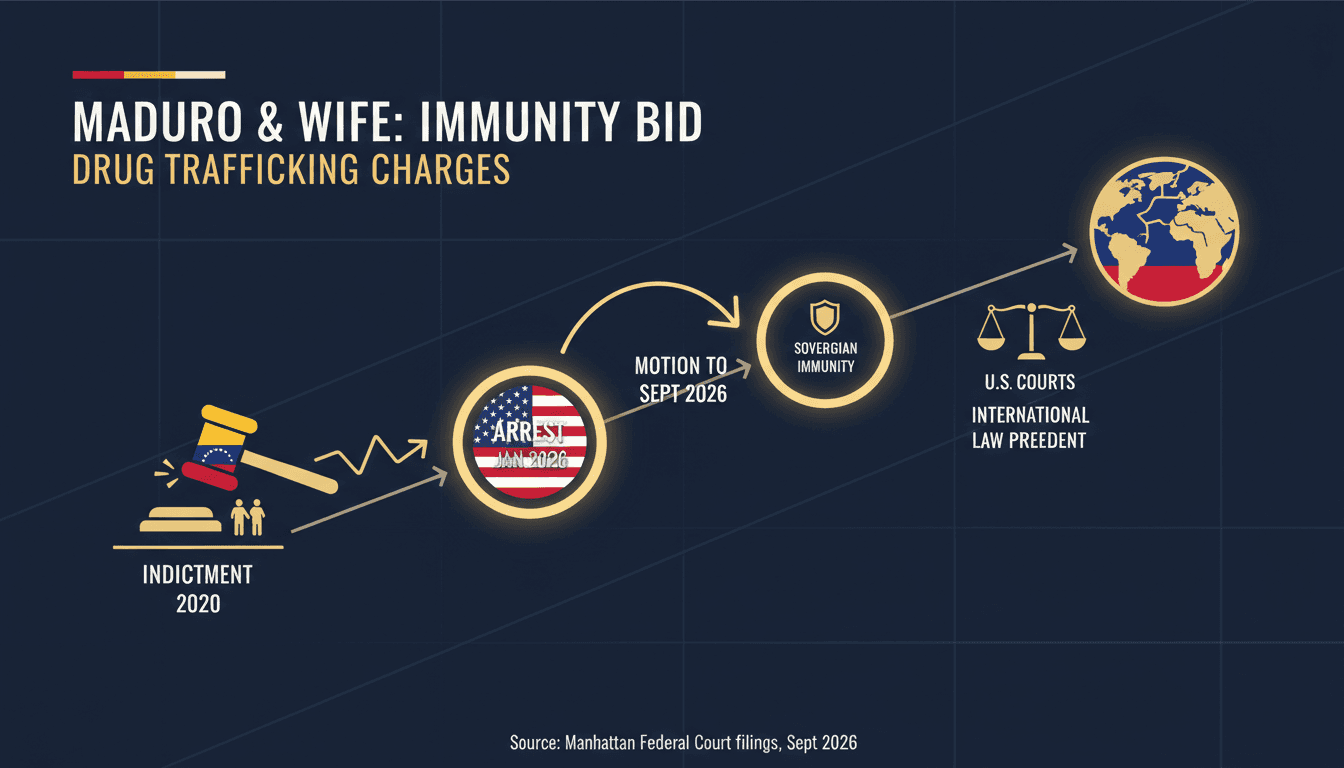
- On September 3, 2026, Nicolás Maduro and Cilia Flores filed motions in Manhattan federal court to dismiss their drug trafficking indictment.
- They argue that U.S. courts lack jurisdiction over a recognized foreign head of state and first lady, citing sovereign immunity.
- Prosecutors must respond by October 2, 2026, with oral arguments scheduled for November 17, 2026, and a trial set for June 1, 2027.
The context you actually need
- Maduro and Flores were arrested by U.S. forces in Caracas on January 3, 2026, during a military operation under the Trump administration.
- They face serious charges including narco-terrorism conspiracy and cocaine importation, stemming from a 2020 indictment.
- Maduro claims the arrest was a kidnapping, while U.S. authorities allege involvement in drug trafficking networks linked to Colombian and Mexican cartels.
What's really happening
The legal maneuvering by Nicolás Maduro and Cilia Flores to dismiss their drug trafficking indictment on sovereign immunity grounds is a significant moment in international law. By asserting that they are protected from U.S. jurisdiction due to their status as a recognized head of state and first lady, they are invoking a principle that has historically shielded foreign leaders from prosecution in domestic courts. This raises critical questions about the limits of sovereign immunity, especially in cases involving serious criminal allegations like drug trafficking.
The couple's defense hinges on two main arguments: status-based immunity, which protects sitting heads of state, and conduct-based immunity, which extends to actions taken in their official capacity. This legal strategy is not without precedent; however, it is rare for a sitting leader to face such serious charges in a foreign court. The implications of this case extend beyond the individuals involved, potentially influencing how future cases of alleged international crimes are handled.
The U.S. government has a vested interest in prosecuting drug trafficking, particularly given the ongoing opioid crisis and the role of international cartels in exacerbating this issue. If the court accepts Maduro's claims of immunity, it could set a precedent that complicates future prosecutions of foreign leaders accused of serious crimes. Conversely, if the court rejects the motion, it would affirm the U.S. stance on accountability for drug trafficking, regardless of a defendant's political status.
The upcoming hearings and trial will be closely watched, not just for their legal ramifications but also for their potential impact on U.S.-Venezuela relations. The case could further strain diplomatic ties, especially if Maduro's claims are upheld, as it may embolden other leaders facing similar charges to seek immunity in U.S. courts.
Who feels it first (and how)
- Legal professionals: Increased scrutiny on international law and sovereign immunity cases.
- U.S. policymakers: Potential shifts in drug enforcement strategies and foreign relations.
- Venezuelan citizens: Ongoing political instability and economic implications tied to Maduro's legal battles.
- International drug cartels: Changes in enforcement dynamics depending on the outcome of the case.
What to watch next
- Prosecutors' response due by October 2, 2026: This will indicate the U.S. government's stance on the immunity claims and set the stage for the November hearing.
- November 17, 2026, oral arguments: The court's reception of the arguments could signal how seriously it is considering the immunity claims.
- Trial set for June 1, 2027: The outcome will have lasting implications for international law and drug trafficking accountability.
Maduro and Flores are facing serious drug trafficking charges in U.S. courts.
The court will engage in a complex legal analysis of sovereign immunity.
The long-term implications for U.S.-Venezuela relations and international drug enforcement.
Frequently Asked Questions
- Why it matters?
- This case highlights the complexities of international law and the implications for global drug trafficking enforcement.
- What happened (in 30 seconds)?
- On September 3, 2026, Nicolás Maduro and Cilia Flores filed motions in Manhattan federal court to dismiss their drug trafficking indictment. They argue that U.S. courts lack jurisdiction over a recognized foreign head of state and first lady, citing sovereign immunity. Prosecutors must respond by October 2, 2026, with oral arguments scheduled for November 17, 2026, and a trial set for June 1, 2027.
- What's really happening?
- The legal maneuvering by Nicolás Maduro and Cilia Flores to dismiss their drug trafficking indictment on sovereign immunity grounds is a significant moment in international law. By asserting that they are protected from U.S. jurisdiction due to their status as a recognized head of state and first lady, they are invoking a principle that has historically shielded foreign leaders from prosecution in domestic courts. This raises critical questions about the limits of sovereign immunity, especially
- Who feels it first (and how)?
- Legal professionals: Increased scrutiny on international law and sovereign immunity cases. U.S. policymakers: Potential shifts in drug enforcement strategies and foreign relations. Venezuelan citizens: Ongoing political instability and economic implications tied to Maduro's legal battles. International drug cartels: Changes in enforcement dynamics depending on the outcome of the case.
- What to watch next?
- Prosecutors' response due by October 2, 2026: This will indicate the U.S. government's stance on the immunity claims and set the stage for the November hearing. November 17, 2026, oral arguments: The court's reception of the arguments could signal how seriously it is considering the immunity claims. Trial set for June 1, 2027: The outcome will have lasting implications for international law and drug trafficking accountability.
Arabic-language political and world news coverage for UAE readers.
"Emarat Al Youm world coverage usually presents international developments through a UAE and Arab audience lens."
— A47 Editor
مادورو وزوجته يطلبان إسقاط الاتهامات ضدهما مادورو وزوجته يطلبان إسقاط الاتهامات ضدهما
Former Venezuelan President Nicolás Maduro and his wife have requested an American judge to dismiss the charges against them related to drug trafficking. This legal move comes amid ongoing scrutiny of their actions and the implications of their leade...
Arabic-language political and world news coverage for UAE readers.
"Emarat Al Youm world coverage usually presents international developments through a UAE and Arab audience lens."
— A47 Editor
مادورو يطلب إسقاط تهم المخدرات الأميركية بناء على حصانته الرئاسية مادورو يطلب إسقاط تهم المخدرات الأميركية بناء على حصانته الرئاسية
Former Venezuelan President Nicolás Maduro and his wife, Cilia Flores, have requested an American judge to dismiss drug trafficking charges against them, citing presidential immunity as a basis for their appeal. This legal move comes amid ongoing scr...
International stories from NPR’s global desk.
"NPR is an American public media organization known for thoughtful reporting and a slightly left-leaning editorial tone."
— A47 Editor
Ex-Venezuelan President Nicolás Maduro and wife seek to end drug charges case on immunity grounds
Former Venezuelan President Nicolás Maduro and his wife, Cilia Flores, have requested a U.S. judge to dismiss drug trafficking charges against them, citing immunity as a foreign leader and first lady. This legal maneuver comes as they face serious al...