
U.S. and Venezuela Finalize Historic Oil Agreement Amid Opposition Concerns
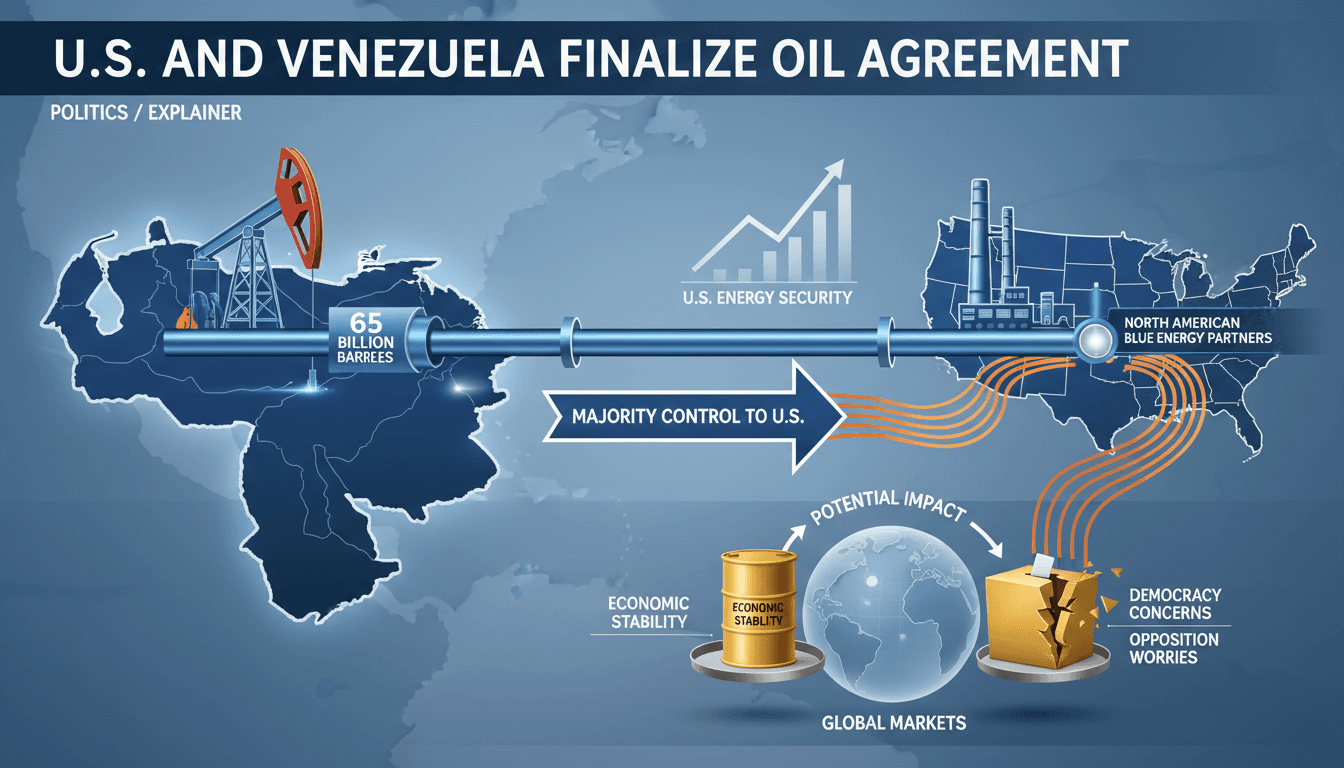
Here's what it means for you.
If you’re in the energy sector or a global investor, this deal could reshape oil supply dynamics and influence market stability.
Why it matters
This agreement marks a significant shift in U.S. foreign policy towards Venezuela, impacting global oil supply and geopolitical relations.
What happened (in 30 seconds)
- The U.S. announced a major oil deal with Venezuela on August 28, 2026, granting majority control over 65 billion barrels of oil reserves.
- Venezuelan opposition leaders expressed concerns that the deal could entrench the authoritarian regime and delay democratic elections.
- The National Assembly approved the agreement on September 1, 2026, despite opposition criticism, reflecting a pragmatic approach to economic recovery.
The context you actually need
- Venezuela's oil sector has been in decline due to sanctions, economic collapse, and political instability, leading to a need for foreign investment.
- The Trump administration's strategy has shifted from sanctions to direct engagement, aiming to secure energy resources previously dominated by China and Russia.
- The deal involves a 100-year concession to 17 oil fields, representing approximately 20% of Venezuela's total oil reserves, which could significantly alter the global oil landscape.
What's really happening
The U.S.-Venezuela oil agreement, touted by President Trump as the "biggest oil deal in world history," is a strategic pivot in U.S. foreign policy aimed at securing energy resources while navigating complex geopolitical waters. The deal grants the U.S. a 35% stake in North American Blue Energy Partners (NABEP), which will manage the extraction of oil from 17 fields holding 65 billion barrels of proven reserves. This move is particularly significant given Venezuela's historical ties to oil production and its current economic struggles under the Maduro-aligned regime.
The approval of the deal by Venezuela's National Assembly, which includes many opposition lawmakers, underscores a pragmatic approach to economic recovery amidst a backdrop of international sanctions and economic collapse. However, this has placed opposition leaders like María Corina Machado in a precarious position. They fear that the deal could further entrench the authoritarian regime led by acting President Delcy Rodríguez, delaying the prospect of free elections and democratic progress.
The U.S. administration argues that the agreement is compatible with a future democratic transition in Venezuela, suggesting that increased investment and engagement could lead to a more stable political environment. However, the opposition's concerns highlight a critical tension: the need for economic recovery versus the imperative of democratic governance. This tension is likely to influence both domestic politics in Venezuela and U.S. foreign policy moving forward.
As the implementation phase begins, the global oil market is watching closely. While immediate reactions have been muted, the long-term implications of increased Venezuelan oil production could stabilize global oil prices, impacting energy import costs for countries like those in the Gulf region. The deal's structure, favoring NABEP, has also raised eyebrows among U.S. energy firms, indicating potential shifts in market dynamics and competition.
Who feels it first (and how)
- Energy companies: U.S. firms involved in oil extraction and distribution may see new opportunities or face competition from NABEP.
- Venezuelan citizens: The economic impact of increased oil production could affect local employment and economic conditions.
- Global investors: Changes in oil supply dynamics may influence investment strategies and market stability.
What to watch next
- Production ramp-up timelines: Monitoring how quickly Venezuela can increase oil output will be crucial for global supply stability.
- Opposition responses: Continued reactions from Venezuelan opposition leaders will indicate the political landscape's evolution and potential impacts on democratic processes.
- U.S. energy policy shifts: Future U.S. policies regarding Venezuela and Latin America could reshape regional energy dynamics and geopolitical alliances.
The U.S. has secured a significant stake in Venezuelan oil reserves through this agreement.
The deal will influence global oil supply and pricing in the coming years.
The long-term political implications for Venezuela's democratic transition remain uncertain.
Frequently Asked Questions
- Why it matters?
- This agreement marks a significant shift in U.S. foreign policy towards Venezuela, impacting global oil supply and geopolitical relations.
- What happened (in 30 seconds)?
- The U.S. announced a major oil deal with Venezuela on August 28, 2026, granting majority control over 65 billion barrels of oil reserves. Venezuelan opposition leaders expressed concerns that the deal could entrench the authoritarian regime and delay democratic elections. The National Assembly approved the agreement on September 1, 2026, despite opposition criticism, reflecting a pragmatic approach to economic recovery.
- What's really happening?
- The U.S.-Venezuela oil agreement, touted by President Trump as the "biggest oil deal in world history," is a strategic pivot in U.S. foreign policy aimed at securing energy resources while navigating complex geopolitical waters. The deal grants the U.S. a 35% stake in North American Blue Energy Partners (NABEP), which will manage the extraction of oil from 17 fields holding 65 billion barrels of proven reserves. This move is particularly significant given Venezuela's historical ties to oil produ
- Who feels it first (and how)?
- Energy companies: U.S. firms involved in oil extraction and distribution may see new opportunities or face competition from NABEP. Venezuelan citizens: The economic impact of increased oil production could affect local employment and economic conditions. Global investors: Changes in oil supply dynamics may influence investment strategies and market stability.
- What to watch next?
- Production ramp-up timelines: Monitoring how quickly Venezuela can increase oil output will be crucial for global supply stability. Opposition responses: Continued reactions from Venezuelan opposition leaders will indicate the political landscape's evolution and potential impacts on democratic processes. U.S. energy policy shifts: Future U.S. policies regarding Venezuela and Latin America could reshape regional energy dynamics and geopolitical alliances.
International stories from NPR’s global desk.
"NPR is an American public media organization known for thoughtful reporting and a slightly left-leaning editorial tone."
— A47 Editor
U.S.-Venezuela oil deal puts opposition in a political bind
Venezuelan opposition members are expressing concern over new oil deals with the United States, fearing that agreements with the authoritarian regime in Caracas could jeopardize democratic progress. This unease is compounded by the recent announcemen...
Global news coverage with extensive reporting on Middle Eastern conflicts and geopolitics.
"Al Jazeera is a Qatar-based broadcaster known for wide regional coverage and alternative perspectives."
— A47 Editor
Why are people calling Venezuela oil deal a new form of US colonialism?
The United States has finalized a multi-billion-dollar oil deal with Venezuela, which critics are labeling as a form of modern-day colonialism. This agreement allows the U.S. to control approximately 65 billion barrels of Venezuelan oil reserves, rai...
Comprehensive coverage of Middle Eastern and global issues.
"Al Jazeera is a prominent voice from the Global South, especially the Middle East, with an emphasis on underreported stories."
— A47 Editor
Why are people calling Venezuela oil deal a new form of US colonialism?
The United States has finalized a multi-billion-dollar oil deal with Venezuela, which critics are labeling as a form of modern-day colonialism. This agreement allows the U.S. to control approximately 65 billion barrels of Venezuelan oil reserves, rai...
International coverage from The Guardian's global desks.
"The Guardian is known for its progressive editorial stance and in-depth analysis."
— A47 Editor
The US and Venezuela: a century-old relationship drenched in oil
The United States and Venezuela have finalized a historic 25-year oil deal, described by President Trump as the largest oil agreement in world history, involving approximately 65 billion barrels of Venezuelan oil. This agreement marks a significant s...